
Arriving in Turkmenistan: the new e-visa through a tour agency, transit visas, land borders, fees and registration
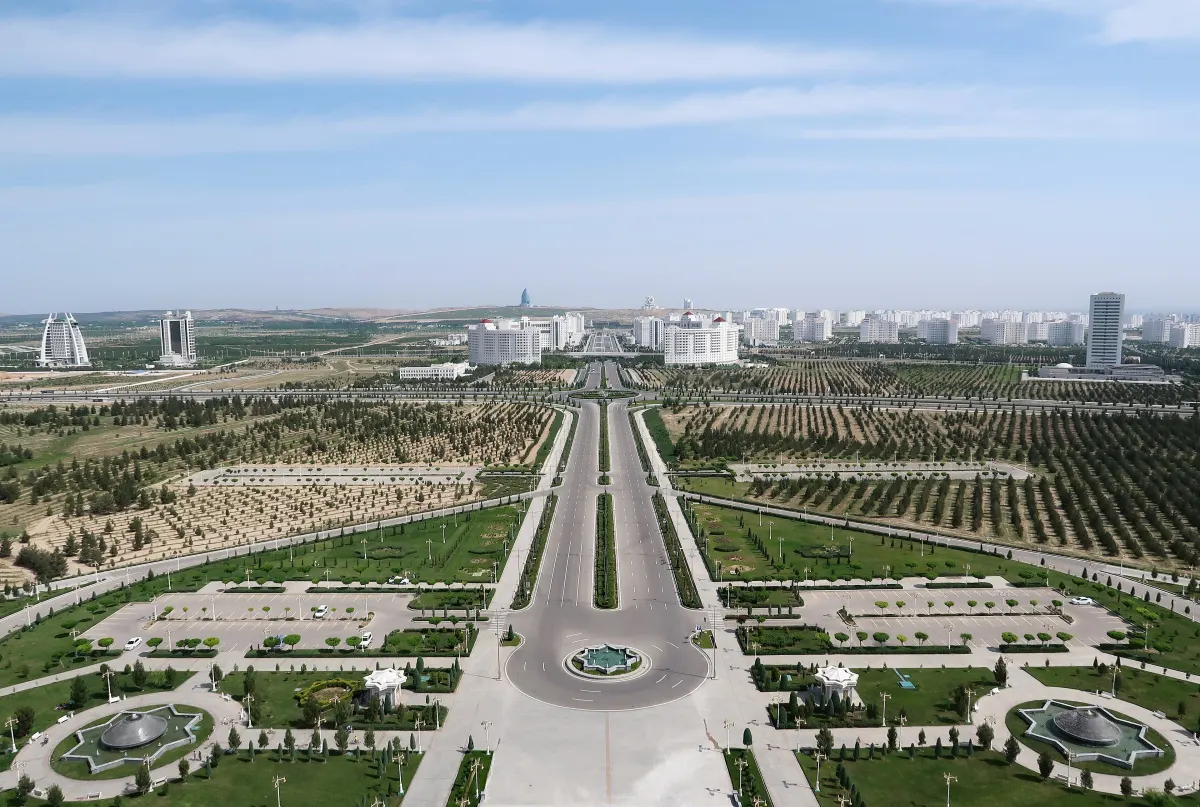
Everyone needs a visa, and tourists need a tour booked with a Turkmen agency to get one. The process changed on 1 October 2026, when Turkmenistan started issuing e-visas. The system is new and the sources still disagree on some details, so ask your agency for the current rules before you pay for flights.
The tourist e-visa
- It replaces the letter of invitation and the visa sticker for tourists. The agency applies, the fee is paid, and you get the e-visa by email. At the border it's checked and your passport is stamped. Some sources say you can show it on your phone, but print a copy too.
- You can't get one by yourself. The official portal (evisa.migration.gov.tm) has a form and lists only a passport scan and photo as compulsory, but the UK government says tourists can't apply directly: your tour agency is your sponsor. Agencies and recent guides say the same.
- Documents: a clear scan of your passport's photo page, and a recent colour photo on a white background. Your passport must be valid for at least 6 months after you plan to leave.
- Time: the portal says 7 working days, 3 if urgent, or 24 hours. Agencies ask for your documents about three weeks or more ahead. Applications can be refused without a reason.
- Cost: worked out in the form from the length, entries and speed. In November 2026 agencies were quoting about US$40 to 80 for a single entry. It isn't refunded if you're refused.
- Dates and entries: you can't enter before the first date or stay after the last. If you leave and come back, you need a double-entry visa. Check that the crossings you want to use are on your paperwork.
- Job and social media: journalists, and people with large online followings, find it harder. Tell the agency the truth about your work.
For visits other than tourism or official conferences and exhibitions, you still need a letter of invitation from a sponsor. In November 2026 Australia's advice still described a letter of invitation for all visas, so it's another thing to check.
Transit visas
In theory, you can cross the country in up to 5 days on a transit visa without a guide, entering and leaving at fixed crossings. In practice they've become very rare: the travel site Caravanistan knew of nobody getting one in 2026. The UK says the State Migration Service must first approve a letter of invitation, which can take a month. You can't change it to a tourist visa. If you change planes in Ashgabat without leaving the airside area, you don't need a visa.
By air
Almost all flights go to Ashgabat. Turkmenistan Airlines and Turkish Airlines fly from Istanbul, and there are flights from the Gulf, China and some European and Asian cities, some only once or twice a week. Until recently there were no direct flights to other Central Asian countries, so many people come by land from Uzbekistan. Conflict in the Middle East disrupted flights and airspace in 2026, so check before you travel.
By land
All the land borders can close without notice, including around public holidays. Most open in the morning, stop for lunch, and close by late afternoon. Allow two hours or more, and arrive early. Australia says crossing any of them needs special authorisation, which your agency arranges with the visa.
- Uzbekistan: the crossings used by tours. Farap–Alat (Turkmenabat to Bukhara), Shavat–Dashoguz (Khiva) and Konye-Urgench–Khojeyli (Nukus). You cross a wide no man's land by minibus or on foot, so pack light and bring a few US$1 notes. See Arriving in Uzbekistan.
- Kazakhstan: one remote crossing by the Caspian, Garabogaz–Temir Baba. Sources conflict: Canada says this border is closed to traffic, while Caravanistan says it reopened in 2023 and a new road to it opened in November 2026. Don't plan on it unless your agency confirms it in writing.
- Iran: Howdan–Bajgiran, Artyk–Lotfabad and Sarakhs. They were used for evacuations in 2026 and need special permission. The UK, US, Canada and Australia tell their citizens not to go to Iran: see Travel warnings for Iran.
- Afghanistan: don't go near it. Canada says to avoid all travel within 5 km of the border and Australia says do not travel to the border region. See Laws and safety.
- By sea: cargo ferries from Azerbaijan (Alat) to Turkmenbashi run without a timetable. You can't get a visa at the Baku or Alat port, and Azerbaijan has kept its sea and land borders closed to people arriving.
What you pay when you arrive
Bring small, clean US dollar notes. Cards aren't reliable.
- Migration fee: US$14 according to the UK; the migration service's own site says US$10.
- COVID test: the UK and Australia say that all arrivals still have to pay for one (US$31 in October 2026).
- Tourism tax: US$2 a day, usually on the hotel bill.
- There can be other charges, such as shuttles, insurance or bank fees. If you bring a car, there's a long list of them: allow US$150 to 300 in all, and ask the agency.
Registration and papers
- If you stay more than 3 working days you must be registered with the State Migration Service within 3 working days of arriving, not counting the day you arrive. The hotel or agency does it: ask them to confirm.
- Keep the migration card from the border if you're given one. You hand it back when you leave.
- Carry your passport and e-visa, and keep copies separately.
- Many border areas, including Dashoguz and Konye-Urgench, the far south and parts of the Caspian coast, need a permit. Canada says to apply 10 working days ahead. The agency arranges it from your route, so you can't add places later.
Customs
- Tobacco: 2 packets of cigarettes (40) at most. Giving tobacco as a gift is illegal.
- Money: declare all your foreign currency when you arrive and leave.
- Medicines: strong painkillers, codeine and some sleeping tablets can be treated as narcotics. See Health.
- Drones: leave yours at home. Agencies say they're confiscated.
- Carpets and antiques: you need an export certificate. See Food and culture.
Comments
No comments yet.