
Arriving in Uzbekistan: visa-free stays, the e-visa, registering with your hotel, airports and customs
Most Western, East Asian and Gulf visitors can enter Uzbekistan without a visa for up to 30 days, and many others can get an e-visa online. Whichever you use, you must be registered wherever you sleep: hotels do it for you. The visa list has changed several times in recent years, so check your own nationality with an Uzbek embassy before you book.
Who can visit without a visa
- 30 days, at the time of writing: citizens of the UK, Ireland and the other EU countries, Switzerland, Norway, Canada, Australia, New Zealand, Japan, South Korea, Singapore, Malaysia, Indonesia, Israel, Turkey, China, the Gulf states, Brazil, Argentina, Mexico and others. Citizens of the United States of all ages have had 30 days visa-free since 1 January 2026.
- Citizens of Russia, Kazakhstan, Azerbaijan, Armenia, Georgia and some other former Soviet countries can stay longer. Kyrgyz citizens get 60 days. Hong Kong and Macau passport holders get a shorter stay of 10 days.
- Some nationalities that otherwise need a visa, including Indians, have been given conditional visa-free entry, for example if they hold a valid visa for the US, UK, Schengen area or certain other countries. These rules are new and have conditions, so check them before you rely on them.
- The visa-free stay is for tourism and short business visits, and can't simply be extended. Count the days: even a short overstay can mean a fine or deportation. Check that your passport is stamped when you arrive.
The e-visa
- If you aren't visa-free, you may be able to apply on the official site, e-visa.gov.uz. Reported fees are US$20 for one entry, US$35 for two and US$50 for several, for a stay of up to 30 days.
- Apply at least three working days before you travel, and preferably a week or two. Use only the official site, as others charge extra.
- If you can't use the e-visa, apply at an Uzbek embassy.
- If you plan to cross into a neighbouring country and come back, make sure your e-visa allows more than one entry.
Your passport
- The UK government says your passport must be valid for at least three months after you arrive, and Canada says six months. Six months is the safe choice.
- You must carry your passport with you at all times: it's the law, police can ask for it, and you can be fined without it. Keep a copy and a photo of it separately.
- Uzbekistan doesn't recognise dual nationality. If you hold an Uzbek passport too, your other country may not be able to help you.
Registration and hotel slips
- You must be registered within three days of arriving. Weekends count, according to the UK government. If you move to another city for more than three days, you need to be registered there too.
- Hotels, hostels and licensed guesthouses register you automatically when you check in, using an official online system called E-mehmon. Some still give you a small paper registration slip: keep every one, or ask for proof, until you leave.
- If you stay with friends or in a private flat, the host must register you online or at the local migration office (OVIR). Ask an apartment owner whether they can do this before you book.
- If you camp, you need to register yourself online. The official self-registration site is reg.emehmon.uz.
- Border officers used to count slips when you left, and checks are said to be lighter now that it's electronic, but gaps or missing registrations can still bring fines for each day and, in bad cases, deportation.
The tourist levy
Foreign visitors aged 16 and over pay a nightly tourist levy, which was raised on 1 September 2026: reported rates run from about 8,800 som a night in a guesthouse to 66,000 som in a hotel with more than 40 rooms. Ask whether the room price includes it, VAT and service.
Airports
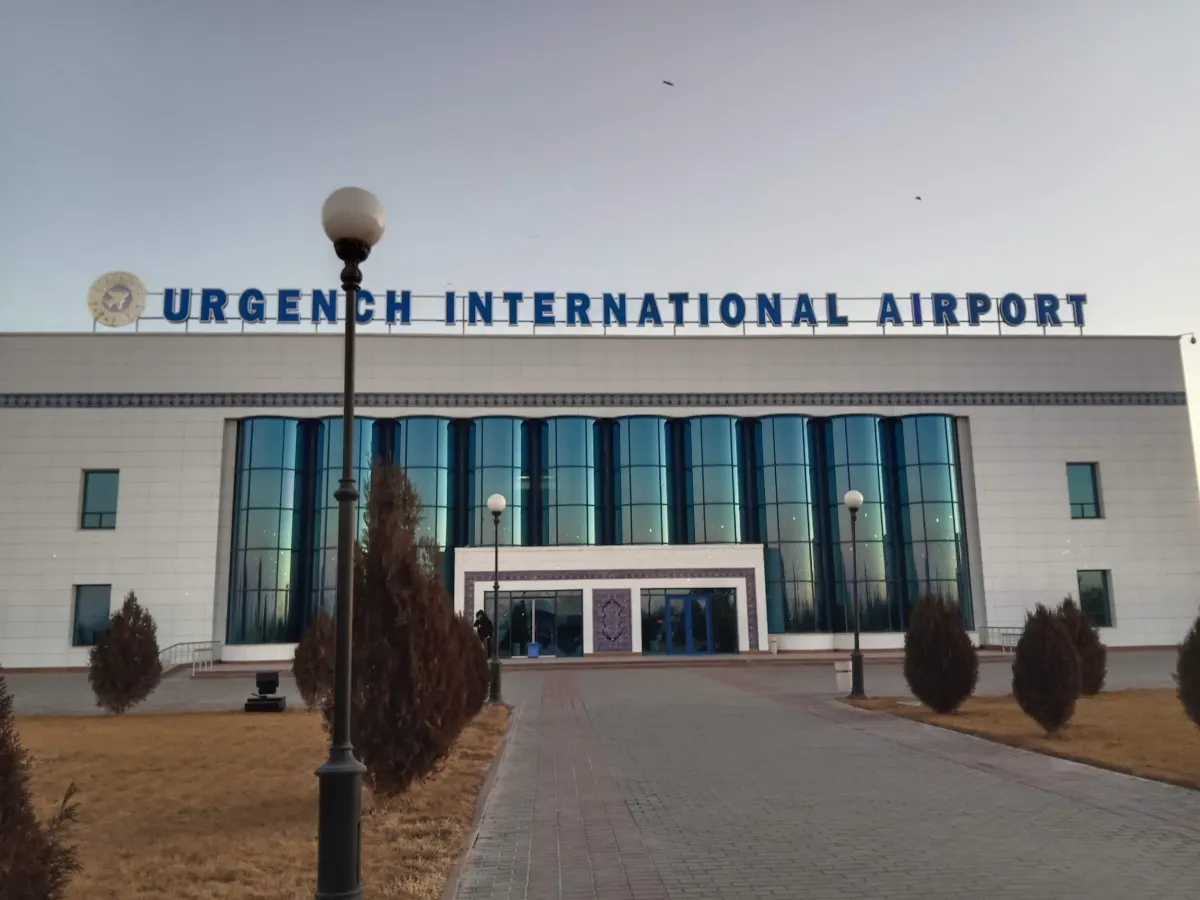
- Most flights land at Tashkent's Islam Karimov airport, close to the city centre. There are also international flights to Samarkand, Bukhara, Urgench (for Khiva) and Fergana, mainly from Istanbul, Russia and the Gulf.
- Flying into one city and out of another, such as arriving in Tashkent and leaving from Urgench or Samarkand, saves backtracking.
- Have Yandex Go (see Phones and apps) ready, or ask your hotel to arrange a car, and change a little money or use an airport ATM (see Money). Ignore the drivers who approach you in the arrivals hall.
Land borders
- You can cross by land from Kazakhstan, Kyrgyzstan, Tajikistan and Turkmenistan. Crossings can open and close, hours vary and queues can be long in summer and at holidays, so check which one is open to foreigners shortly before you go.
- The main crossing from Kazakhstan is north of Tashkent on the road to Shymkent. The Panjakent crossing links Samarkand with Tajikistan, and there are crossings to Kyrgyzstan in the Fergana Valley.
- Turkmenistan needs a visa arranged in advance, usually with a tour.
- The crossing into Afghanistan at Termez is closed to foreigners, according to the UK government, and Canada says to avoid all travel within 5 km of that border.
Customs and cash
- You can bring in any amount of cash, but the Uzbek Tourism Committee says that if you have more than the equivalent of 100 million som (somewhere around US$8,500 in late 2026) you must declare all of it on arrival. Foreign governments quote other limits, so if you're carrying a lot, declare it. Keep the stamped copy of the form until you leave: it's the proof that the money came in with you.
- You can't take out more foreign currency than you brought in.
- Medicines are checked, and some common ones are controlled: see Safety, the law and medicines.
- Antiques and anything 50 years old or more need a certificate from the Ministry of Culture. New carpets, ceramics and souvenirs don't, but keep receipts.
- Drones are largely prohibited: don't bring one without an import licence and written permission.
See also Getting around Uzbekistan, Safety, the law and medicines and When to go.
Comments
No comments yet.