
Money in Uzbekistan: som, cards or cash, ATMs, changing dollars and tipping
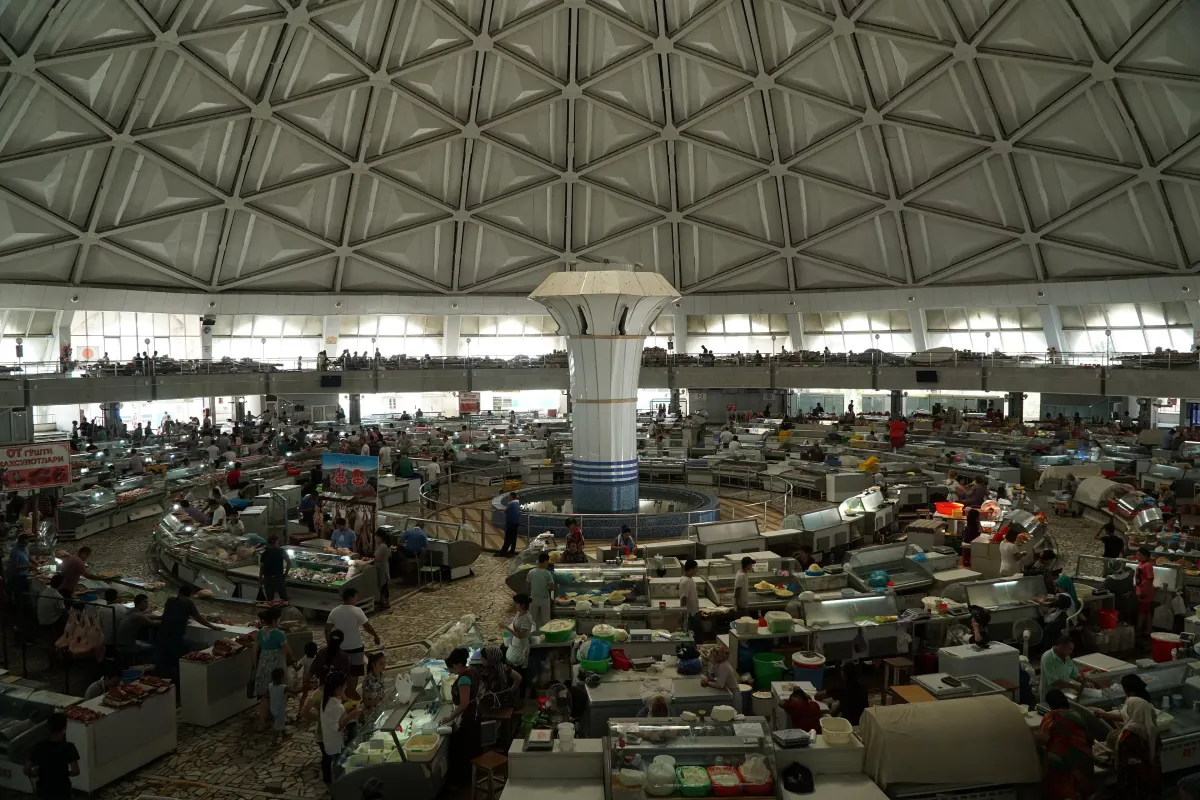
Uzbekistan's currency is the som (so'm, UZS). Until 2017 many visitors changed money on the black market for bagfuls of notes. Now you can change money at any bank, ATMs give som, and cards work in the cities. You still need cash in the bazaars, on the road, and in small towns.
Som
- One US dollar was worth roughly 12,000 som in 2026, so even ordinary meals cost tens of thousands. Check the current rate, and round it in your head.
- You can't buy som before you arrive, and shouldn't take more of it home than you need to: change leftovers back at a bank. Keep the exchange receipts.
- Prices are often written with the zeros left off, or said as "thousand", so check which is meant. Count your notes: bigger ones look alike in colour.
Changing money
- Bring US dollars or euros in clean, unmarked, recent notes: banks and exchange booths refuse damaged ones, and US dollars from before 2013. Other currencies are harder to change.
- Change money only at banks and official exchange desks, and at hotels and airports if you must. The black market is illegal, and gets you cheated or fined.
- Bank desks need your passport. The rate at an airport can be worse than in town.
- Keep a reserve of dollars in case the ATMs let you down.
ATMs
- ATMs that take Visa and Mastercard are common in Tashkent, Samarkand, Bukhara and Khiva, at banks and big hotels, and some let you use contactless. They're scarcer in small towns and the Fergana Valley, and in Karakalpakstan and the desert, so withdraw before you go.
- They give som only. A guide in 2025 put the limit at about 3 million som a time on most machines, so you may need several withdrawals. Ask your bank about its fees and decline any offer to convert to your own currency.
- Tell your bank that you're travelling, and bring two cards.
Cards
- Visa and Mastercard are widely accepted in larger hotels, restaurants, supermarkets and shops in the cities. Contactless and phone payments work, including on the Tashkent metro. Uzbek cards (Uzcard and Humo) and Click or Payme QR codes are for residents.
- Market stalls, street food, small cafés, guesthouses, shared taxis and public toilets usually want cash.
- Cards issued in Russia often don't work.
Things you can't buy with cash
- Since 1 April 2026, alcohol, tobacco, petrol and gas can't be bought with cash, only by card or QR payment. No exception for foreigners has been reported, so carry a card if you want any of these. Very large payments must also be cashless.
Prices and the tourist levy
- Uzbekistan is cheap by Western standards. A budget traveller can eat for about 120,000 to 200,000 som a day, and a mid-range hotel room costs about US$55 to 100, according to a guide in September 2026.
- Museums and monuments charge foreigners more than locals: see Samarkand, Bukhara and Khiva. A nightly tourist levy is added to your hotel bill: see Arriving.
- Foreign visitors can claim a VAT refund on some shopping at certain shops. Ask at the till before you pay.
Tipping and bargaining
- Tipping isn't expected, but many restaurants add a service charge, so check the bill. If there's none, rounding up or leaving about 10% is kind. Guides and drivers on tours appreciate a tip.
- Bargain at bazaars for souvenirs, crafts and carpets, not for food with a price. Start by asking the price, smile, and offer less. Shops with fixed prices don't bargain.
Tips for money
- Split your cash and cards between different bags, and watch your pockets in markets (see Safety).
- Keep small notes of 5,000 and 10,000 som for buses, taxis, toilets and tips.
- Declare large amounts of cash on arrival: see Arriving in Uzbekistan.
Comments
No comments yet.