
Samarkand, Bukhara and Khiva: how long to stay, tickets, opening hours, guides and the best times of day
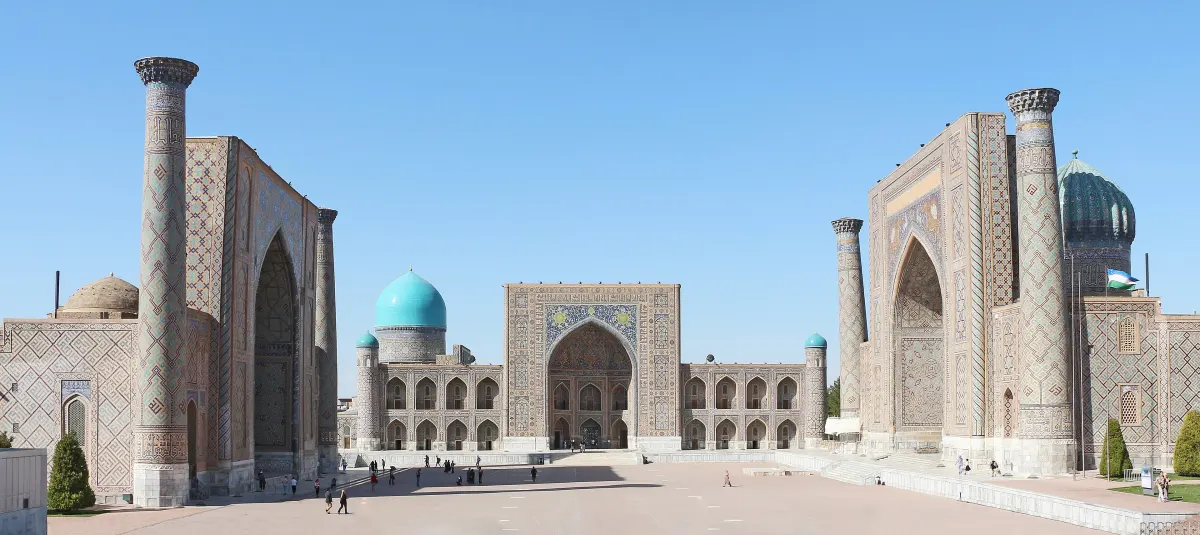
Uzbekistan's three great Silk Road cities are very different. Samarkand has the grandest blue-tiled monuments, Bukhara a living old town to wander in, and Khiva a complete walled city that feels like an open-air museum. Together they're the heart of any trip.
How long to stay
- Samarkand: two full days, or three with a day trip to Shahrisabz.
- Bukhara: two days.
- Khiva: one full day and a night. Stay inside or close to the walls, as the old town is at its best before 9 am and after the day visitors leave.
- Tashkent: a day for the metro, the bazaar and the museums.
Tickets
- Each monument has its own ticket, at a higher price for foreigners, and there's no combined pass for Samarkand. Reported prices for foreign adults in September 2026: Registan 100,000 som, Shah-i-Zinda 80,000, Gur-e-Amir 75,000, Bibi-Khanym 65,000. You can see the Registan's façades from outside the ticketed area for free.
- In Bukhara most of the old town is free to walk, and you pay for the Ark (60,000) and individual museums.
- Khiva sells a ticket for the walled city's museums, about 250,000 som in 2026, said to be valid for two days. The Islam Khodja minaret and the walk on the walls can cost extra, and some visitors say hotel guests inside the walls come and go without it.
- Some places charge a small extra fee for a camera. Bring cash in small notes, though ticket offices in the cities often take cards.
- Prices rise often, so treat these as a guide.
Opening hours
- As a rule, monuments open from about 8 or 9 am to 5 or 7 pm, shorter in winter. Some, such as the Registan, stay open or lit into the evening. Official hours differ between sources and change with the season, so check at your hotel, or the day before.
- Mosques close to visitors at prayer times, and some museums close one day a week, often Monday or Tuesday.
The best times of day
- Go early in summer, before the heat, and to see the tiles in soft light. Shah-i-Zinda is at its quietest and loveliest first thing.
- Go back in the evening. The Registan, Gur-e-Amir, the Kalyan minaret and Khiva's walls are lit up after dark.
- Midday is for a long lunch, a museum or a rest.
Guides
- A local guide for half a day is worth it at least once in each city, because few monuments have good English signs. Book through your hotel or a tourist information office, or with a licensed guide, and agree the price, what's included and the time.
- People who offer to guide you at the gate, or to show you a shop, may earn commission. A polite "no thank you" is enough.
Samarkand
Start at the Registan, with its three madrasas, then Gur-e-Amir, the tomb of Timur (Tamerlane). On another morning walk to Bibi-Khanym and Siab Bazaar, and up to Shah-i-Zinda. The Afrasiyab Museum has wonderful Sogdian wall paintings, and Ulugh Beg's observatory is nearby.

Registan, Samarkand
The great public square of Samarkand, framed by three monumental madrasas from the 15th to 17th centuries, covered in blue and turquoise tilework, on…

Shah-i-Zinda, Samarkand
An avenue of mausoleums climbing a hillside, built from the 11th to the 19th centuries, with some of the most beautiful glazed tilework in Central As…
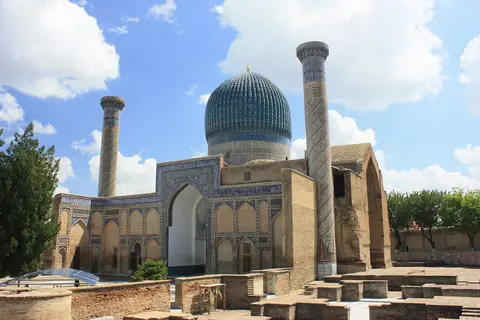
Gur-e-Amir, Samarkand
The mausoleum of Timur (Tamerlane), the 14th-century conqueror, with a ribbed turquoise dome over a hall glittering with gold leaf and onyx.
Bukhara
Old Bukhara is best on foot: start at Lyabi-Hauz, walk through the domed trading arcades to the Po-i-Kalyan mosque and minaret, and go on to the Ark fortress and the Samanid Mausoleum. Craft workshops fill the old caravanserais.

Old Bukhara
A holy Silk Road city with more than 140 monuments, a UNESCO World Heritage Site.
Khiva
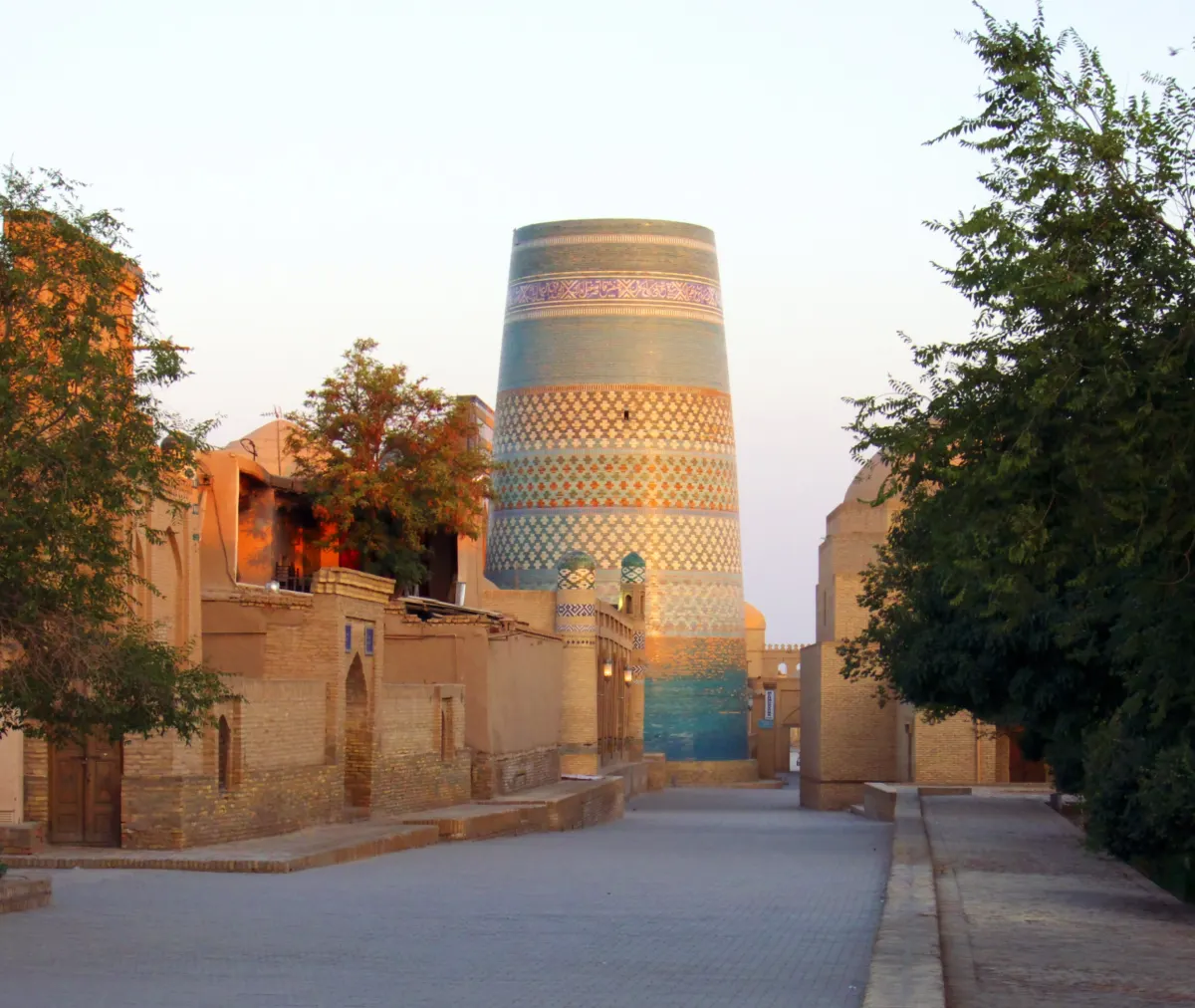
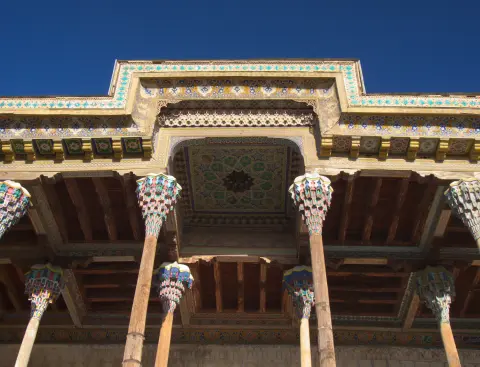
In Itchan Kala see the short, tiled Kalta Minor, the Kunya Ark (the old citadel), the Juma Mosque with its forest of carved wooden columns, and the Tash Hauli palace. Climb the Islam Khodja minaret or walk along the walls for the view, best at sunset.

Itchan Kala, Khiva
The walled inner town of Khiva, a remarkably complete Silk Road city of mud-brick walls, madrasas, minarets and palaces, a UNESCO World Heritage Site.
Tips for visiting
- Carry cash in small notes, water, a hat and a scarf for women in mosques (see Culture and etiquette).
- Crowds are biggest from late March to May and September to October. Stay out of the way of wedding parties, and ask before you photograph people.
- If you buy suzani embroidery, ceramics or a carpet, compare several workshops and bargain kindly. See Money.
See also the route in 7 days in Uzbekistan.


Comments
No comments yet.