
Culture and etiquette in Armenia: churches and monasteries, the Genocide Memorial, language and hospitality
Armenia is one of the oldest Christian nations, with its own church, its own alphabet and a long, often tragic history that shapes how Armenians see the world. A little background, and a little care in churches and in conversation, goes a long way.
The Armenian Apostolic Church
- Armenia is traditionally said to have become the first country to adopt Christianity as its state religion, in 301 AD. Most Armenians belong to the Armenian Apostolic Church, whose head, the Catholicos, sits at Etchmiadzin, west of Yerevan.
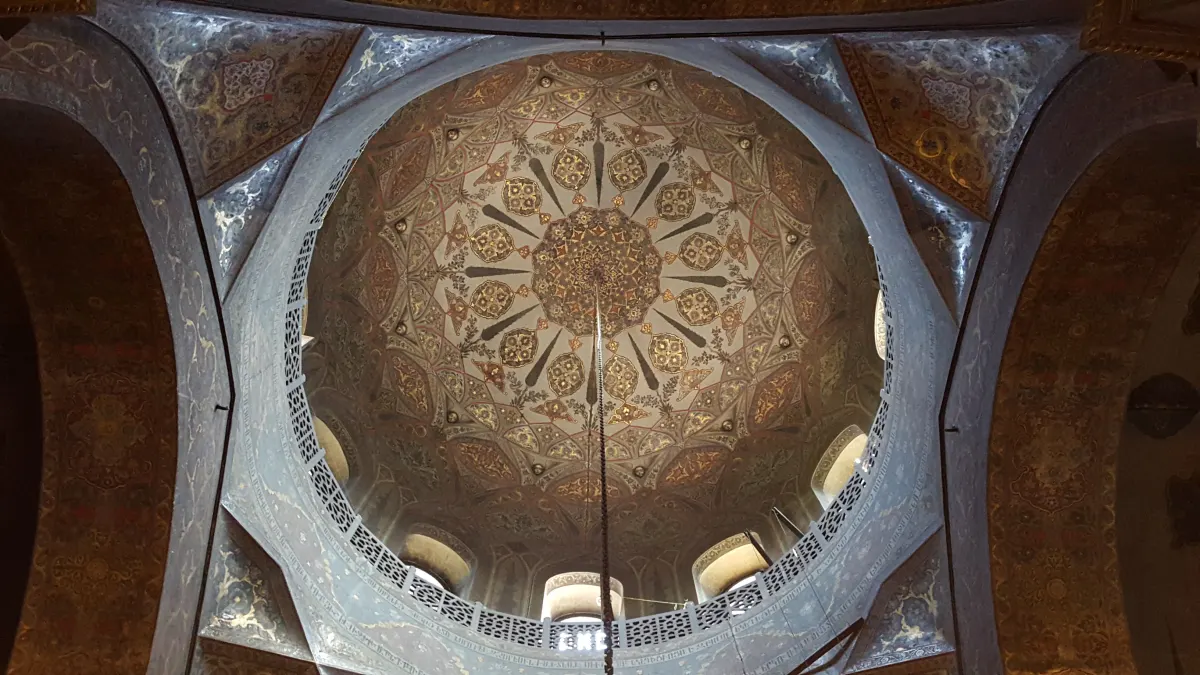
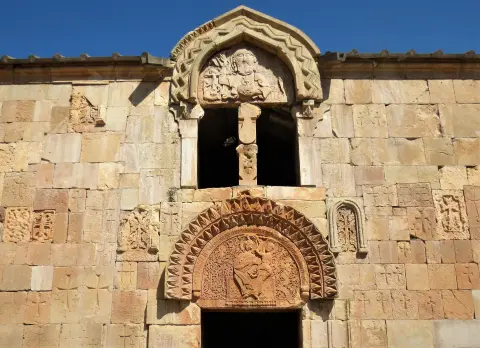
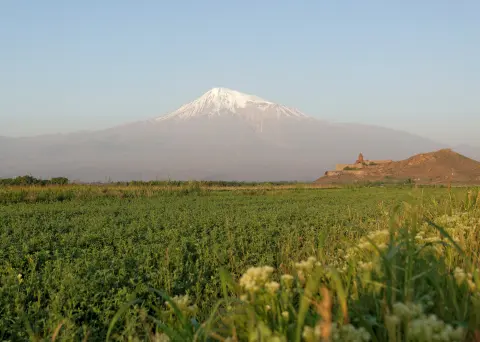
- Its churches are usually small and dark, built of stone, with a conical dome, little decoration inside and candles burning in trays of sand. Many of the most beautiful are in remote monasteries: Geghard, Noravank, Tatev, Haghpat and Sanahin, and Khor Virap, below Mount Ararat.
- Khachkars, carved stone crosses, stand everywhere, in churchyards, by roads and in fields. No two are the same, and their craft is on UNESCO's list of intangible cultural heritage.
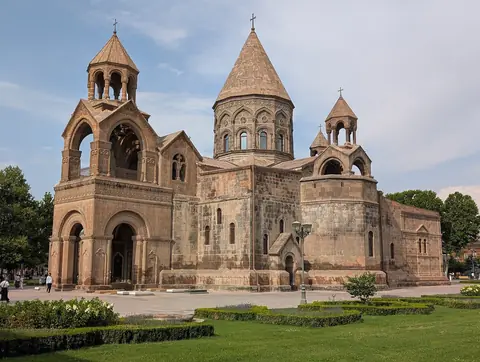
Etchmiadzin Cathedral
The mother church of the Armenian Apostolic Church, considered the oldest cathedral in the world, first built in 301–303 after Armenia became the fir…
Visiting churches and monasteries
- Dress modestly: cover your shoulders, and wear long trousers or a skirt below the knee. Some Armenian women cover their hair in church, and visitors are welcome to do the same.
- Be quiet, especially during a service, and don't walk in front of people praying. Buying and lighting a thin candle is a nice gesture.
- Photography is usually allowed, but not during services or of the clergy without asking. Some churches ask you not to use a flash.
- You may see Armenians leave a church walking backwards, so as not to turn their back on the altar. You don't have to do the same.
- Small sacrifices of animals, called matagh, still take place at some monasteries, including Geghard. It's a tradition, not a show, so be respectful.
The Genocide Memorial
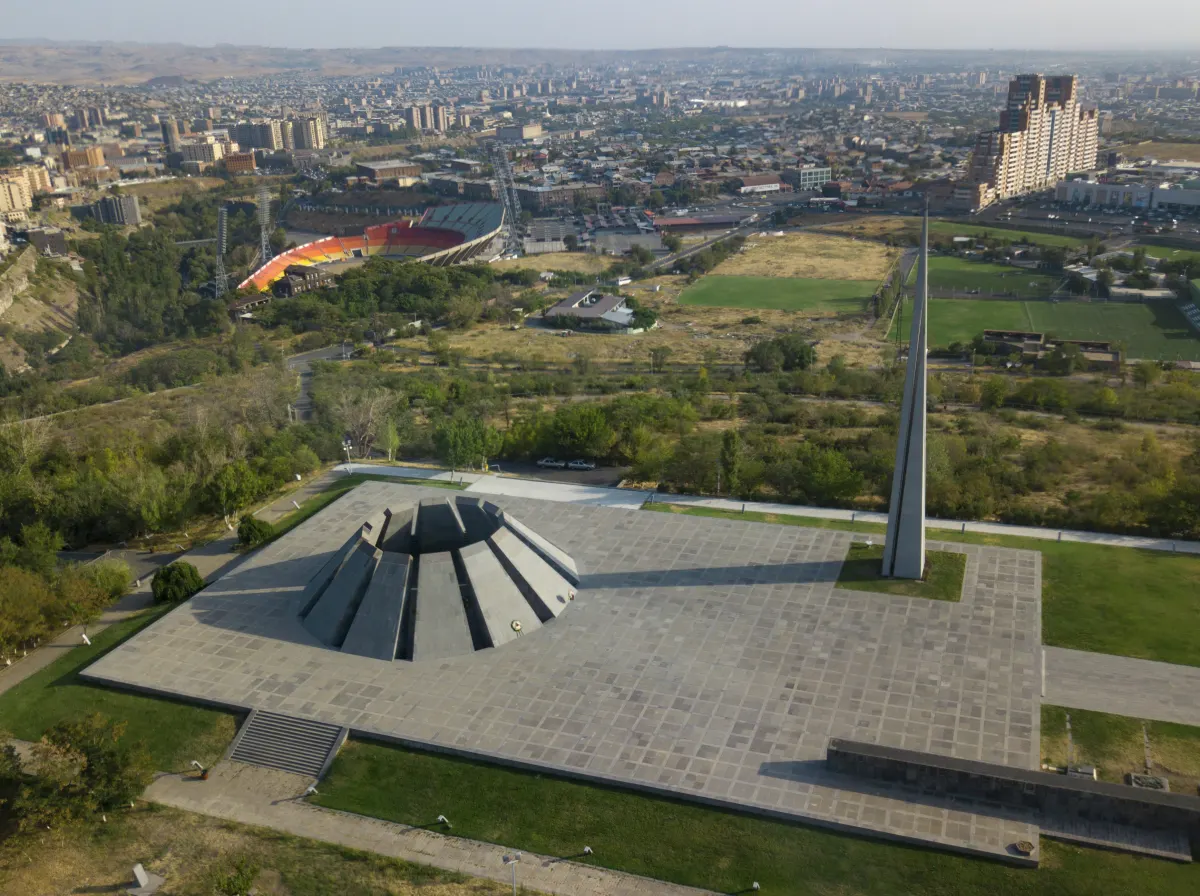
Tsitsernakaberd, on a hill above Yerevan, remembers the Armenians killed in the Ottoman Empire from 1915, up to about 1.5 million people, in what most historians and many countries call a genocide. Its eternal flame, the memorial wall and the museum beside it are central to Armenian identity: nearly every Armenian family was touched by it, and many descend from survivors.
- On 24 April, Remembrance Day, hundreds of thousands of people walk up the hill to lay flowers around the flame. Visitors are welcome to join quietly.
- The museum is free, and takes a couple of hours. It's hard going, but it explains a great deal about the country.
Subjects to handle with care
- The genocide, Turkey, Azerbaijan and Nagorno-Karabakh, which most Armenians left in 2023, are painful subjects. Listen rather than argue, and don't deny the genocide in conversation.
- Mount Ararat, the national symbol, on coats of arms, brandy labels and in every view from Yerevan, is across the border in Turkey. Many Armenians feel strongly about it.
- More Armenians live abroad than in Armenia, in a diaspora from Los Angeles to Moscow, Beirut and Marseille. You'll meet many visiting the country of their grandparents.
- Armenia is socially conservative outside central Yerevan. Same-sex relationships are legal, but many people disapprove, and public affection may draw hostile attention.
Language
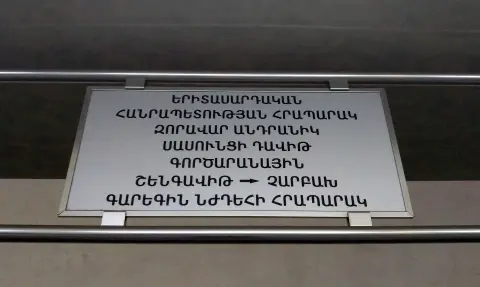
- Armenian has its own alphabet, created by the monk Mesrop Mashtots in the early 5th century. The Matenadaran in Yerevan holds thousands of old Armenian manuscripts.
- Most people over 40 speak Russian, and many young people in Yerevan speak good English. Outside the capital, Russian is more useful than English.
- A few words help: barev dzez (hello), shnorhakalutyun (thank you, though many people say merci), ayo (yes), voch (no).
Hospitality
Armenians are famously hospitable. If you're invited into a home, take your shoes off at the door if your hosts do, bring something small, such as sweets or a gift from home, and expect to be fed and toasted for hours: see Armenian food, wine and brandy. In family guesthouses, breakfast and dinner with your hosts are often the highlight of a stay.
Military sites
It's illegal to photograph military bases, equipment and installations, and there are many near the borders. If you're not sure, don't. See Safety in Armenia.
Comments
No comments yet.