
Wildlife safaris in Sri Lanka, done responsibly: Yala, Udawalawe, Minneriya, elephants and whale watching
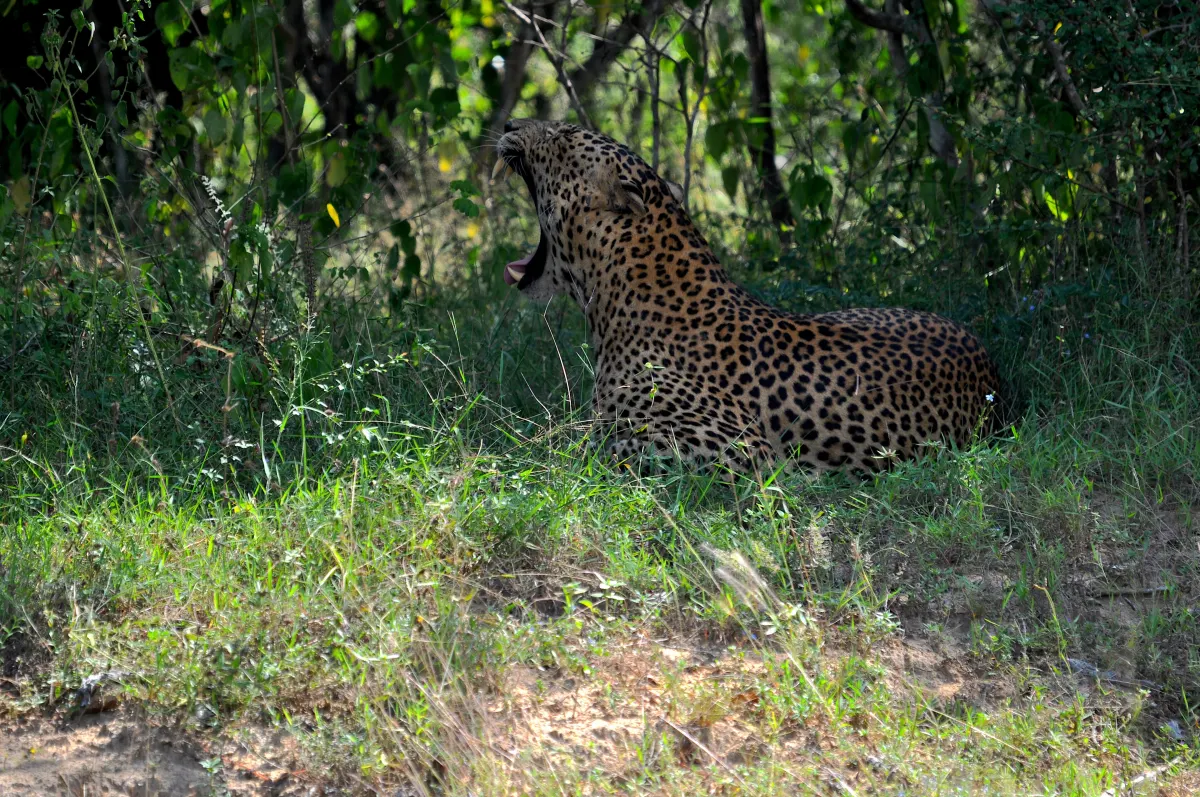
Sri Lanka is one of the best places in Asia to see wildlife: leopards in Yala and Wilpattu, herds of wild elephants almost everywhere, blue whales off the south coast, and hundreds of kinds of birds. But popular parks have become crowded, with jeeps racing to sightings, so it's worth choosing carefully.
Which national park?
- Yala, in the south-east, has one of the world's highest densities of leopards, and sloth bears, elephants and crocodiles. Block 1, the most visited part, is very crowded at peak times; other blocks are quieter. Parts of Yala usually close for some weeks in the dry season (around September and October): in 2026, Blocks 1 and 2 were closed from 14 September to 15 October.
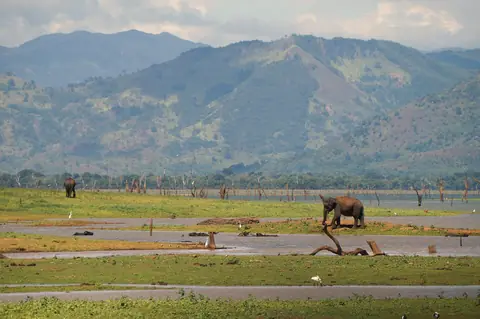
- Udawalawe, between the hills and the south coast, is the most reliable park for elephants, which you see in herds all year round. The Elephant Transit Home next to the park raises orphaned elephants and releases them into the wild.
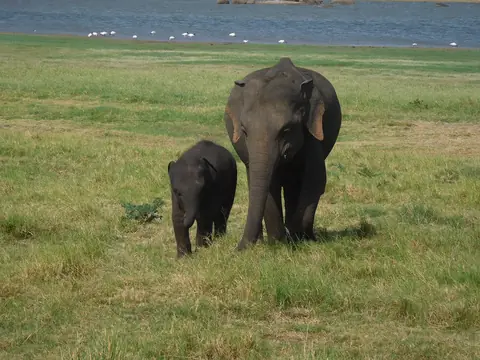
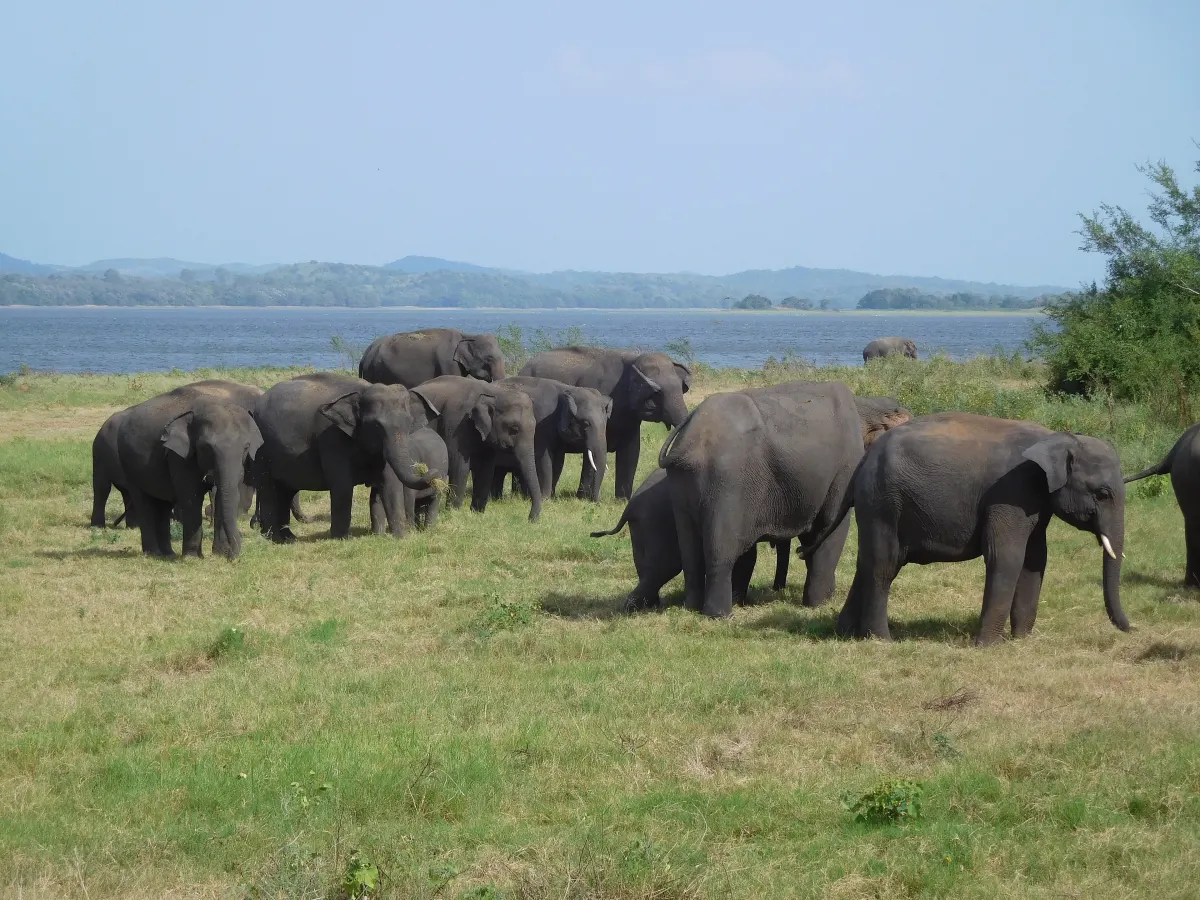
- Minneriya, Kaudulla and Hurulu Eco Park, in the Cultural Triangle, are where the Gathering happens: from about July to October, hundreds of elephants come to the shrinking reservoirs to feed. The elephants move between the three parks, and jeep drivers know which one to go to.
- Wilpattu, in the north-west, is bigger, wilder and much quieter than Yala, with leopards and sloth bears among lakes (villus) and forest.
- Sinharaja is rainforest rather than safari country: walk with a guide for endemic birds, monkeys and lizards.
- Horton Plains, in the hills, has sambar deer and endemic birds on the walk to World's End.

Yala National Park
Sri Lanka's most famous wildlife park, with one of the highest densities of leopards in the world, as well as elephants, sloth bears, crocodiles and …
Udawalawe National Park
One of the best places in Asia to see wild elephants: herds of hundreds live in the open grassland and scrub around the Udawalawe reservoir.
Minneriya National Park: the Gathering
From about July to October, in the dry season, hundreds of Asian elephants come to the grassy shores of the ancient Minneriya reservoir to eat and dr…
Choosing a safari
- Safaris are in open jeeps with a driver, usually for a morning (from about 6 am) or an afternoon, or a full day. Only jeeps and drivers licensed by the Department of Wildlife Conservation (DWC) may take visitors into the parks, and a DWC tracker usually rides with you.
- Book through your hotel or a well-reviewed operator, and say you want a driver who keeps to the speed limit and the tracks, doesn't chase animals, and turns the engine off at sightings. Rushing jeeps have hit and stressed animals, and crowding round leopards is a well-known problem in Yala.
- Don't ask the driver to get closer, get out of the jeep, make noise or feed animals. Tip the driver and tracker for a good, calm safari, not for "getting" a leopard.
- Go to a quieter park or block, or at a quieter time, if you can: you'll often see more.
- Bring binoculars, a hat, sun cream, water and a scarf or mask for the dust.
Elephants outside the parks
- Wild elephants cross roads, especially around Udawalawe, Habarana and the Cultural Triangle, and on the road from Wellawaya. Never feed them from the car, however tame they seem: fed elephants become aggressive and get killed. Keep your distance, and never approach on foot.
- Avoid elephant rides and places where elephants are chained, made to perform or bathed for tourists. Animal welfare groups have criticised several elephant "orphanages" and parks for this. Seeing elephants in the wild, or at the Elephant Transit Home, is the better choice.
Whale and dolphin watching
- Blue whales, sperm whales and spinner dolphins live close to Sri Lanka's coast. Boats leave from Mirissa, on the south coast, from about November to April, and from Trincomalee, on the east coast, roughly from May to September, though the seasons vary from year to year.
- Whale watching is regulated: boats must be licensed, must keep their distance and must not chase or surround whales, and swimming with whales is not allowed. But a 2024 study found that most operators in Mirissa and Trincomalee broke the rules.
- Choose an operator that gives a safety briefing, has life jackets and shade, limits passenger numbers, and says it follows the DWC rules, and don't pay extra to swim with whales.
- Trips start early and can take five hours or more in a rolling sea, so take seasickness tablets if you need them.

Mirissa whale watching
Mirissa is one of the best places in the world to see blue whales, the largest animals ever, from November to April, as well as sperm whales and dolp…
Turtles and birds
- Several kinds of sea turtle nest on Sri Lanka's beaches. Avoid hatcheries that keep turtles in tanks for tourists; watch nesting with a guide at night, without lights, or snorkel with turtles in the sea without touching them.
- Sri Lanka has more than 30 kinds of birds found nowhere else. Sinharaja, Horton Plains and Kitulgala are good places to see them, best with a bird guide.
See also: Weather and the best time to go, Money for park fees, and two weeks in Sri Lanka, which includes a safari.

Comments
No comments yet.