
Getting around Sri Lanka: trains, buses, tuk-tuks, PickMe and Uber, and hiring a driver
Sri Lanka is small, but travel is slow: roads are narrow and busy, and 100 km can take three hours in the hills. Most visitors either hire a car and driver for some or all of their trip, or mix trains, buses and tuk-tuks, which is much cheaper and more fun, but slower.
A car and driver
- Hiring a car (or a van, for a group) with a driver is the most popular way to see Sri Lanka, and not expensive by Western standards. The driver takes you from place to place, waits while you sightsee, and finds his own room for the night, which is usually included in the price.
- Book through a tour agency or a hotel, or a driver recommended by other travellers. Drivers licensed by the Sri Lanka Tourism Development Authority (SLTDA) as chauffeur guides can also guide you round sites; others are just drivers.
- Agree in writing what's included: fuel, the driver's food and room, highway tolls, parking, and how many hours a day. Entrance fees are always extra.
- Drivers often take you to shops, spice gardens and gem dealers that pay them commission. Say at the start that you don't want to stop at shops, and politely say no.
- A tip for the driver at the end of the trip, by the day, is usual if you're happy.
- In 2026, the government rationed fuel with weekly quotas because of shortages linked to the conflict in the Middle East, with extra allowances for licensed tourist transport. Ask your agency or driver whether it affects your plans.
Trains
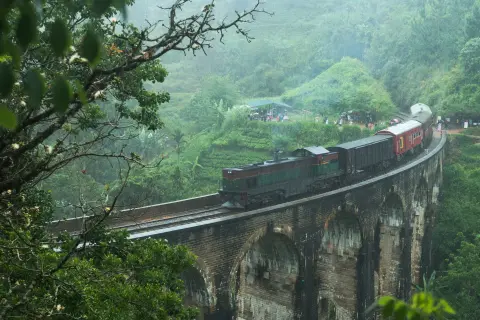
Sri Lanka's trains are slow, old and wonderful: the hill country line to Ella through the tea plantations is one of the world's great train rides, and the coast line south from Colombo to Galle runs right beside the sea. The railway was badly damaged by Cyclone Ditwah in November 2025, and some of the main line through the hills is still closed. See The hill country train for what's running and how to book.
- There are three classes: first class (air-conditioned, or an observation saloon on some trains), second class, with fans and open windows, and crowded third class. Reserved seats are sold online and at stations; unreserved tickets are sold at the station on the day.
- Stay inside the carriage while the train moves: people die every year after hanging out of the doors for photos.
Buses
- Buses go almost everywhere, very cheaply. Red buses belong to the state-run Sri Lanka Transport Board; private buses are often more colourful and faster, and louder. Pay the conductor on board.
- Air-conditioned intercity buses, such as the expressway buses from Colombo to Galle and Matara, and buses from Colombo to Kandy, are quicker and more comfortable.
- Ordinary buses are often packed and driven fast and hard. Put big bags at the back or by the driver, keep valuables on you, and leave the front seats for monks, who sit there by custom.
Tuk-tuks, PickMe and Uber
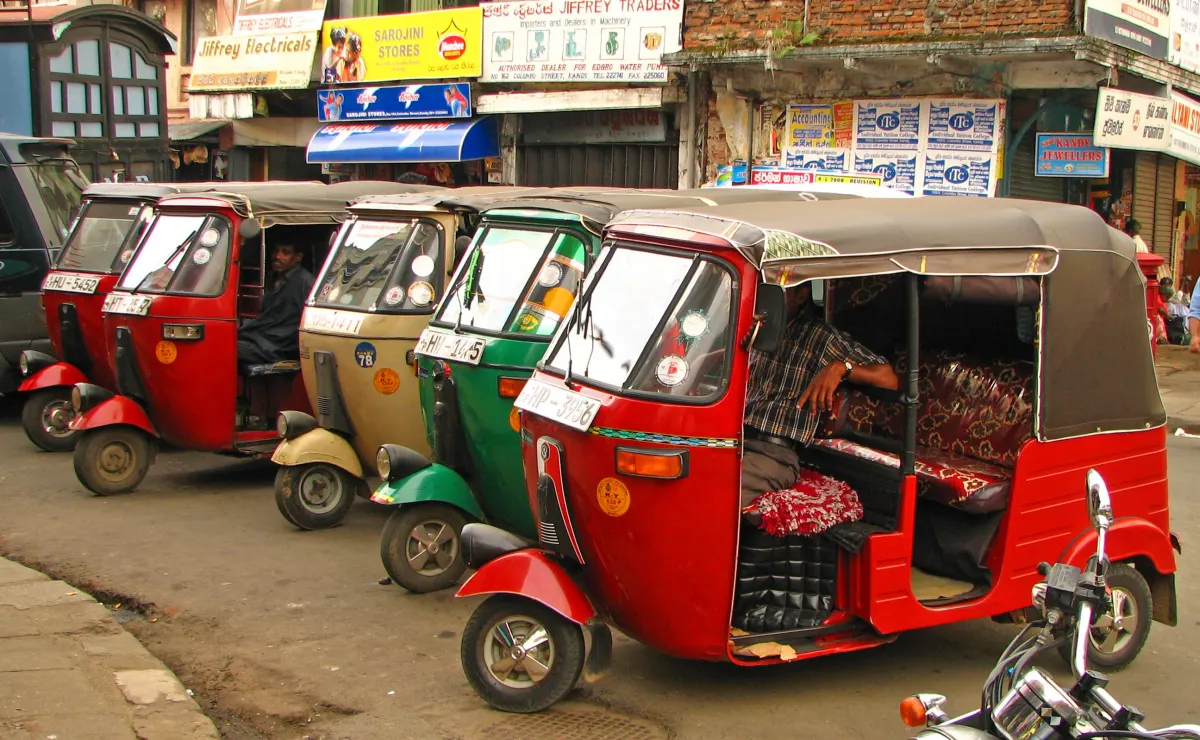
- Tuk-tuks (three-wheelers) are everywhere, for short trips and for day trips round a town. In Colombo, many have meters; elsewhere, agree the price before you get in, and ask your hotel what a fair fare is.
- The ride-hailing apps PickMe, a Sri Lankan company, and Uber work in Colombo, the airport, Kandy, Galle and other big towns, for tuk-tuks and cars. You see the fare in advance, which avoids haggling. They're harder to find in small places.
- If a tuk-tuk driver makes you uncomfortable, especially at night, get out somewhere busy and find another one.
- Drivers who offer to take you somewhere cheaply, or for free, usually plan to stop at a gem shop or spice garden. See Safety and scams.
Driving yourself
- Driving is on the left, but driving in Sri Lanka is hard: roads are full of buses overtaking on bends, tuk-tuks, dogs, cattle and pedestrians, and accidents are frequent, especially at night.
- To drive, you need an International Driving Permit (1949 convention) and a Sri Lankan recognition permit, from the Automobile Association of Ceylon in Colombo. Only rent from an SLTDA-registered company.
- Renting a scooter or tuk-tuk to drive yourself is popular in beach towns and around Ella, but the same rules apply, and your travel insurance may not cover you.
Domestic flights and seaplanes
There are few domestic flights: some air taxis and seaplanes fly between Colombo and places like Kandy, the south coast and Trincomalee, but they're expensive, and most people travel by road.
See also: 7 days in the Cultural Triangle and Kandy and Two weeks in Sri Lanka.
Comments
No comments yet.