
Money in Indonesia: rupiah, ATMs and skimming, cards, QRIS, bargaining and tipping
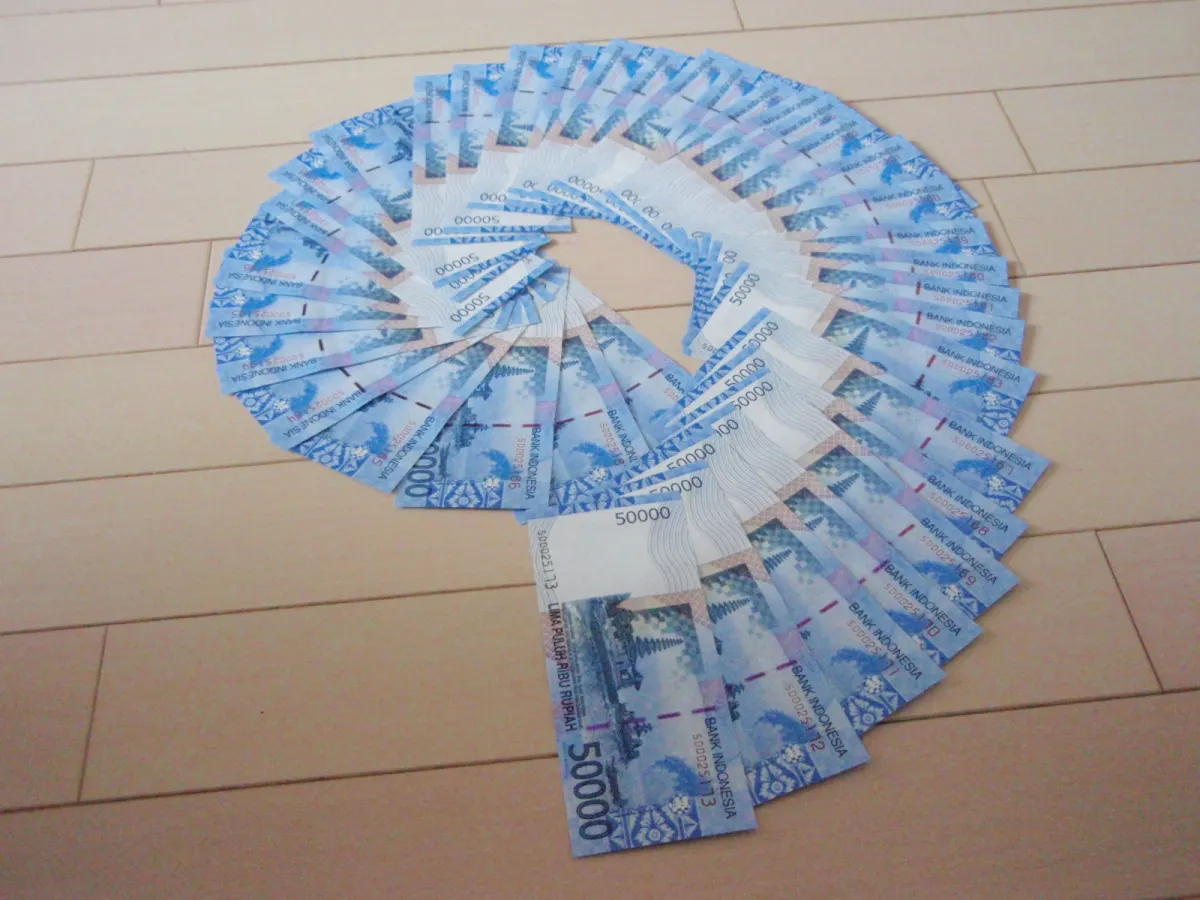
Indonesia's money is the rupiah (IDR, Rp). With more than 15,000 rupiah to the US dollar, prices have a lot of zeros, and a nice dinner can come to a million. Cash is still needed for warungs (small local restaurants), markets, small shops and drivers, but cards and QR payments are taking over in cities and tourist areas.
The banknotes
- Notes run from 1,000 to 100,000 rupiah: the red 100,000 and blue 50,000 notes are the ones you'll use most. Coins (100 to 1,000) are worth little.
- Prices are often written with "k" or without the last three zeros: "35k" or "35" means 35,000 rupiah.
- Small shops and drivers often can't change a 100,000 note, so keep 10,000 to 50,000 notes for small things.
- In Bali, by law, you must pay in rupiah, not in dollars or other currencies.
ATMs and skimming
- ATMs are everywhere in towns and tourist areas, but scarcer in the countryside and on small islands: on the Gilis, Nusa Penida and in Komodo, carry enough cash.
- Most ATMs give 2.5 to 3 million rupiah or so at a time. Many charge a fee, on top of your own bank's.
- Skimming (copying your card with a device fitted to the ATM) is a problem in Bali. Use ATMs inside banks, shopping centres or supermarkets, or at least ones attached to a bank branch, rather than standalone machines in the street. Cover the keypad, and check your account regularly.
- Some machines give the cash before the card: don't walk away without your card.
- If the ATM asks whether to charge you in your home currency or in rupiah, choose rupiah.
Changing money
- Use licensed money changers only: they show a Bank Indonesia logo and a QR code, and the word "berizin" (licensed). Bank branches are also safe.
- Small unlicensed counters in Bali with rates better than everyone else's are often scams: they short-change you with sleight of hand as they count the notes. Count your money yourself before you leave the counter.
- Bring clean, undamaged US dollar or euro notes: older or marked notes get a worse rate, or are refused.
Cards
- Visa and Mastercard are taken in hotels, bigger restaurants, supermarkets and shops in Bali, Jakarta and other cities, though some add a surcharge of around 3%. American Express is less often accepted.
- Contactless payment works in many places in the cities and in Bali.
- Warungs, markets, small shops, drivers and most places away from tourist areas take cash only.
- You can pay for Gojek and Grab rides with a card in the app.
QRIS
QRIS is Indonesia's national QR code payment system: almost every shop, café and even street stall has a QRIS sign, and Indonesians pay by scanning it with a banking or wallet app. Visitors with banking apps from some countries can now pay with it too: the cross-border link covers Thailand, Malaysia, Singapore, Japan, South Korea and China. Check whether your bank supports it. Otherwise, some travel apps and prepaid tourist cards let foreigners pay by QRIS; if not, you'll need cash or a card.
Bargaining
- Bargain at markets, souvenir stalls, and with unmetered drivers and boatmen. Don't bargain in shops with price tags, supermarkets, restaurants, or on ride-hailing apps.
- Start at around half the first price at tourist markets, such as Ubud's art market, and work up. Keep it friendly and smiling; a little Indonesian helps. If you can't agree, walk away politely.
- Once you've agreed a price, pay it.
Tipping
- Tipping isn't expected in local warungs, but it's appreciated, and wages are low.
- Restaurants and hotels in tourist areas often show prices with "++", meaning that a service charge and tax (together often around 15% to 21%) are added to the bill. You don't need to tip on top, though many people leave the small change.
- Drivers and guides: around 50,000 to 100,000 rupiah for a good day with a driver or guide is generous. For a multi-day trek, such as Rinjani, tip the guide and porters together at the end.
- Spa and massage staff, and hotel staff who carry bags: 10,000 to 20,000 rupiah or so.
What things cost
A plate of nasi goreng at a warung costs from around 20,000 to 40,000 rupiah, a nasi Padang meal a little more, a small Bintang beer 30,000 to 50,000 in a bar, and a coffee in a Bali café 30,000 to 50,000. Prices in tourist restaurants in Seminyak, Canggu and Ubud can be close to those at home.


Comments
No comments yet.