
Money in Chile: pesos, cash machines and their fees, cards, changing money, hotel VAT and what things cost
Chile isn't cheap by South American standards, but it's simple: one exchange rate, no black market, and cards nearly everywhere. Cash machines are the expensive part.
The peso
- The Chilean peso is written $ or CLP, with a dot for thousands: $10.000 is ten thousand. In late November 2026 a US dollar was about 1,020 pesos. Look up the day's rate at the central bank.
- Notes: 1,000, 2,000, 5,000, 10,000 and 20,000. Coins: 10, 50, 100 and 500. Cash totals are rounded to the nearest ten.
- A luca is 1,000 pesos, and a gamba 100.
- Prices include 19% VAT (IVA). UF and UTM are units for rents and fines that rise with inflation.
Cash machines
- Most banks' machines charge foreign cards about 5,000 to 9,000 pesos each time, and give no more than 200,000. So take out the most you can. Your own bank may charge too.
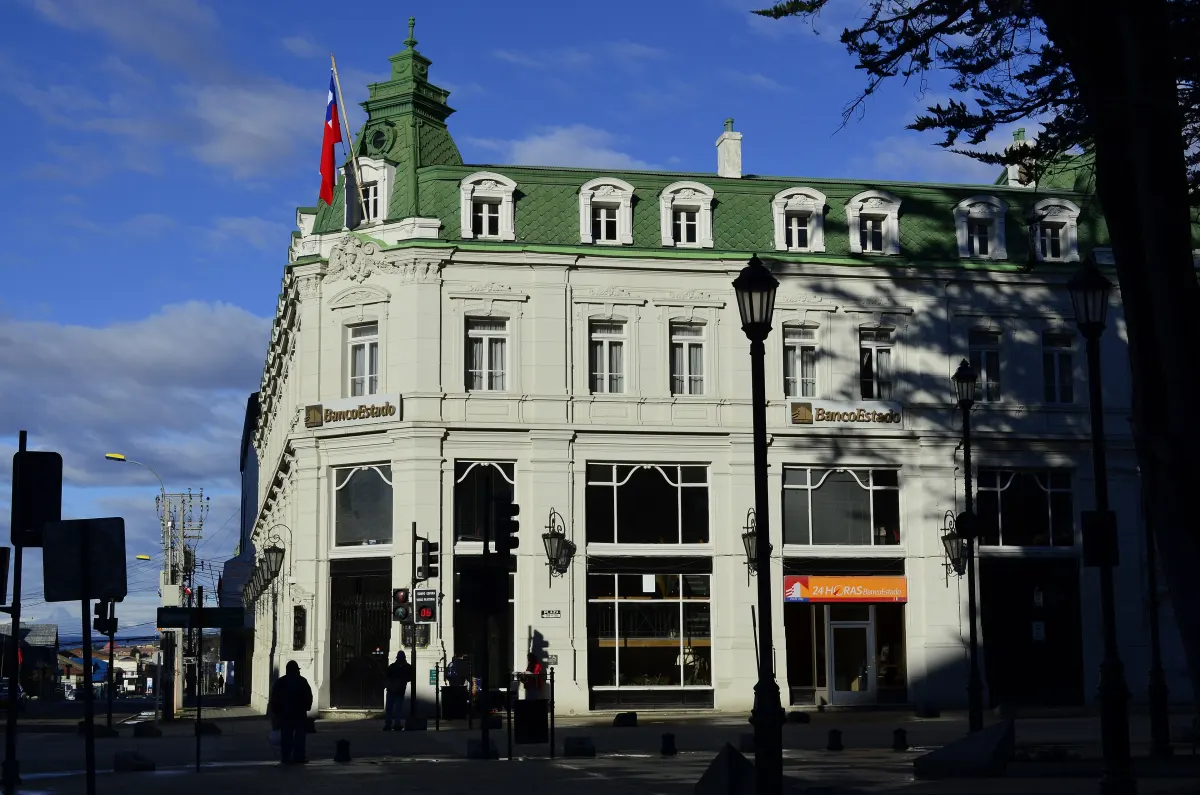
- Travellers report that BancoEstado is at the cheaper end, and a few banks less again. The screen tells you the fee: press no if it's too much, and try another.
- Choose to be charged in pesos. If it asks, choose extranjero (foreign card).
- Use machines inside banks, supermarkets and petrol stations, by day. Cards are copied, and people are followed: see Safety.
- Fill your wallet before San Pedro, the Carretera Austral, Chiloé's villages, Puerto Natales on a busy weekend, and Rapa Nui, where the machines run out.
Cards
- Visa and Mastercard work in shops, restaurants, taxis and even on market stalls, usually contactless. American Express less often.
- You'll be asked ¿Débito o crédito? For a foreign card say crédito. ¿Cuotas? means instalments: say sin cuotas.
- Read the number on the machine, and count the zeros, before you tap.
- Some Chilean websites refuse foreign cards. Try PayPal, or buy at the counter.
- Carry cash for small shops, rural buses, park entrances in the Atacama, toll booths and tips.
Changing money
- Exchange offices (casas de cambio) give fair rates for clean dollars and euros. In Santiago there are many on Agustinas street and in Providencia. Never change in the street.
- The airport's rates are poor. In Puerto Natales and San Pedro you can change Argentine pesos and bolivianos, badly.
Hotels without VAT
- Foreign tourists are exempt from the 19% VAT on rooms in hotels registered for it. Show your passport and PDI slip, and pay in dollars or with a foreign card.
- Many quote foreigners a price in US dollars that already leaves it out. Small guesthouses often aren't registered. Ask ¿Está exento de IVA?
- There have been plans to change this, and to refund VAT on shopping. In late 2026 ask what applies.
Rough prices
- Set lunch (menú) 7,000 to 12,000 pesos. Dinner with a glass of wine 18,000 to 30,000. A completo hot dog 3,000 to 5,000. Coffee 2,500 to 3,500.
- Dorm bed 14,000 to 22,000, double in a guesthouse 45,000 to 70,000, mid-range hotel 80,000 to 130,000. Torres del Paine and Rapa Nui cost much more.
- Bus of three hours 6,000 to 10,000. Litre of petrol: look at the station, as it changes every few weeks.
Bargaining
It isn't usual, apart from a small discount (descuento) in craft markets or for several nights.
Comments