
Driving in Austria: the vignette, tunnel tolls, winter tyres, Alpine passes, Tyrol's exit bans and parking
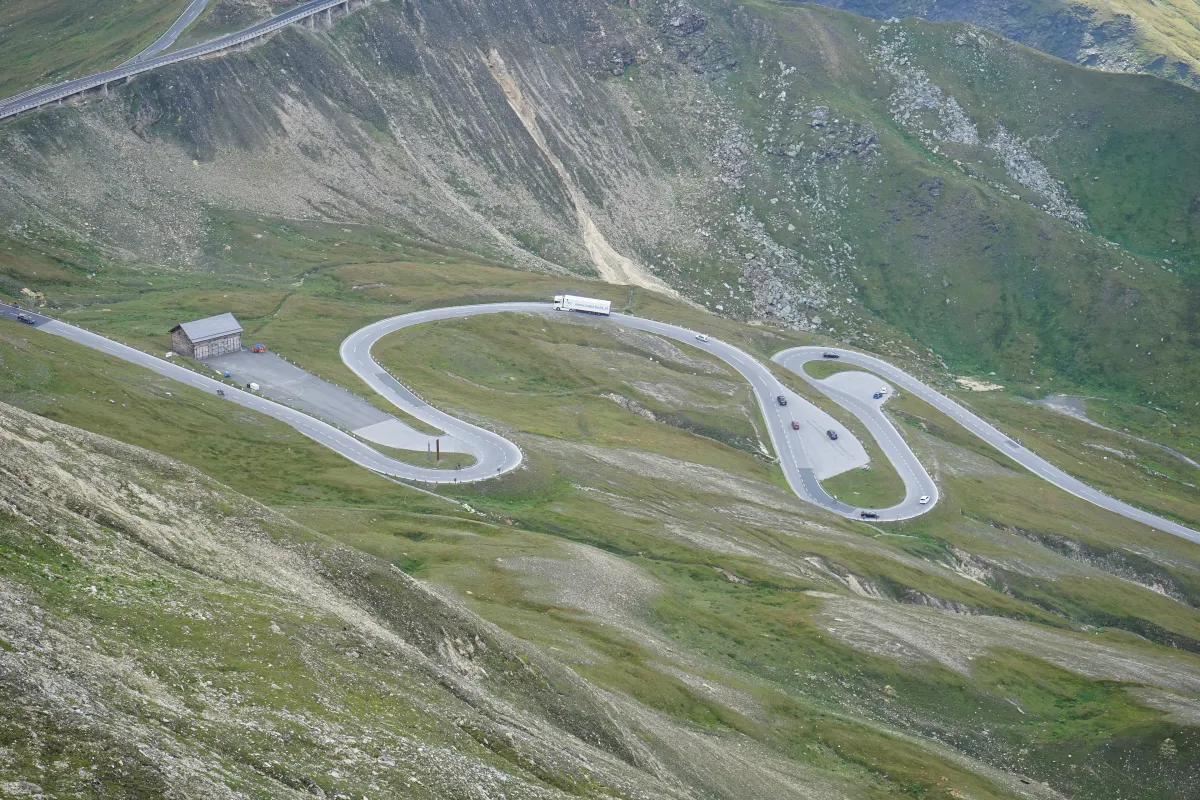
Austria's roads are excellent and its mountain roads are a reason to come. You must pay for the motorways before you use them, carry winter tyres from November to mid-April, and expect queues at weekends. In the cities, leave the car at your hotel.
The vignette
- You need one on all motorways and expressways (A and S roads). From 2027 it's digital only: it's linked to your number plate, and there's no sticker to buy. A 2026 annual sticker is valid until 31 January 2027.
- 2027 prices for a car: 1 day €9.80, 10 days about €13, 2 months €32.60, the year €108.90. 2026 prices (€9.60, €12.80, €32, €106.80) hold until 31 December.
- Buy from ASFINAG's shop or app, the automobile clubs, or at petrol stations near the border. Resellers add a fee.
- A 1 or 10-day vignette can start at once. A 2-month or annual one bought online only starts 18 days later, because of the right to cancel.
- Type the plate and country carefully: a wrong plate counts as no vignette. Cameras check, and the penalty is many times the price.
- Hired in Austria, the car has one. Hired elsewhere, ask.
Section tolls
A few Alpine motorways have a toll of their own, instead of the vignette. In 2026, for a car, one way: Brenner (A13) €12.50, Tauern (A10) €15, Arlberg tunnel (S16) €13, Pyhrn (A9) €7 and €12 for its two tunnels, Karawanken tunnel (A11) €9. Pay at the booth, or online beforehand and drive through. Expect a little more in 2027.
Licence and papers
- EU and EEA licences, and UK photocard licences, are accepted. You must be 18.
- Austria's government says a licence from elsewhere that isn't in German is valid only together with an international driving permit or a translation. That means the USA, Canada, Australia and New Zealand. Get the permit at home.
- Carry the car's papers, a warning triangle, a first aid kit and a reflective vest within reach.
- Under-14s shorter than 135 cm need a child seat.
Rules of the road
- Limits: 50 km/h in towns (30 in many streets), 100 outside, 130 on motorways. IG-L signs cut motorways to 100 for clean air. Cameras are everywhere, and for extreme speeding the police can take the car away.
- Alcohol: 0.5 g per litre, and 0.1 for new drivers.
- Phones in the hand are banned.
- Rettungsgasse: when traffic stops, the left lane pulls left and everyone else right, to leave a corridor for ambulances.
- On narrow mountain roads the car that can stop more easily gives way. Postbuses on signed mountain roads go first.
- Petrol stations may raise prices only once a day, at noon. Fill up in the morning, and off the motorway.
Winter
- From 1 November to 15 April, in snow, slush or ice, a car must have winter tyres on all four wheels (M+S or the snowflake, with enough tread). Without them you can be fined, and blamed for an accident.
- A round blue sign with a chained tyre means snow chains are compulsory there. Carry them for ski villages.
- Hire firms in Austria fit winter tyres, sometimes for a fee. Cars from Italy may not have them.
The high roads
- Grossglockner High Alpine Road: open from about the start of May to the start of November, by day only. It opened on 25 April in 2026. A day ticket was €46.50 (€40 for an electric car) in 2026, or €36.50 after 6 pm. Engines boil and brakes burn: use low gears going down.
- Gerlos Alpine Road, to Krimml, and the Felbertauern tunnel to East Tyrol, are open all year, with tolls of about €12 to €13.
- Timmelsjoch to Italy: €20, usually open from June to October.
- Silvretta road: closed from the Vorarlberg side until about 2030, after landslides. From Tyrol you can drive up free to the lake in summer.
- The Tauern car train doesn't run from 8 February to 9 July 2027.
Where it jams
- Brenner motorway: the Lueg bridge is being rebuilt, and is down to one lane each way on many days until about the end of 2027. ASFINAG publishes a calendar. Avoid Saturdays in ski season and summer.
- Tyrol's exit bans: on summer weekends and holidays (1 May to 1 November in 2026, 7 am to 7 pm), and on ski-season weekends, through traffic may not leave the motorway to dodge a queue, whatever your sat nav says, in the Kufstein, Reutte, Imst, Schwaz and Innsbruck areas. Police turn cars back. You can drive to a hotel there: have the booking with you.
- Tauern motorway (A10) and Fernpass: long queues on Saturdays.
Cities and parking
- Salzburg: in July and August day visitors can't drive through the centre (the Neutor, Staatsbrücke and Rudolfskai area). It began in 2026, with fines of up to €80, and the city says it will return each summer. Hotel guests with a booking are exempt, and the big garages stay reachable. Park and Ride is €7.50 a day with the bus.
- Vienna: every district is a short-stay zone (Kurzparkzone), Monday to Friday 9 am to 10 pm, at €3.40 an hour, for two hours at most. Use the HANDYPARKEN app, or a garage or P+R. Elsewhere look for blue lines.
- In some towns cameras may soon check access to the centre: the law has allowed it since May 2026.
See also Tyrol and the Grossglockner by car, with a route map.

Grossglockner High Alpine Road
A spectacular toll road over the Alps, 48 km with 36 hairpin bends, climbing to 2,504 m, built in the 1930s.

Krimml Waterfalls
Austria's highest waterfalls, plunging 380 m in three stages in the Hohe Tauern National Park.
Comments