
Arriving in Austria: Schengen rules, EES and ETIAS, border checks, customs and getting in from the airport
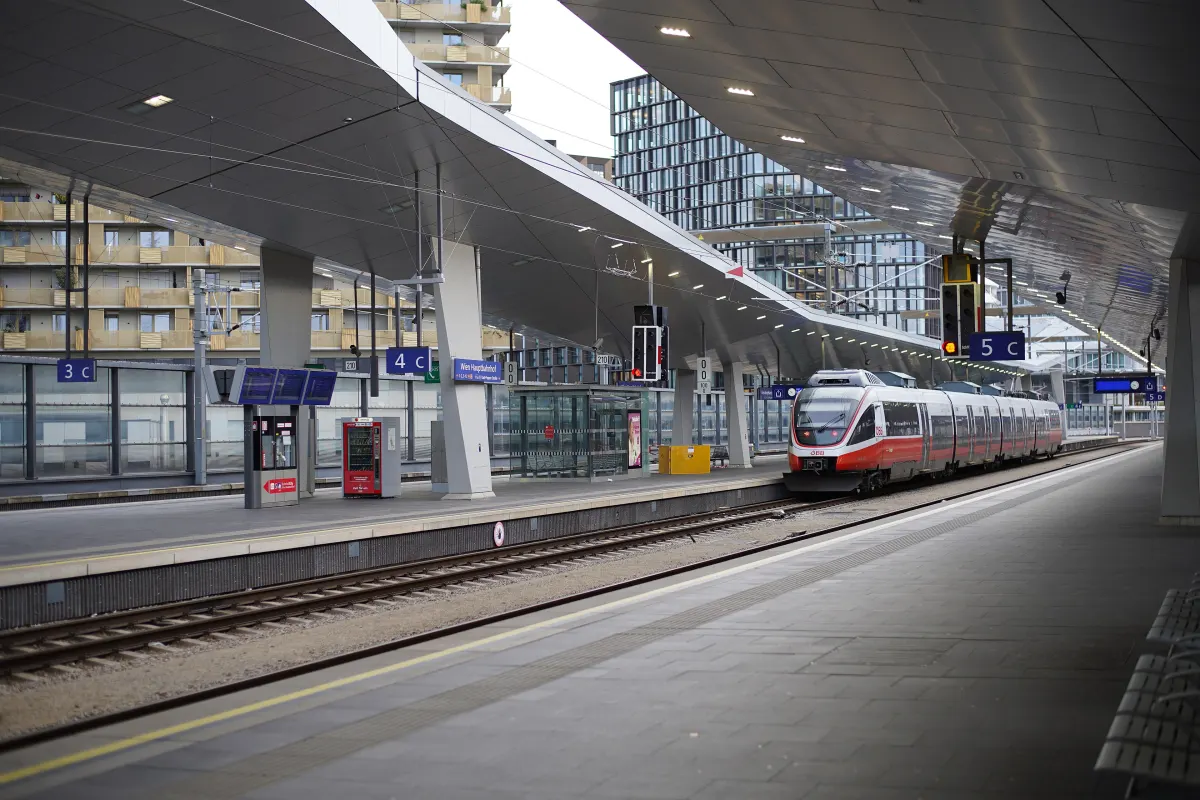
Austria is in the Schengen area, the group of European countries with no routine passport checks between them. Most visitors from outside the EU can come for up to 90 days without a visa. Two new systems matter: EES, which is running, and ETIAS, which isn't yet.
The 90-day rule
- Citizens of the UK, USA, Canada, Australia, New Zealand, Japan, South Korea and many other countries can stay without a visa for up to 90 days in any 180-day period. The days count for the whole Schengen area together, so time in Germany or Italy uses them up too.
- Overstaying can mean a fine and a ban of up to three years.
- EU, EEA and Swiss citizens need only a passport or national identity card. Other nationalities, including Indian, Chinese and South African citizens, normally need a Schengen visa, applied for in advance.
- Austria has old agreements with a few countries, such as Canada, that allow a longer stay in Austria alone. Ask an Austrian embassy in writing before you rely on one.
Your passport
- For visitors from outside the EU, it must have been issued less than 10 years before you arrive, and be valid for at least three months after you leave the Schengen area.
- Border officers can ask for proof of where you're staying, travel insurance, a return or onward ticket and enough money for your stay.
- In Austria you must always be able to show or quickly fetch your passport. A driving licence from home doesn't count as identification.
EES: fingerprints and a photo
- The Entry/Exit System replaces passport stamps for visitors from outside the EU and Schengen. It became fully operational on 10 April 2026.
- The first time you cross the border, your fingerprints and photo are taken. It's free, there's nothing to apply for before you travel, and children aged 11 or younger don't give fingerprints. The record lasts three years.
- Allow extra time in both directions, and more for a connection from a flight outside Schengen to one inside it.
- You register where you first enter Schengen. If you change planes in Frankfurt or Amsterdam, that's there, not in Vienna.
ETIAS: not yet
- ETIAS is an online travel authorisation that visa-free visitors will need. In November 2026 it wasn't in operation, no applications were being accepted, and there was no start date. The EU says it will announce one several months ahead.
- When it starts, it will cost €20 and be applied for online.
- Any website that offers to take your application now is not genuine. The only official address is travel-europe.europa.eu. Look there before you book.
Checks at the land borders
- Austria has temporary controls on its borders with Slovakia, Czechia, Hungary and Slovenia. They're listed by the European Commission until 15 March 2027, and have been extended again and again. They're mostly spot checks.
- Germany checks people arriving from Austria, also until 15 March 2027. Trains from Salzburg and Kufstein can be held up for a few minutes, and the motorways back up at weekends.
- Everybody needs a passport or identity card with them, even on a day trip to Bratislava or Munich.
At your hotel
Guests fill in a short registration form on arrival, and show a passport or identity card. The hotel does the rest. Most places also collect a tourist tax.
Customs
- From outside the EU you can bring up to €430 of goods by air (€300 by land, €150 for under-15s), plus, for those aged 17 and over, 200 cigarettes, 1 litre of spirits or 2 litres of drinks up to 22%, 4 litres of wine and 16 litres of beer. The limits are lower on some roads from Switzerland, such as from duty-free Samnaun.
- Meat, milk and anything made with them are banned from most countries outside the EU, including the UK, with small exceptions such as baby milk.
- Declare cash of €10,000 or more, in or out.
- Don't bring cannabis from Germany or anywhere else: it's illegal in Austria.
From Vienna airport
- Until the end of October 2027 the railway through the middle of Vienna is closed for rebuilding, so the old advice is out of date.
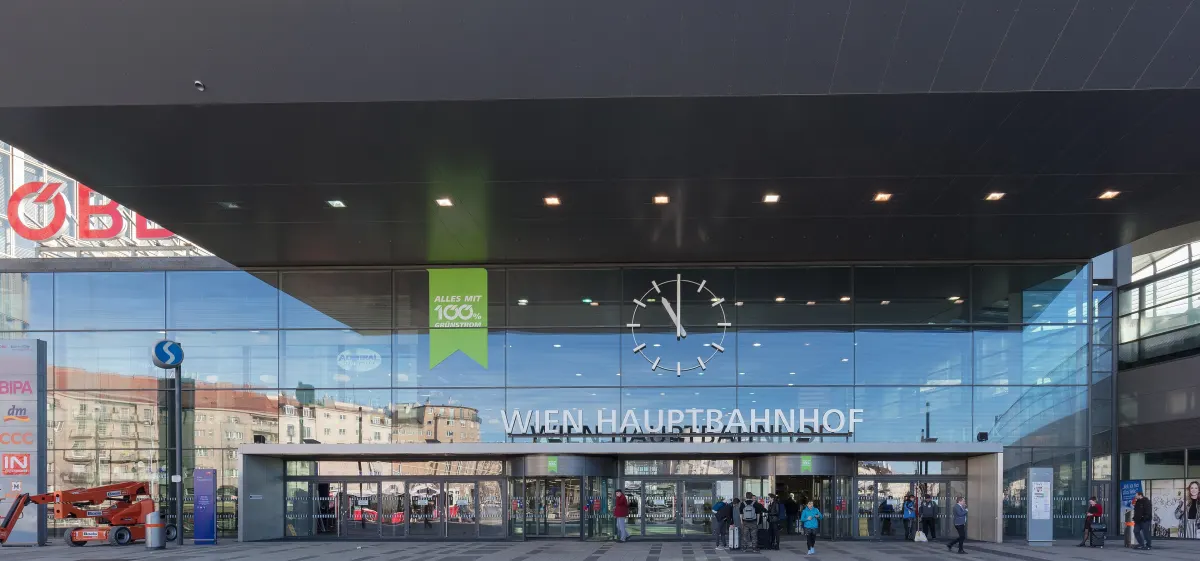
- Railjet and InterCity trains still run direct to Vienna's main station (Wien Hauptbahnhof) in about a quarter of an hour, for the normal local fare, and many go on to St. Pölten, Linz and Salzburg. The slower REX7 goes there too. The main station is on the U1.
- The S7 only runs as far as St. Marx. The City Airport Train (CAT) to Wien Mitte has been replaced by buses, up to five an hour.
- Vienna Airport Lines buses go to several places in town, with extra ones to Karlsplatz and Praterstern during the works.
- A city ticket doesn't cover the airport: buy the extra zone, or a ticket for the whole trip.
From the other airports
- Salzburg: city buses to the main station and the centre, about 20 minutes. Innsbruck: bus F, about 20 minutes. Graz: trains from a station a few minutes' walk away. Linz, Klagenfurt: buses or taxis.
- Munich is often the best airport for Tyrol and Salzburg, and Zurich for Vorarlberg. Bratislava, used by budget airlines, is about an hour by bus from Vienna.
Arriving by land
- Trains run direct from Munich, Frankfurt, Berlin, Zurich, Venice, Prague, Budapest, Ljubljana and Warsaw, and night trains from much further. From 8 February to 9 July 2027 most trains from Munich take longer.
- Driving: buy a vignette before you reach the motorway: see Driving.

Buildings
Schönbrunn Palace, Vienna
Hietzing, Vienna
The Habsburgs' 1,441-room summer palace, a UNESCO World Heritage Site, where Empress Maria Theresa, Emperor Franz Joseph and Empress Elisabeth (Sisi)…

Historic sites
Hohensalzburg Fortress and Old Town, Salzburg
Salzburg
One of the largest medieval castles in Europe, standing above Salzburg's baroque old town, a UNESCO World Heritage Site.

Comments