
Arriving in Brunei: visa-free stays, the E-Arrival Card, alcohol and customs rules, and the Malaysian border
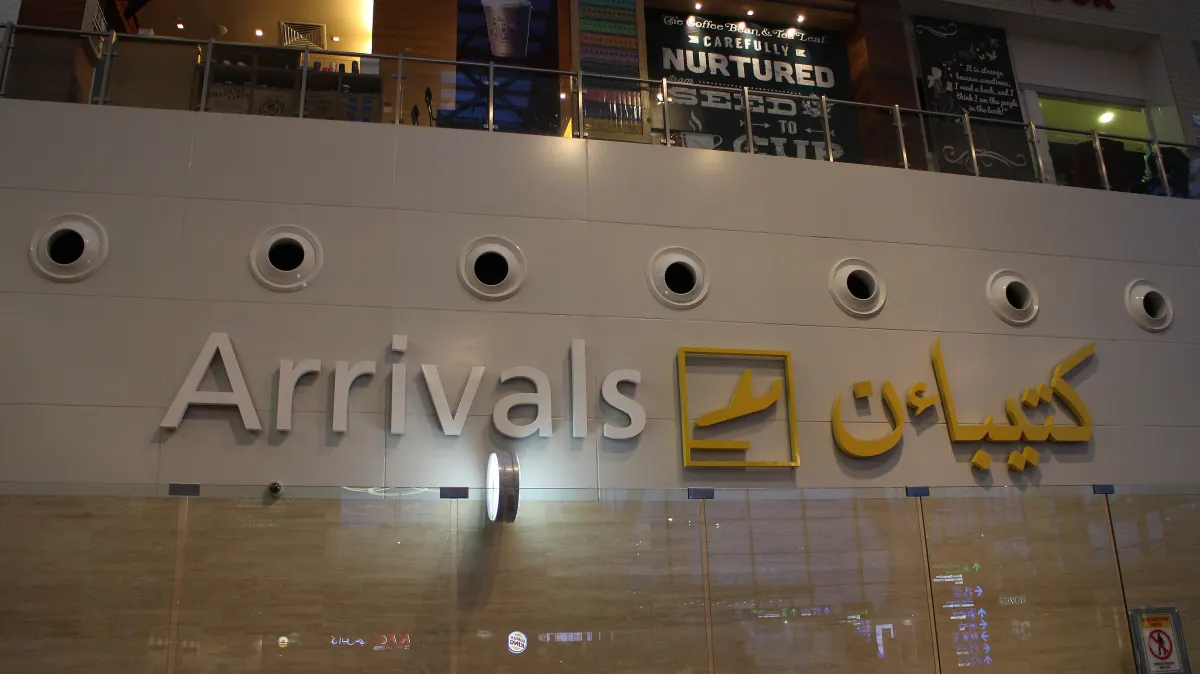
Brunei is easy to enter for most visitors, but there are a few things to do first. Everyone needs a free E-Arrival Card, passports must be valid for six months, and the stay you're given depends on your nationality: 90, 30 or 14 days. Australians need a visa, which they can get on arrival. Nothing alcoholic is sold in the country, vapes aren't allowed in without a permit, and every cigarette must be declared.
Do you need a visa?
The list is on the Ministry of Foreign Affairs visa page. For ordinary passports, in November 2026 it said:
- 90 days without a visa: the UK, the USA, Canada, Ireland and the other European Union countries, Switzerland, Norway, Iceland and Liechtenstein.
- 30 days without a visa: New Zealand, Malaysia, Singapore, Japan, South Korea, Laos, Turkey, Ukraine, Oman and the United Arab Emirates.
- 14 days without a visa: several countries, including China, Hong Kong, Macau, Taiwan, Indonesia, the Philippines, Vietnam, Cambodia, Myanmar, the Maldives, Russia, Peru and Costa Rica.
- Visa on arrival: Australia and Saudi Arabia (up to 30 days) and Qatar (14 days). Take Brunei or Singapore dollars in cash for the fee, and go to the visa counter before the passport queue. The Australian government simply says that Australians need a visa, so check with Brunei's high commission in Canberra if you'd rather arrange it before you go.
- A visa in advance, from a Brunei embassy or high commission: many other nationalities, including India, South Africa, Brazil and Mexico.
The stay is written in your passport stamp: check that you've been stamped in, and don't overstay. The UK government warns that the penalties for overstaying include detention and caning.
Before you travel
- Passport: valid for at least six months from the day you arrive, and undamaged.
- E-Arrival Card: every foreign visitor must fill it in before arriving by air, land or sea, on the immigration department's portal at imm.gov.bn. You make an account, and need your passport, travel details and the address where you'll stay. It's free (other websites charge for it), and it isn't a visa. Official advice on timing is to do it within, or at least, three days before you arrive, so aim for three days before and keep the reference number on your phone: the airline may ask for it. Passengers who stay airside in transit don't need one.
- Health declaration: the UK, Canadian and Singaporean governments say you also have to complete the Ministry of Health's arrival declaration, in the BruHealth app or at healthinfo.gov.bn, before or when you arrive.
- Medical insurance: since 1 July 2025, visitors who need a visa, including those who get one on arrival, must show medical insurance covering emergency treatment and hospital for their whole stay (at least B$10,000 of cover, according to the Australian government and Brunei's high commission in Canberra), or they may only be given two weeks. The tourism board says visa-free visitors don't need to show it unless they extend their stay, but Canada tells its visa-free citizens to have proof, so carry your policy. Buy insurance anyway: serious cases are flown to Singapore.
- Onward ticket: airlines can ask for one, and for proof that you have enough money for your stay.
- Yellow fever certificate: if you're coming from a country where there's a risk of it.
Alcohol
You can't buy alcohol anywhere in Brunei, including in hotels, restaurants and on the national airline. Non-Muslims aged 17 or over can bring in a limited amount:
- up to two bottles of spirits or wine (1 litre each), and 12 cans of beer (330 ml each). Customs' own page words it as bottles "or" beer, while the tourism board and the Singapore government say both: if you have both, ask when you declare.
- You must declare it to customs, at the counter or in the Customs.BN app, even if you're within the limit. Keep the stamped form with the bottles until they're empty.
- You can only do it once every 48 hours.
- It's for your own use, in private, such as in your hotel room. Never drink it in public, and never give it to a Muslim. See Laws and etiquette in Brunei.
Other customs rules
- Cigarettes: there's no duty-free allowance. Declare every one, and pay duty of B$0.50 per stick. Tobacco isn't sold legally in Brunei either.
- Vapes: vaporisers and e-liquid are restricted imports, and having them without a permit is an offence. In October 2026, a passenger was fined B$28,570 for three vapes and 38 bottles of e-liquid in his luggage at the airport. Leave them at home.
- Meat: beef and poultry have to come from a halal-approved abattoir, so don't bring any.
- Also banned or controlled: drugs, pornography, firearms, replicas, ammunition, fireworks and firecrackers, and religious material that could be used for preaching.
- Medicines: bring your own in their original packets, with the prescription. If you take strong painkillers, sleeping pills, ADHD medication or anything else that's controlled, ask Brunei's Ministry of Health or an embassy first.
- Cash: declare B$15,000 or more (or the same in other currencies), coming in or going out.
From the airport
- Brunei International Airport is about 15 to 20 minutes' drive from the centre of Bandar Seri Begawan (BSB, or just "Bandar").
- Taxis have fixed fares from the airport: in 2026, most hotels in the city were B$20–25 between 6am and 6pm, and B$5 more in the evening.
- Dart, the local ride app, is usually cheaper. Drivers pick up in the car park, a short covered walk from the terminal.
- A bus runs into the city in the daytime for B$1, but don't count on it. See Getting around Brunei.
- There's a tourist information desk in arrivals (not on Fridays or Sundays), and phone company booths for a SIM card.
Crossing from Malaysia by land
Brunei is surrounded by the Malaysian state of Sarawak, which also cuts it in two. There are four road crossings, normally open from 6am to 10pm, and sometimes until midnight around the big holidays:
- Sungai Tujoh: for Miri in Sarawak, and the Niah and Mulu caves. It's in the far west, by Kuala Belait.
- Kuala Lurah: for Limbang in Sarawak, about half an hour south of Bandar.
- Ujung Jalan (Puni): between Limbang and the separate Temburong district.
- Labu: between Temburong and Lawas in Sarawak, on the way to Sabah.
Good to know:
- You need Brunei's E-Arrival Card going in, and Malaysia's own digital arrival card going the other way. Sarawak and Sabah have their own immigration control, and stamp you in separately: see Arriving in Malaysia and Malaysian Borneo.
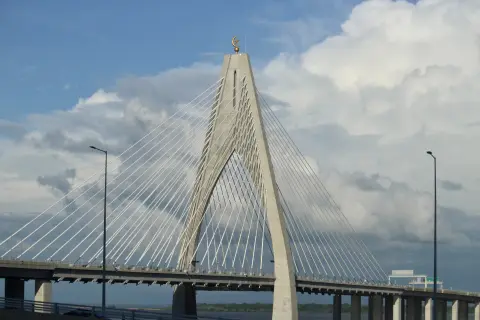
- The old road from Bandar to Sabah crosses borders several times, with a lot of passport stamps. The bridge to Temburong, opened in 2020, has cut out two of the crossings.
- Buses across the borders are few and change often. There has been a daily bus between Bandar and Kota Kinabalu in Sabah (6 to 8 hours), but no through bus to Miri for several years: travellers take a car or van, or a taxi on each side. Check what's running before you plan around it.
- Queues are long on Friday evenings, at weekends and in school holidays.
- By car: a foreign-registered car must have its tank at least three-quarters full when it enters, must be registered on Brunei's Entry-Exit System, and can only buy unsubsidised fuel at certain stations. Check that your hire company allows the trip.
By ferry
Ferries run between the Serasa terminal, near Muara, and the Malaysian island of Labuan (1 to 2 hours), where you can change for Sabah. Timetables change, so check them a few days before. Serasa is about 25 km from Bandar, and slow to reach by bus: take a Dart or taxi.
Comments
No comments yet.