
Culture and etiquette in the UAE: visiting mosques, the Sheikh Zayed Grand Mosque, greetings, dress and Ramadan
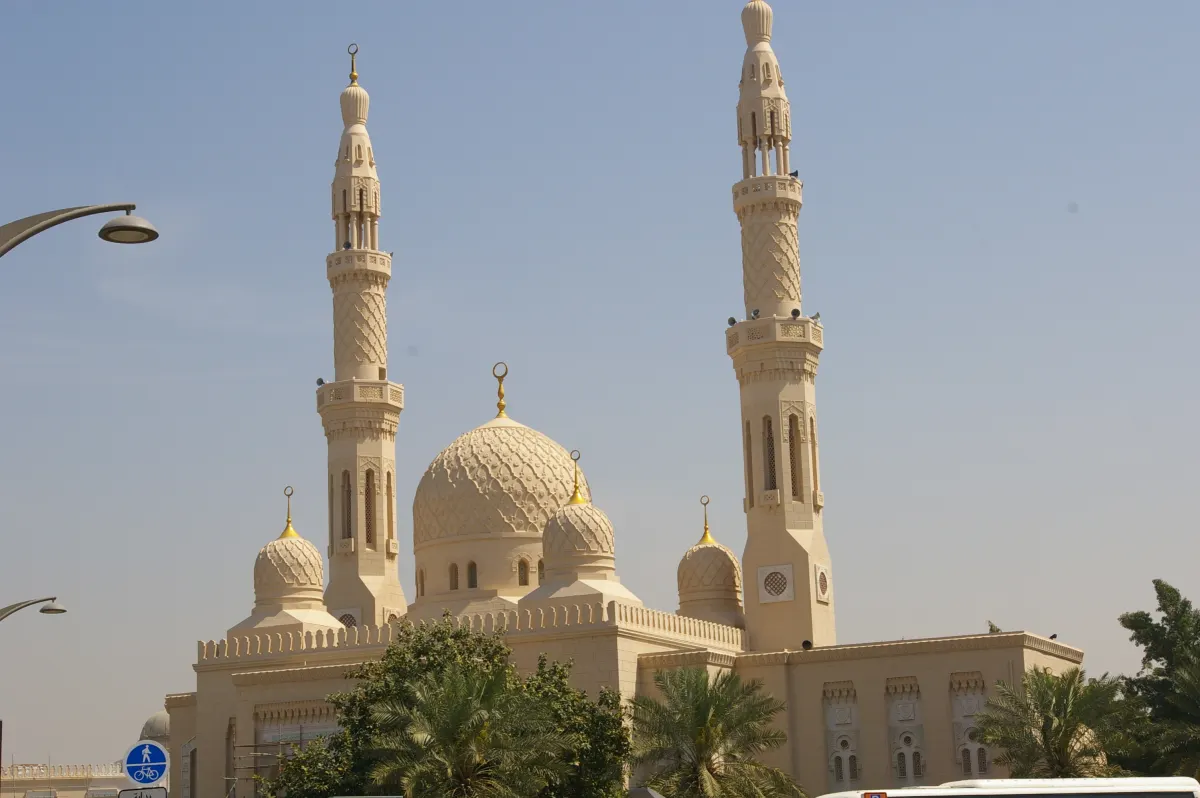
The UAE is a conservative Muslim country that hosts people from everywhere, and it's proud of doing so tolerantly: there are churches, Hindu temples and a synagogue as well as mosques. Emiratis are only about one in ten of the people you see, usually in national dress: a white kandura for men and a black abaya for women. A little courtesy is noticed and returned.
Greetings and manners
- "As-salaam alaikum" (peace be upon you) is answered "wa alaikum as-salaam". "Shukran" is thank you.
- Men and women: wait to see if someone of the opposite sex offers a hand. If not, put your right hand on your heart and smile.
- Use your right hand to eat, give and take. Don't point with a finger or show the soles of your feet.
- Accept coffee and dates if you're offered them. Ask after someone's health and family, but a man shouldn't ask another about his wife by name.
- Stay calm. Raising your voice loses you respect, and swearing is against the law: see UAE laws visitors trip over.
- Don't discuss the rulers, politics or religion critically. Rulers' pictures are everywhere, and treated with respect.
- Stand for the national anthem, and don't play music near a mosque at prayer time.
What to wear
- At beaches, pools and resorts, wear what you would at home, but cover up when you leave.
- In malls, souks and museums, cover shoulders and knees. Air conditioning is fierce, so you'll want a layer anyway.
- In Sharjah, Ajman, Al Ain and villages, dress more modestly than in Dubai.
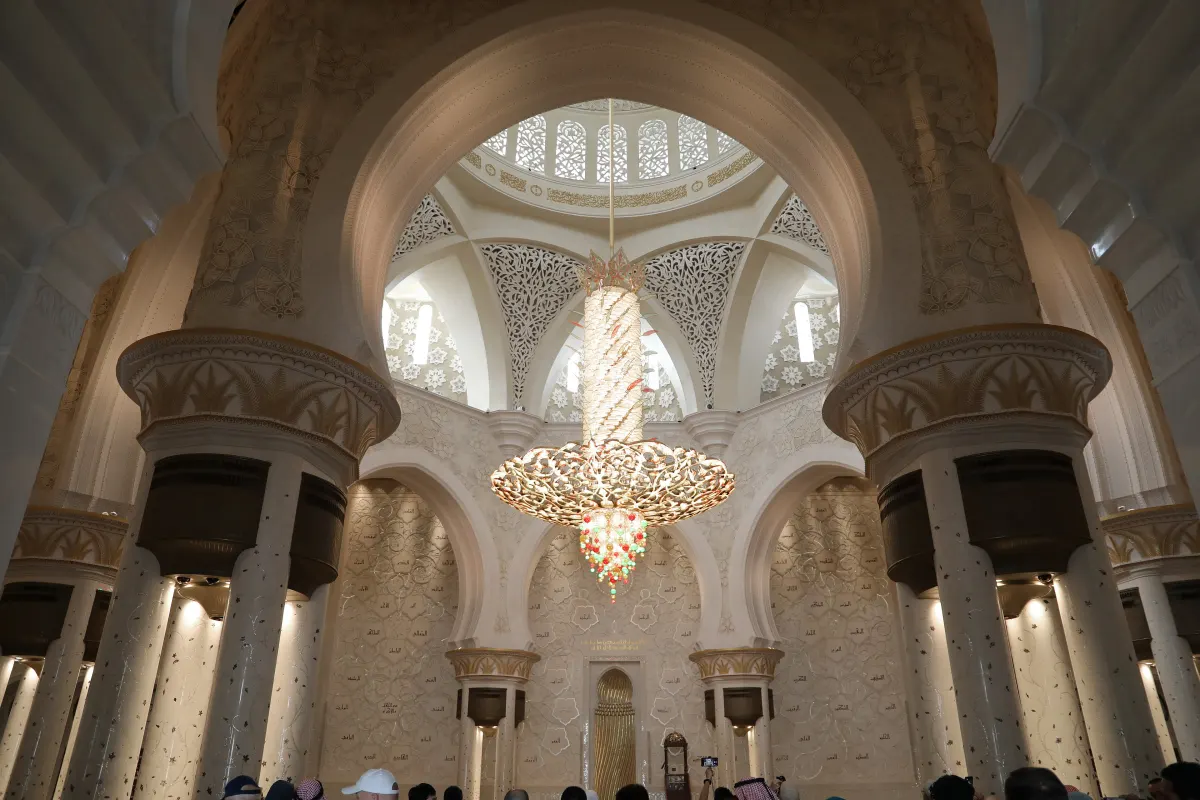
The Sheikh Zayed Grand Mosque, Abu Dhabi
The Sheikh Zayed Grand Mosque welcomes everyone, but its rules are strict and people are turned away every day.
- Book a time online at szgmc.gov.ae, up to a month ahead. Since September 2026 there's a charge: 10 dirhams for visitors from abroad (5 for UAE residents). Worshippers enter free, and reports say the over-60s, under-threes and people with disabilities do too.
- Hours: 9am to 8.30pm, Saturday to Thursday; Friday 9am to 11.30am and 2.30pm to 8.30pm. They change in Ramadan and at Eid. Night tours, called Sura, run from 9pm.
- Women: loose clothes that cover you to the wrists and ankles, not see-through, and a headscarf covering your hair.
- Men: long trousers, and a shirt with sleeves. No shorts, vests or tight clothes.
- The mosque no longer lends abayas: bring your own clothes, or buy an abaya (about 45 dirhams) in the souk by the entrance.
- Free guided tours, about 45 minutes, usually at 11am, 1pm and 5pm (Friday 11am and 5pm).
- Photos are fine for yourself, but don't pose like a fashion model, hug, kiss, lie down or make hand signs, and don't photograph people praying. No food or drink, not even water, and no smoking.
- Stay on the marked path, take off your shoes where told, don't touch the Quran, and don't walk in front of someone praying.
- The entrance is underground through a small mall, and there's a long walk to the mosque: allow two hours. The hour before sunset is loveliest and busiest.

Buildings
Sheikh Zayed Grand Mosque, Abu Dhabi
Abu Dhabi
A vast white marble mosque with 82 domes, completed in 2007, with the world's largest hand-knotted carpet, crystal chandeliers and reflecting pools.
Mosques in Dubai and elsewhere
- Jumeirah Mosque in Dubai has guided visits for non-Muslims run by the Sheikh Mohammed Centre for Cultural Understanding, whose motto is "Open doors, open minds". Traditional clothes can be borrowed there. Check the days and times on its website.
- The centre, in Al Fahidi, also serves Emirati meals where you can ask any question: the best way for a visitor to meet Emiratis.
- Sharjah's Al Noor Mosque also runs tours for visitors.
- Other mosques aren't open to non-Muslims.
- In Abu Dhabi, the Abrahamic Family House, on the same island as the Louvre, has a mosque, a church and a synagogue side by side.
Ramadan and the holidays
- Ramadan should run from about 8 February to 9 March 2027, and around 11 days earlier each year. Days are quiet, with shorter hours for shops and sights, and nights are lively and generous.
- Most restaurants in Dubai and Abu Dhabi now open by day. Eat and drink out of sight of people who are fasting, and not in the street. Don't smoke or vape in public.
- Join an iftar, the meal at sunset. A cannon is fired in several places in Dubai to mark it.
- Eid al-Fitr, at the end of Ramadan, and Eid al-Adha (about mid-May 2027) are public holidays: hotels fill and roads are busy.
- Eid Al Etihad (National Day), 2 and 3 December, brings flags, parades and fireworks.
Traditions to look for
- Camel racing, with robot jockeys, on winter mornings: Al Marmoom, outside Dubai, is easy to visit. Falconry, dhow sailing and pearl diving are the other old skills.
- Museums: the Etihad Museum on how the country was born in 1971, and the Al Shindagha Museum by Dubai Creek.
- The oasis and forts of Al Ain are the best place to understand life before oil.



Comments
No comments yet.