
Singapore's laws and fines: vapes, smoking, littering, chewing gum, alcohol and the drug laws
Singapore is one of the safest cities in the world, and part of the reason is that it enforces its laws, including small ones that would be ignored elsewhere. Visitors are fined just like residents, and "I didn't know" doesn't help. Most of the rules are easy to follow once you know them, but two can wreck a holiday: vaping and drugs.
Vapes and e-cigarettes
- Buying, having or using a vape, e-cigarette or any vaporiser has been illegal in Singapore since 2018, and the law was tightened again in 2025 and 2026. The fine for owning or using one can be up to S$10,000, and enforcement is heavy: officers check people at the airport and land crossings, on the street and in hotels.
- Vapes containing the anaesthetic etomidate ("Kpods") are now in a much more serious category: having or using one can mean up to 10 years in prison or a fine of up to S$20,000, and importing them brings prison and caning. Offenders and repeat vapers must also attend rehabilitation, and foreigners can lose their pass and be deported.
- This applies to visitors and to transit passengers at Changi. Don't bring a vape, don't buy one from anybody in Singapore, and don't hold one for a friend.
Smoking
- You can't smoke in any indoor public place, in restaurants, hawker centres, bus shelters, near building entrances, in public parks, on beaches, along many waterways and in a growing number of whole neighbourhoods. Orchard Road and most of the city centre are No Smoking Zones, where you can smoke only at the marked designated smoking points, often painted yellow boxes.
- Look for the smoking points, or ask. Smoking in the wrong place means a fine, and the maximum in court is S$1,000.
- Throwing a cigarette end on the ground is littering, too.
Littering, spitting and vandalism
- Littering, including dropping a cigarette end, a bus ticket or a sweet wrapper, usually means an on-the-spot fine (a composition sum) of S$300 for a first offence. In court, it can be up to S$2,000, and repeat offenders can be given a Corrective Work Order: picking up rubbish in public in a bright vest.
- Spitting in public is an offence too.
- Vandalism, including graffiti and stickers, can mean prison and caning, and foreigners have been caned for it.
On the MRT and buses
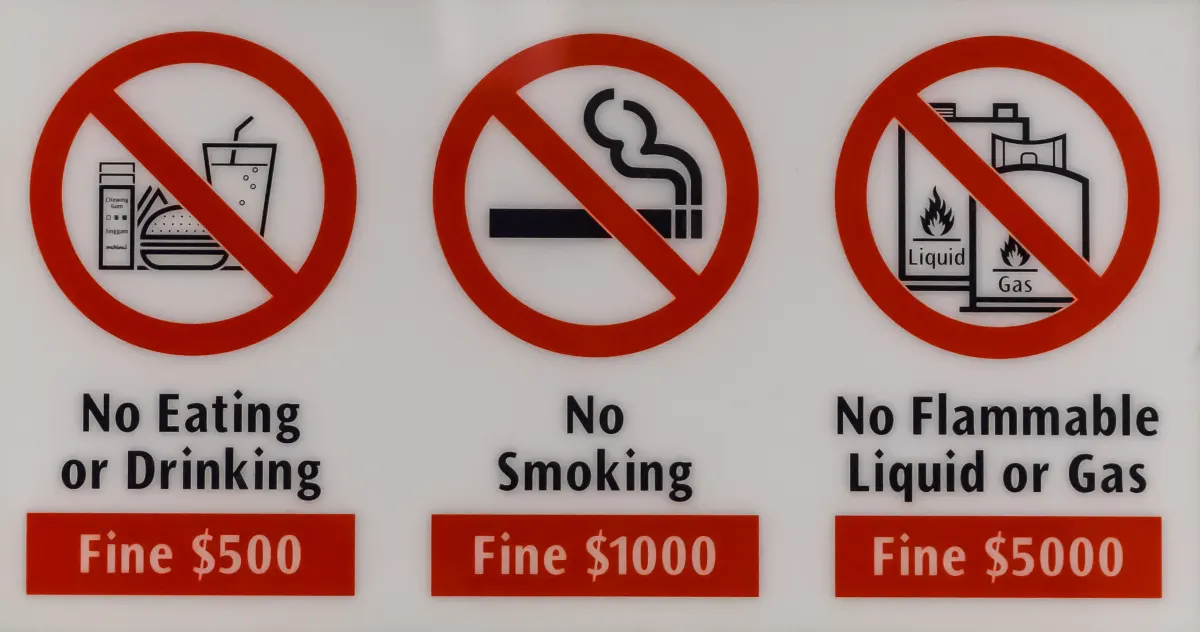
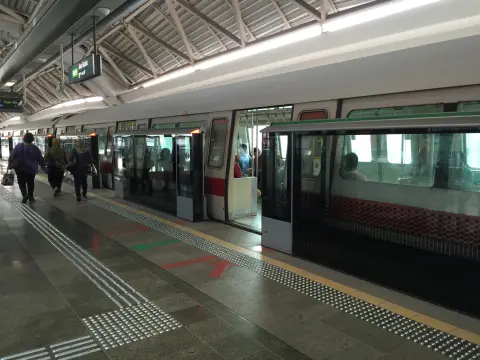
- No eating or drinking on trains, on buses or in the paid areas of stations, not even water: the signs warn of fines of up to S$500.
- No smoking (up to S$1,000), and no flammable liquids or gases (up to S$5,000).
- No durians, by custom and by the signs: their smell isn't allowed on trains, buses or in many hotels.
Crossing the road
- Jaywalking, crossing a road within 50 metres of a pedestrian crossing, bridge or underpass instead of using it, is an offence, and police do fine people for it. Use the crossings, and wait for the green man.
Chewing gum
- It isn't illegal to chew gum in Singapore, but you can't buy it (except some medicinal and dental gum sold at pharmacies), and you can't bring it in. Don't stick used gum anywhere.
Alcohol
- Drinking alcohol in a public place between 10.30pm and 7am is illegal, except in licensed bars, restaurants and entertainment venues. Shops can't sell takeaway alcohol in those hours either.
- Geylang and Little India are Liquor Control Zones, where drinking in public is banned all weekend, on public holidays and the day before them, and shops have shorter hours for selling alcohol.
- Alcohol is heavily taxed and expensive. Bars have happy hours, and hawker centres sell cheaper beer.
- Being drunk and disorderly is an offence, and drink-driving penalties are severe.
Drugs
- Singapore's drug laws are among the harshest in the world. Possession of even small amounts means prison. Having more than a set amount (for example, a few grams of heroin or 15 g of cannabis) means you're presumed to be trafficking, and trafficking larger amounts (such as 15 g of pure heroin or 500 g of cannabis) carries the death penalty. Singapore carries out executions, including of foreigners.
- You can be drug-tested when you arrive, including in transit, and charged with drug consumption even if you took the drug in another country where it's legal. Think twice about that cannabis-friendly stop in Bangkok just before Singapore.
- CBD products and anything else containing cannabis are illegal, and so is etomidate (see vapes, above).
- Never carry a bag or parcel for anyone else.
Other things to know
- Feeding wild monkeys, wild birds such as pigeons, and other wildlife is illegal, with heavy fines.
- Not flushing a public toilet is an offence too, though it's rarely enforced on visitors.
- Bribery: Singapore has zero tolerance. Never offer money to a police officer or official.
- Protests: you need a police permit for almost any public assembly or protest, and foreigners are not allowed to take part in them. The only place for demonstrations without a permit is Speakers' Corner in Hong Lim Park, for citizens and permanent residents.
- Same-sex relationships: sex between men was decriminalised in 2022; same-sex marriages and partnerships aren't recognised. Singapore is socially conservative, and public displays of affection are uncommon.
- Drones need permits in many places, and can't be flown near the airports or over many areas: check the Civil Aviation Authority of Singapore's rules first.
- Scams: phone and online scams are common, often by people pretending to be police, bank staff or officials. Real officials won't ask you to transfer money.
- If you're arrested, ask for your embassy or high commission to be told.
Comments
No comments yet.