
The right of public access in Sweden (allemansrätten): walking, wild camping, fires, berries, dogs and huts
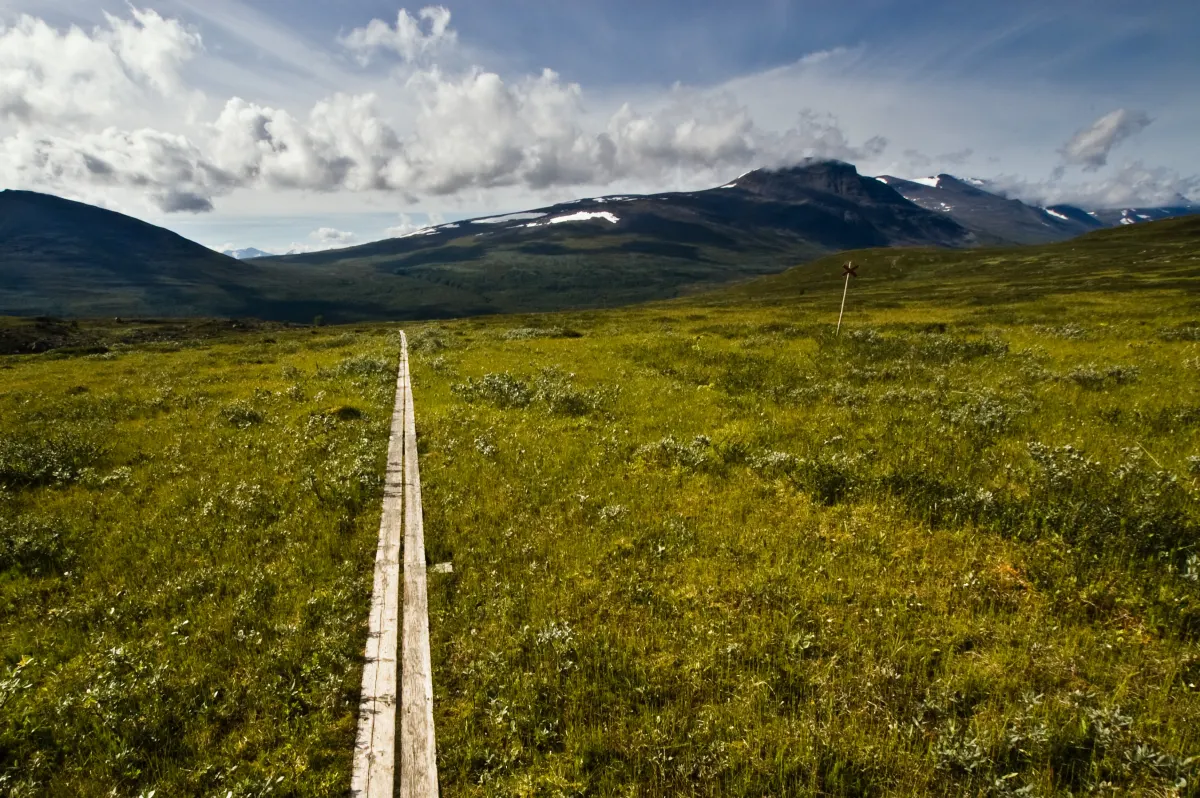
In Sweden you may walk, ski, swim, paddle and camp on almost any land, whoever owns it. It's called allemansrätten, the right of public access, and it's in the constitution. The whole of it fits in four words: don't disturb, don't destroy.
Walking
- You can go almost anywhere on foot, bicycle, horse or skis, through gates (close them) and across private forest.
- Keep away from houses: you mustn't go through a garden, or near enough to disturb the people. Keep off fields with a crop, and newly planted trees.
- Swim and land a boat anywhere that isn't somebody's private shore, and not in bird and seal sanctuaries, which are closed for part of the year.
Tents
- Two or three tents may stay for a night or two. For longer, or for a group, ask the landowner.
- People in a house nearby shouldn't see or hear you. Choose firm ground, away from grazing animals and crops.
- In national parks and nature reserves it's different: camping is often allowed only at marked places, or not at all. Read the board. In Tyresta, near Stockholm, and Skuleskogen, look up the rules first.
- City parks and beaches have their own bans.
Cars, camper vans and roof tents
The right doesn't cover vehicles. It's illegal to drive or park off the road, on grass, beaches or forest ground, and even the landowner can't allow it. A roof tent counts as a vehicle. See Driving.
Fires
- You may make a small one if it's safe, on gravel or sand, and best of all in a ready-made place. Use fallen twigs, not live trees or fallen trunks. Never on bare rock, which cracks, or on moss or peat.
- In dry weather there's a fire ban (eldningsförbud). It was widespread in the south in June and August 2026. Then no open fire is allowed, not even in a made fireplace, and the strictest ban stops barbecues too. Check with the county or krisinformation.se.
- Take a camping stove. In the mountains, use nothing else.
Berries, mushrooms, flowers
- Pick wild blueberries, lingonberries, cloudberries and mushrooms as you like, even to sell. Only eat what you know.
- Many flowers are protected, including all orchids. Don't take stones, bark or branches from living trees.
Fishing
With a rod, it's free along the coast and in the five biggest lakes: Vänern, Vättern, Mälaren, Hjälmaren and Storsjön. Everywhere else buy a fishing card (fiskekort), online or at a petrol station. Hunting isn't included.
Dogs
- On a lead from 1 March to 20 August, everywhere in nature. In reserves often all year, and in reindeer country always.
- Don't take one through a field of cows or horses.
Reindeer
They belong to somebody. If the herd moves away, you're too close. Be still, and take the long way round, above all from April to June, when calves are born.
Rubbish
Take all of it home, food scraps too. It stops African swine fever from spreading among wild boar.
Huts and long paths
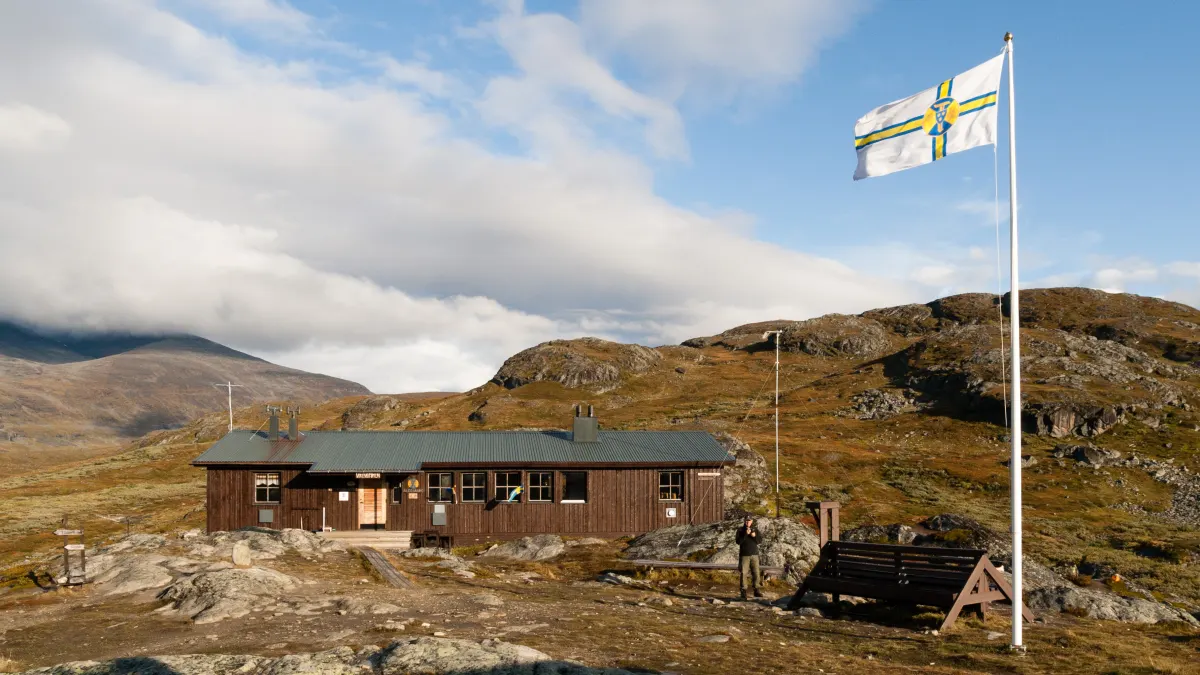
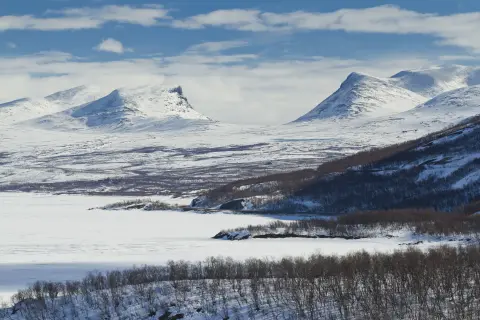
- The Swedish Tourist Association (STF) has huts about a day's walk apart on the Kungsleden, from Abisko past Kebnekaise, with bunks, gas, and at some a shop and sauna. You fetch water and chop wood yourself.
- In 2027 the huts at Abiskojaure and Sälka are open 19 February to 18 April and 18 June to 19 September. Others differ by days.
- Booking ahead is cheaper, but not needed: whoever comes gets a roof, if only a mattress on the floor.
- Elsewhere, look for wind shelters (vindskydd): open cabins by the path, free, first come.
- Sarek has no huts, bridges or paths. It's for experts.
Mosquitoes
From late June to mid-August they rule the north. A head net, long sleeves and a breezy camp help. They're almost gone by September, when the hills are red and gold.
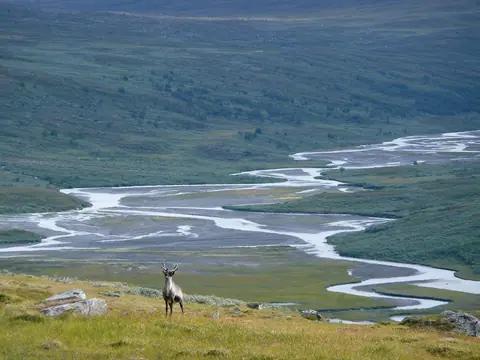
Sarek National Park
One of Europe's last true wildernesses, part of the Laponia World Heritage site, with no trails, huts or bridges, 200 peaks and 100 glaciers.
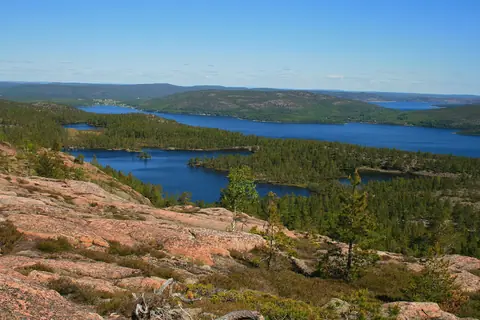
Skuleskogen National Park
A park on the High Coast World Heritage site, with Slåttdalsskrevan, a narrow gorge 200 m long, old forest and views over the sea.
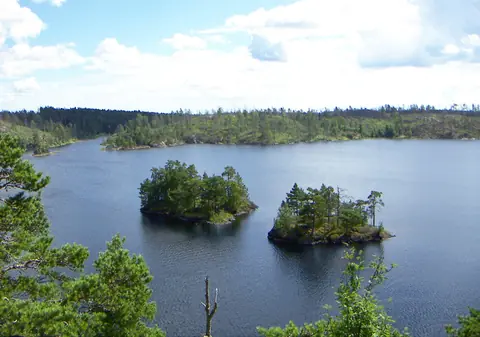
Tyresta National Park
Old-growth forest of pine trees up to 400 years old, lakes and rocky outcrops, reachable by bus from Stockholm.
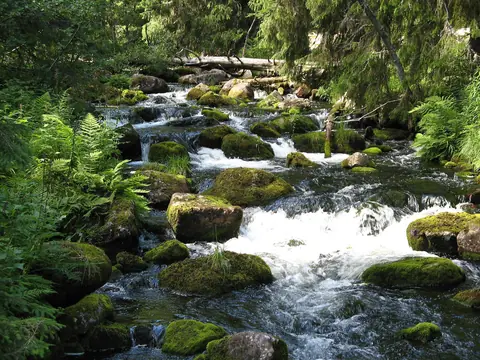
Fulufjället National Park
A mountain plateau with Njupeskär, Sweden's highest waterfall at 93 m, and Old Tjikko, a spruce whose roots are about 9,500 years old, among the worl…
Comments