
Arriving in the Maldives: the free visa, the IMUGA form, what you can't bring in, and airport taxes
Almost everyone gets a free 30-day tourist visa when they land in the Maldives. The things to do beforehand are the free online IMUGA form, and checking your bags: this is a strictly Muslim country, and customs takes away things that are ordinary at home, including any bottle of duty-free alcohol.
Before you fly
- The IMUGA traveller declaration: every traveller fills in a form on the official site, imuga.immigration.gov.mv, within the 96 hours before arriving, children included, with passport, flight and accommodation details. It's free and takes a few minutes, and it sends a code to your email address. Other sites charge for the same form: don't use them. The official site says the form is also needed within 96 hours of departure, so check when you leave.
- Your passport should be valid for at least one month after you arrive, according to the UK government. Some airlines ask for more, so six months is safer. It mustn't be damaged.
- Have your return or onward ticket and a booking for somewhere to stay ready to show, especially if you're on a one-way ticket or staying in guesthouses.
- Yellow fever: a vaccination certificate is needed if you're nine months or older and come from a country with yellow fever, or spent more than 12 hours in transit in one.
- Flights to the Maldives often go through the Gulf. Since the Middle East conflict has disrupted flights and airspace, check your airline and your government's advice for the countries you change planes in.
The visa
- The visa is free and is given at the airport on arrival to tourists of nearly all nationalities. You can't work on it.
- Staying longer: a tourist visa can be extended, up to about 90 days in all, for a fee. Extensions are applied for online through IMUGA; apply well before your first 30 days are up.
- Israeli passports: since April 2025, people travelling on an Israeli passport aren't let in. In November 2026, a bill to make the ban permanent was before parliament, so check if it affects you, including if you have two passports.
What you can't bring in
- Alcohol, including duty-free bought on the way. It's taken from you at customs and held or thrown away.
- Pork and anything containing it.
- Anything seen as contrary to Islam, such as idols for worship and Bibles. Other religious books and pictures for personal use may also be a problem, so ask your embassy or airline before you pack them.
- Vapes: e-cigarettes, vaping devices and liquids are banned, for visitors too, since November 2024. They're taken at the airport; ask for a receipt, as you may be able to collect them when you leave.
- Pornography, weapons and drugs of any kind or amount, including cannabis. Bags are scanned at the airport, even for people in transit, and drug offences can lead to very long jail sentences.
- Medicines: carry prescriptions for anything with a controlled drug in it, and check the Maldives' rules before you go.
- Tobacco: the rules changed recently, and you can be charged duty or have extra taken. Anyone born on or after 1 January 2007 can't buy, use or have tobacco at all. See Laws and culture.
- Drones need permission, and it's hard for visitors to get.
- Cash worth US$10,000 or more has to be declared, when you arrive or leave.
Leaving: taxes and what to take home
- There are two charges for leaving on an international flight from Malé: a departure tax and an airport development fee. At the time of writing, for foreigners, each is US$50 in economy class, US$120 in business class and US$240 in first class, so economy pays US$100 in all. They're normally included in your plane ticket, so you don't pay them at the airport.
- The green tax, per night, is paid at your hotel instead: see Money.
- Don't take home coral, or anything made of tortoiseshell: it's illegal.
At Velana International Airport
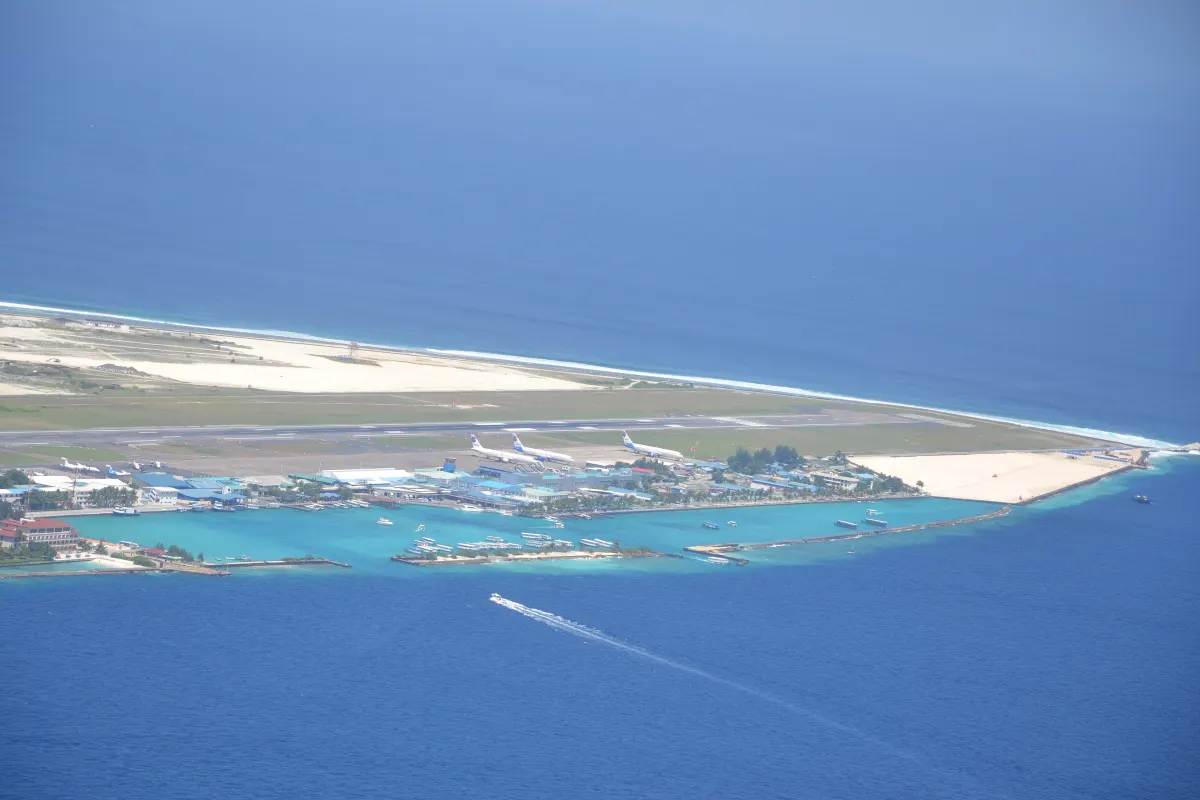
- Malé's airport is on its own island, Hulhulé, joined by a bridge and a bus to Malé and Hulhumalé, and to the rest of the country by boat and seaplane. If you've booked a resort, look for its sign or counter after customs.
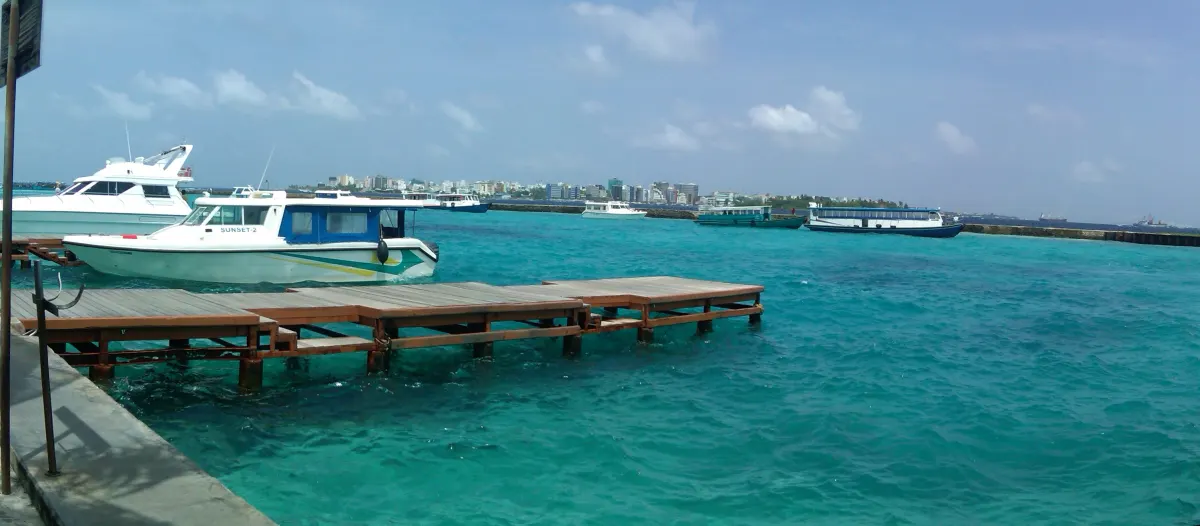
- For local islands, your guesthouse usually tells you which speedboat to take and where it leaves from, near the arrivals hall. See Getting around.
- There are ATMs, exchange counters and SIM counters. Dhiraagu and Ooredoo are the two phone companies, and you need your passport to buy a SIM. An eSIM bought before you go works too.
- Seaplanes and most speedboats run in daylight, so a late flight can mean a night near the airport, in Hulhumalé for example.
See also: Resorts or local islands and Laws and culture.
Comments
No comments yet.