
Staying safe in Syria: kidnapping, landmines, checkpoints, power cuts and health
Governments say not to go to Syria, and to leave if you're there and can do it safely: see Travel warnings for Syria. This sums up what they tell people who are there anyway, as of November 2026. Germany says nobody's safety can be guaranteed, in Damascus or anywhere else, and that a tour company can't protect you better.
Before you go
The US and German governments advise serious preparation, and it says a lot about the risk: write a will, leave powers of attorney, settle who looks after your children, leave a DNA sample with your doctor, and agree on questions that prove you're alive if you're taken hostage. Get professional security advice, and have a plan to leave that doesn't depend on your embassy.
Kidnapping
- It can happen anywhere in Syria, for money or for political reasons. Canada says the risk has been increasing, and is highest in tribal areas and the south. Germany reports many cases on the coast, and more risk away from the big cities and main roads.
- Tourists, journalists, aid workers, students and business travellers are all targets.
- Keep a low profile, vary your times and routes, don't post your plans or location, and check in regularly with someone at home. Don't travel after dark.
- The British and Australian governments don't pay ransoms, and paying a terrorist group is a crime.
Attacks and fighting
- Limit your time in crowded cafés, markets, hotels, places of worship and around government buildings, above all on holidays. Australia says to avoid gatherings after Friday midday prayers, and funerals.
- Keep away from demonstrations: people near them have been arrested.
- Keep away from military sites. If there's an air raid warning, go to the lowest floor of a solid building, or an inside room without windows.
- If there's an attack, leave when it's safe, because a second one may follow.
Landmines and unexploded weapons
- They're one of the biggest dangers in Syria. Al-Monitor reported in September 2026 that mine clearance groups had counted at least 2,375 people killed or injured since December 2024.
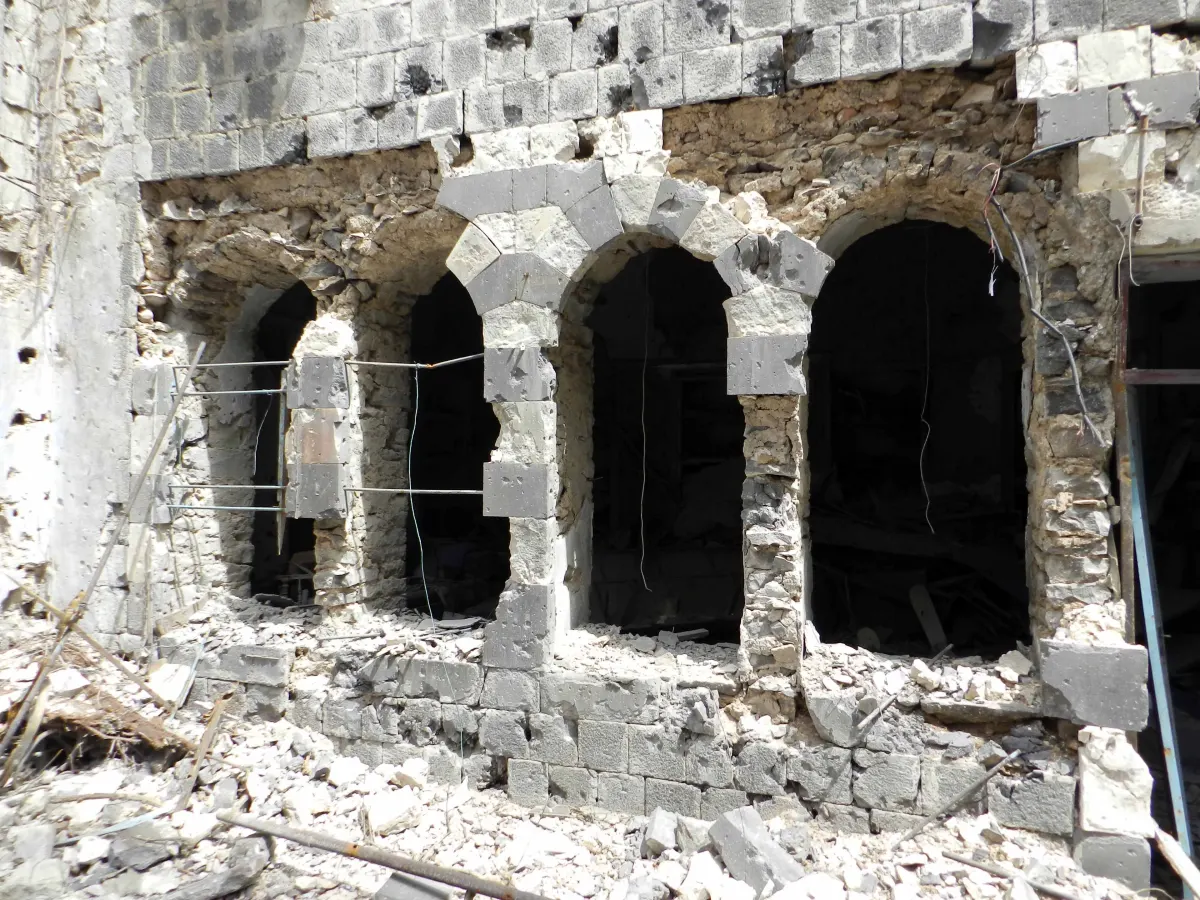
- The UK says busy areas and main roads are largely clear, but the danger is in the countryside, at road edges, on untarred roads and farmland, in woods and orchards, near old front lines, in damaged or empty buildings, also in towns, and in the Syrian desert, which is where Palmyra is.
- Don't step off roads and paved areas without an experienced guide. Don't go into ruins, and never touch anything that could be a weapon.
- Booby traps and homemade bombs are used too, above all in the north and east.
Roads and checkpoints
- Checkpoints are common in cities and on main roads. Germany warns of arbitrary arrests, demands for money and shooting, and of a higher risk of assault for women.
- Stop, stay calm, and don't use your phone at a checkpoint. Never drive past one, even if it looks empty. Carry your passport, or copies, as you must be able to show ID.
- Roads are bad, accidents are common, and driving after dark is especially dangerous. Main roads such as Homs–Hama, Homs–Damascus and those on the coast can be blocked.
Power, water and phones
- Expect long power cuts, and shortages of water, fuel and some food. Canada says some areas get only two to three hours of electricity a day.
- Phones and internet can be cut. Carry power banks, a torch, and paper copies of addresses and phone numbers. Keep a stock of food, water and medicine.
Health
- Many hospitals are damaged or closed, and even basic medicines can be missing. Bring all you need, with prescriptions.
- For a serious illness or injury you'd need to be evacuated, and that may not be possible.
- Drink bottled or boiled water, and avoid raw food and unpasteurised milk products. Cholera, typhoid, hepatitis A and brucellosis occur.
- Leishmaniasis (from sandfly bites) is common, rabies occurs, and there's malaria in the far north-east. Avoid bites, and stay away from dogs.
- Check your polio and measles protection. Ask a travel clinic at least six to eight weeks ahead.
- Earthquakes happen, and there are sandstorms in the hot months.
Emergency numbers
Police 112, ambulance 110, fire 113 (Canadian and Australian governments). The UK warns that they may not respond.
Comments
No comments yet.