
Culture in Turkmenistan: greetings, dress, mosques, holidays, horses and carpets
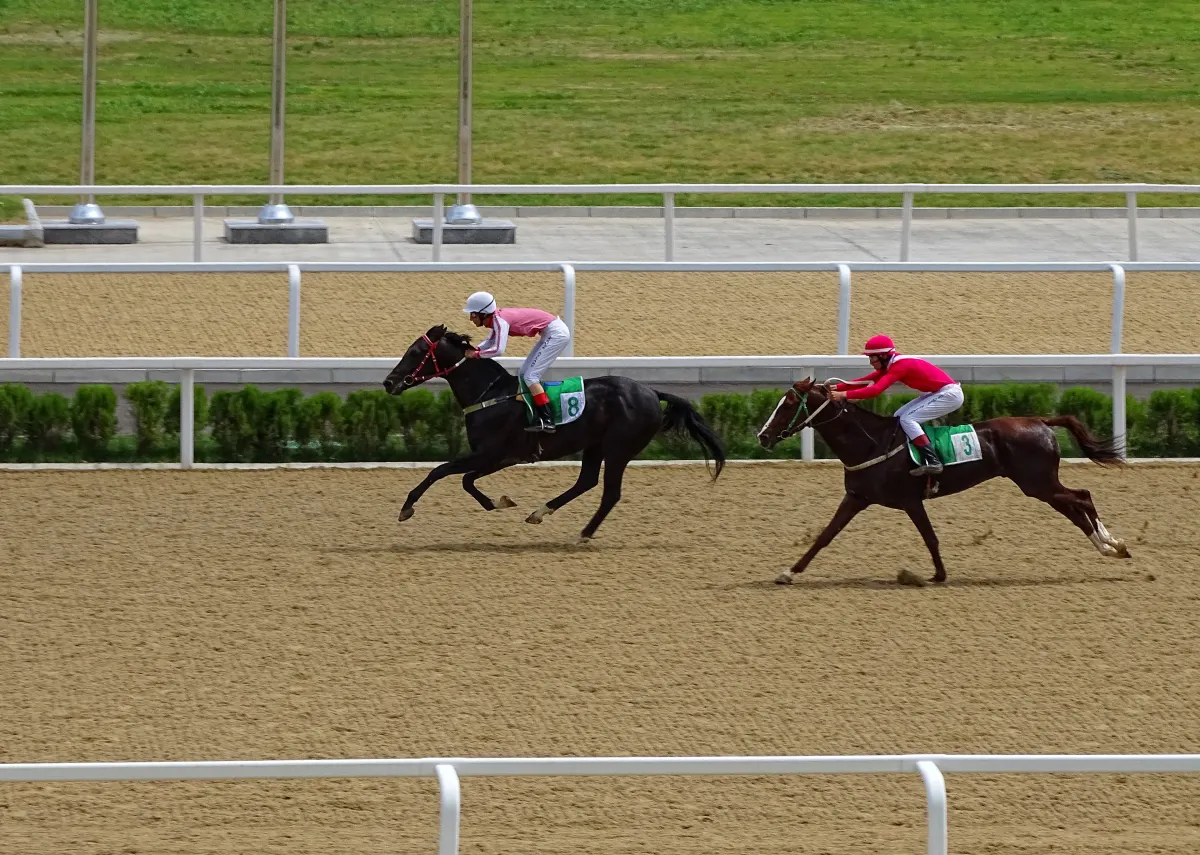
People in Turkmenistan are polite, reserved with strangers, hospitable in the old nomad way, and proud of their carpets, horses and bread.
Greetings and homes
- Say salam. Men shake hands with men, often with the other hand on the forearm or heart. With women, wait for her to offer a hand, or nod with your hand on your heart.
- Greet and serve older people first, and stand when they come in.
- Tourists on a normal visa usually can't stay in, or may not be allowed to visit, private homes. If your agency arranges a meal with a family, take your shoes off, bring sweets, fruit or something from your country, and eat a little of everything.
- Don't point your feet at people or food, whistle indoors, or blow your nose at the table.
- Don't kiss or hug in public, even if you're married.
What to wear
People dress smartly. Most women wear long dresses. Visitors should cover shoulders and knees; trousers are fine for women, and men rarely wear shorts in town. Take a scarf for mosques and shrines, light long sleeves for the sun, and something warm for desert nights.
Mosques and shrines
Most people are Sunni Muslim, in a secular state, with many Sufi shrines. At the great mosque at Gypjak near Ashgabat, and the shrines of Kunya-Urgench, you'll be among pilgrims: take off your shoes where others do, cover your hair if you're a woman, keep quiet, and ask before taking photos. Avoid Friday midday prayers.
In Ramadan (about 8 February to 9 March in 2027) don't eat, drink or smoke in front of people who are fasting.
Holidays
- Nowruz on 21 and 22 March is the best one for visitors, with food, horses, wrestling and yurts.
- Horse Day, the last Sunday of April, celebrates the golden Akhal-Teke. Carpet Day is the last Sunday of May.
- Independence Day (27 September) and Neutrality Day (12 December) bring parades in Ashgabat: roads close, and you're not usually allowed near.
- Kurban Bayram is about 16 May in 2027.
Carpets and other things to buy
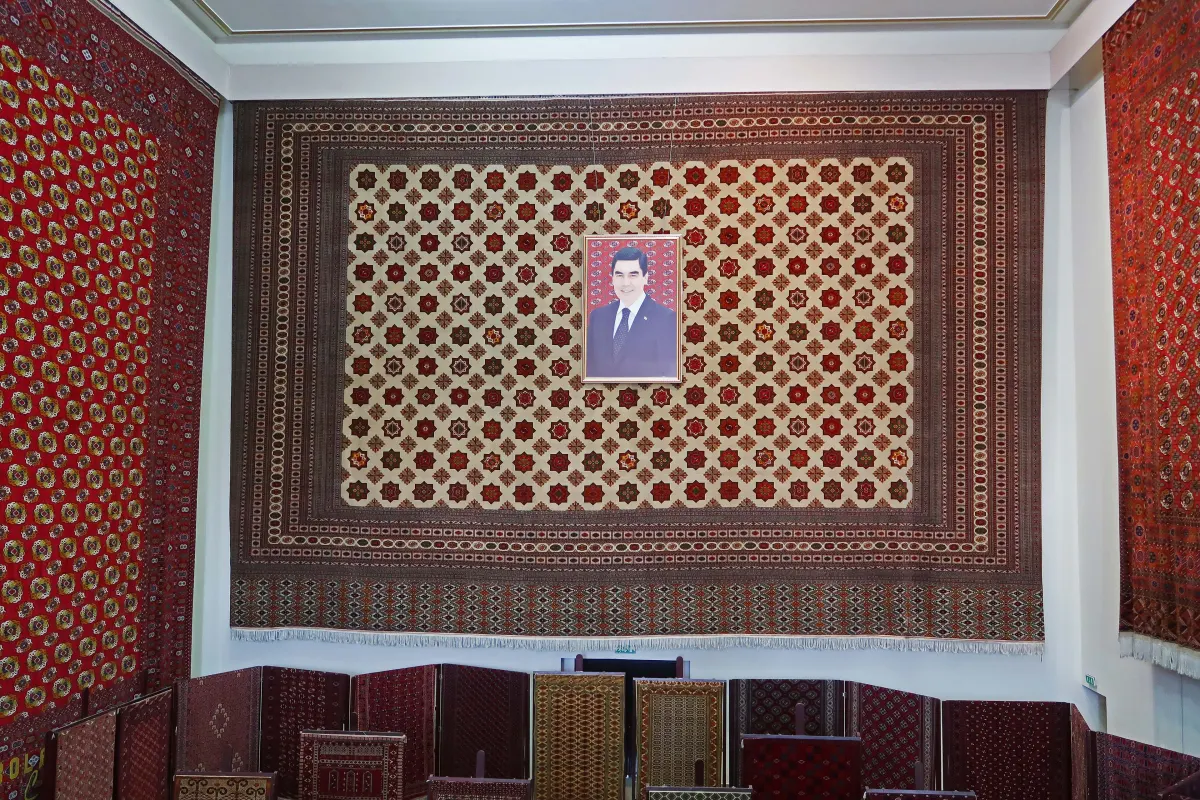
- Turkmen carpets are deep red with the gul emblem of each tribe. See old and giant ones at the Carpet Museum in Ashgabat.
- A handmade carpet needs an expert certificate and an export permit, or customs will take it. State shops usually include it; for bazaar carpets your agency can arrange it, which takes a day or more. Large ones pay a duty. Keep all the papers.
- Don't buy antiques, old jewellery or anything from an archaeological site.
- Felt rugs, silk (keteni), woolly telpek hats, embroidered skullcaps, dried melon and saxaul-wood crafts are easier.
- Altyn Asyr bazaar (Tolkuchka), on the edge of Ashgabat, is the biggest market, busiest at weekends. Ask before you take photos.
A few words
- Salam: hello. Sag boluň (sagh bolung): thank you, also goodbye.
- Hawa: yes. Ýok (yok): no.
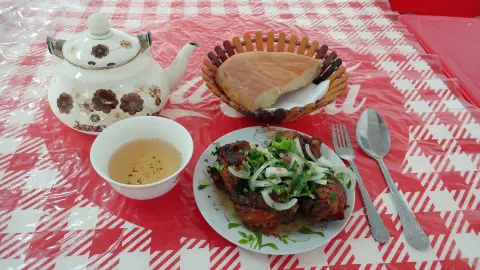
- Çaý (chai): tea. Suw: water. Näçe? (nache): how much?
Russian is widely understood. English is rare outside tourism.
See also food and drink.

Comments