
Health, earthquake damage and other hazards in Myanmar
Most governments advise against travel to Myanmar: see Travel warnings for Myanmar. Medical care is limited, and it's one of the first things to think about if you go.
Medical care
- The public health system is under severe strain, and hospitals have closed at short notice. Private hospitals in Yangon and Mandalay are the best chance of good care, and even they are below what you may be used to. Elsewhere there's very little.
- Serious cases may need to go to Thailand or further. Evacuation can be delayed or impossible.
- Hospitals usually want cash up front, and some don't take foreign patients. Getting care at night is harder where there's a curfew.
- The ambulance number is 192, but there often isn't an ambulance. Private hospitals have their own numbers: ask your hotel for one when you arrive.
- Bring all your medicines, with a doctor's letter and copies of prescriptions. Medicines sold locally may be fake.
Health risks
- See a travel clinic at least eight weeks before you travel. Ask about hepatitis A, typhoid, Japanese encephalitis, rabies, polio and the routine vaccinations. If you stay more than four weeks, Australia says to carry proof of polio vaccination.
- Malaria is a risk in many areas, and dengue, chikungunya and Zika are spread by mosquitoes too. Use repellent, cover your arms and legs, sleep under a net or in a screened room, and ask about malaria tablets.
- Rabies is common in dogs. Stay away from dogs, monkeys and other animals, and get treatment straight away if you're bitten or scratched. It may be hard to find locally.
- Drink bottled or boiled water, avoid ice, and eat food that's freshly cooked and hot.
- Schistosomiasis is a risk in fresh water: don't swim in lakes, rivers or ponds.
The March 2025 earthquake
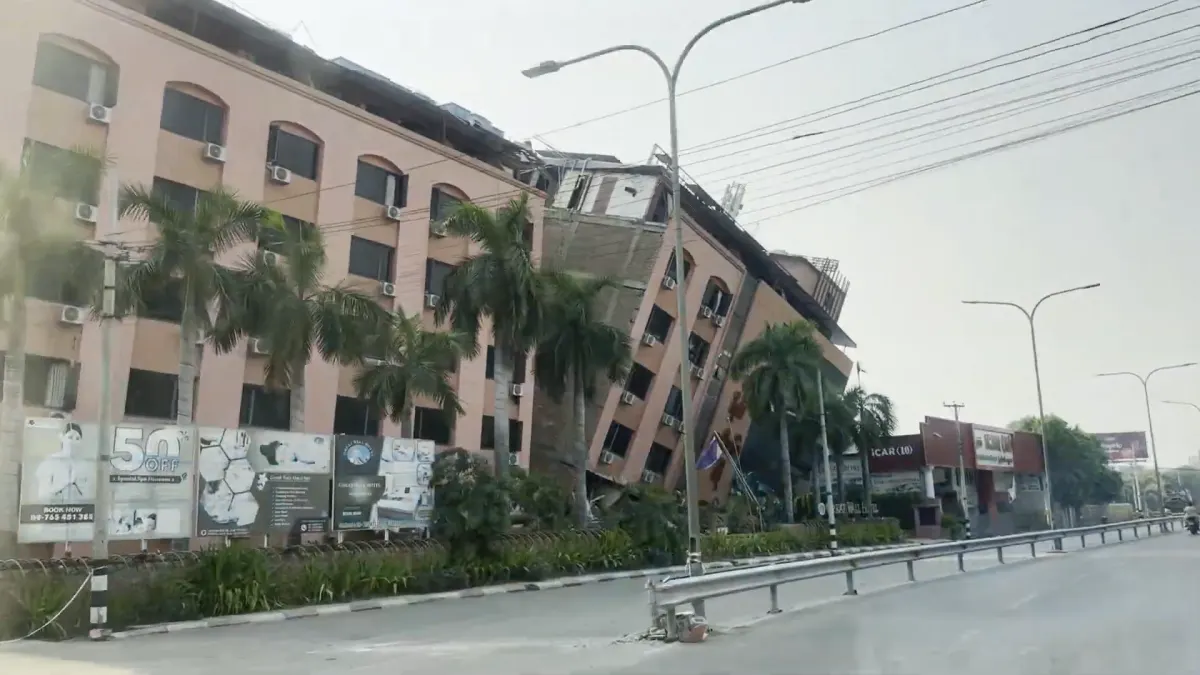
- A magnitude 7.7 earthquake hit central Myanmar on 28 March 2025. It killed thousands of people, and badly damaged Mandalay, Sagaing and Naypyitaw, including hospitals, roads and bridges.
- The damage is in places where help was already hard to get because of the war. Ask locally about damaged buildings and bridges, don't go into cracked or closed ones, and don't climb on old monuments.
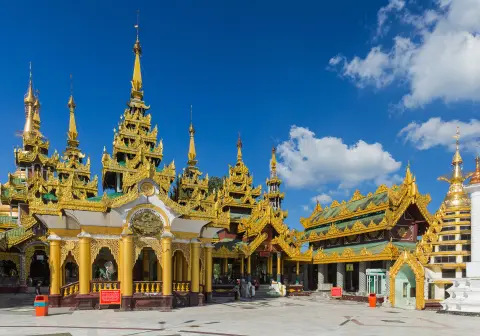
- Some sights may still be closed or under repair: check before you go to any of them.
- Myanmar has many faults, so more quakes are likely. Know your hotel's way out. If the ground shakes, drop, cover and hold on, and afterwards get away from damaged buildings, as aftershocks follow.
Weather
- The monsoon runs from about May to October, with floods and landslides, which cut roads.
- Cyclones come in from the Bay of Bengal, mostly from about mid-April to mid-May and in October and November, and can hit Rakhine State and the delta hard. Myanmar's Department of Meteorology and Hydrology issues warnings.
Roads, trains and boats
- Road travel outside cities is dangerous for both accidents and the conflict. Don't travel at night, and see the warnings about the Yangon–Mandalay roads.
- Trains run on some routes, but the timetable is unreliable and safety is poor. Ferries and river boats may be overloaded, with few life jackets: wear one, and don't go on an overfull boat.
What to pack
- A basic first-aid kit, all your medicines, water purification tablets, a torch, a power bank and some food, in case services are cut.
- Copies on paper of your passport, visa, insurance and contacts.


Comments
No comments yet.