
Getting around the UAE: the Dubai Metro, Nol cards, taxis, Careem and Uber, intercity trains and buses, and driving
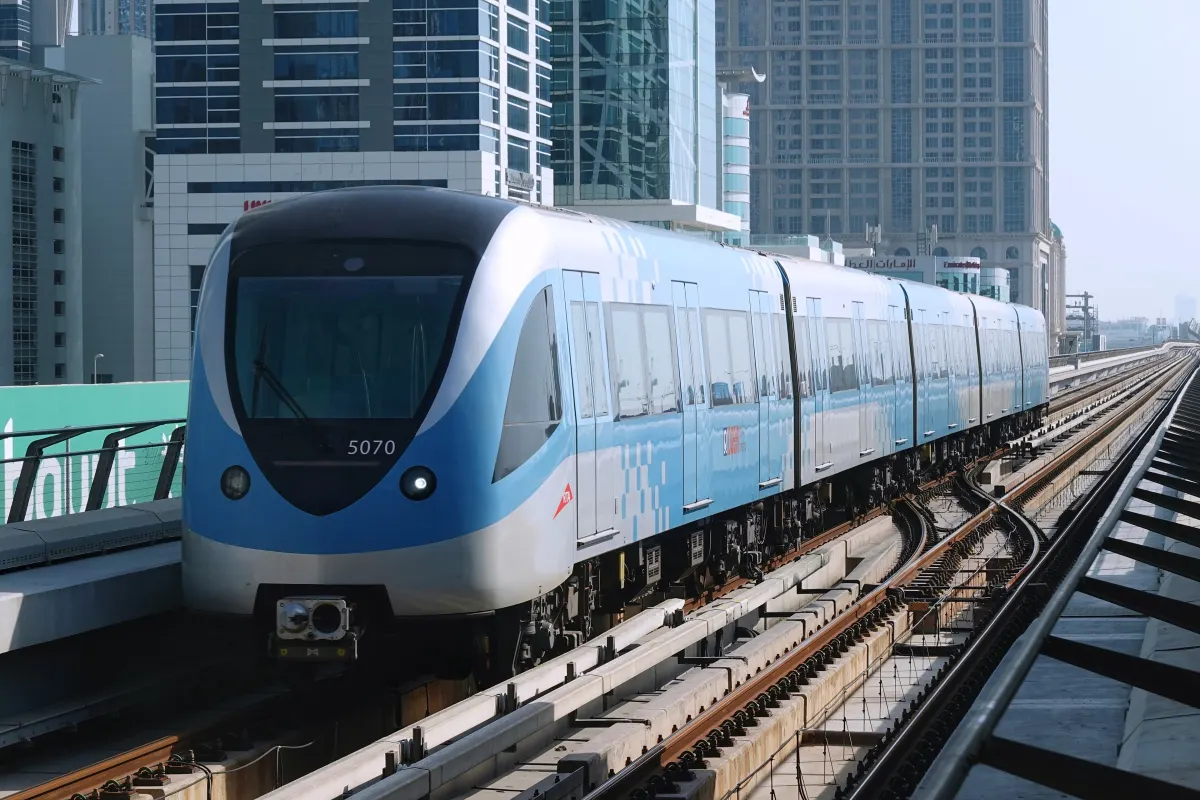
Dubai has a cheap, spotless, driverless Metro and an honest fleet of taxis, and since 2026 you can take a train between Dubai and Abu Dhabi. Beyond the two big cities, a hire car is the easiest way to see the mountains and oases.
The Dubai Metro
- The Red Line runs along the coast: from the airport (Terminals 1 and 3) past Deira, BurJuman, Dubai Mall / Burj Khalifa and Mall of the Emirates to Dubai Marina, Expo City and beyond. The Green Line loops through Deira and Bur Dubai, with stops for the old town and the Creek and the gold and spice souks. They cross at Union and BurJuman.
- Hours: about 5am to midnight, until 1am on Friday nights, and from 8am on Sundays. They change for holidays and Ramadan.
- Trains come every few minutes. They're packed in the rush hours, about 7am to 9.30am and 5pm to 8pm.
- Each train has a women and children's carriage and a Gold Class carriage at one end, marked on the platform. Getting into the wrong one means a fine.
- No eating, drinking or chewing gum (100 dirhams), no feet on seats (100), no sleeping where it isn't allowed (300), and no alcohol (500), even sealed.
- Stations are big: from Dubai Mall station it's a 15-minute walk along an air-conditioned walkway to the mall.
- The Dubai Tram connects the Red Line with the Marina and JBR beach, and the Palm's monorail (a separate ticket) with Palm Jumeirah.
Nol cards and fares
- You need a Nol card for the Metro, tram, buses and water buses. Tap in and tap out every time.
- Silver is best for most visitors: 25 dirhams, with 19 of credit on it. Fares are 3, 5 or 7.50 dirhams, depending on how many zones you cross. Gold costs double, for Gold Class.
- The paper Red Ticket is for one or two trips: 2 dirhams for the ticket, and fares of 4, 6 or 8.50.
- Buy and top up cards at station machines and ticket offices. The airport stations sell them.
- Children of 5 and under travel free. Changes between Metro, bus and tram within 30 minutes count as one journey.
Taxis, Careem and Uber
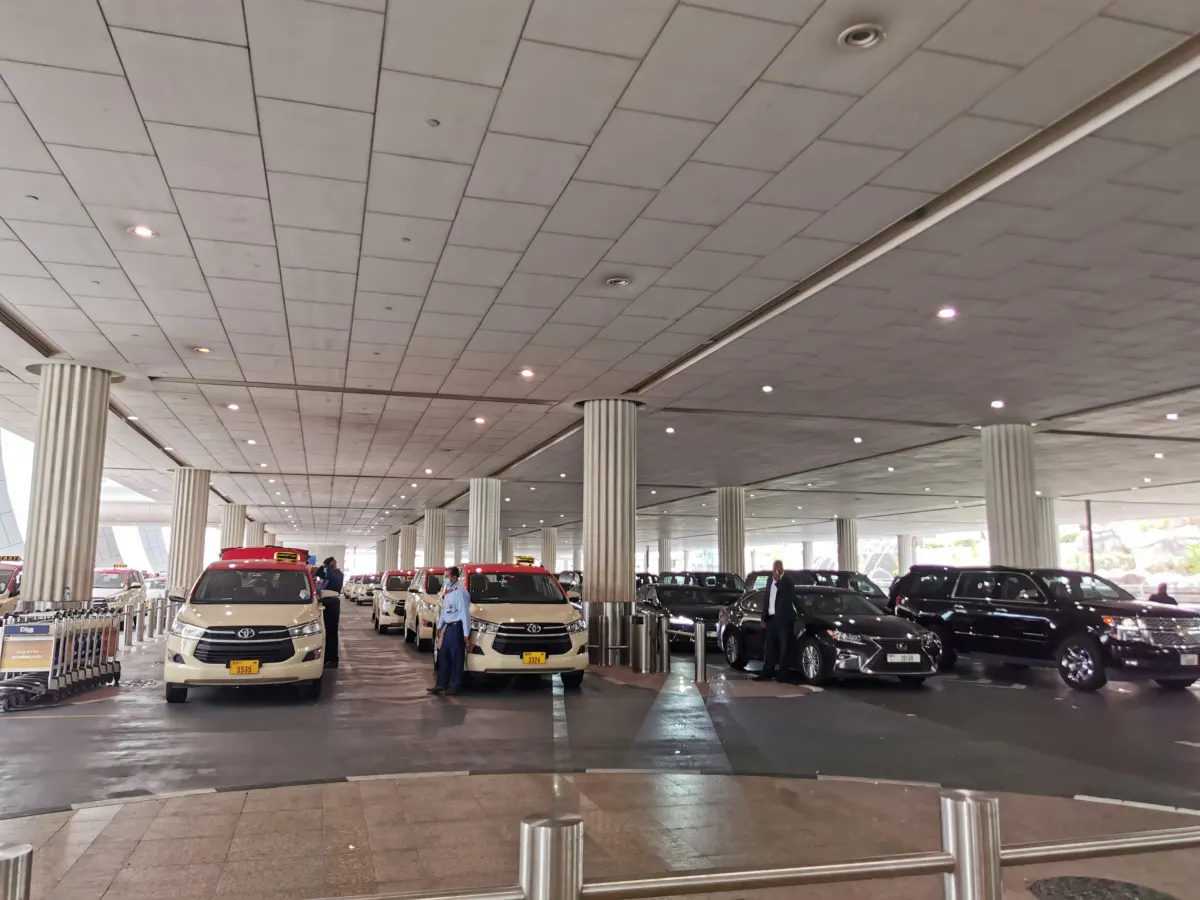
- Dubai's taxis are cream with coloured roofs, metered and reliable. The minimum fare is about 12 or 13 dirhams; from the airport they start at 20 to 25. Those with pink roofs have women drivers, for women and families.
- Abu Dhabi's taxis are silver, also metered.
- Careem is the main app: its "Hala" option calls an ordinary Dubai taxi. Uber also works, usually with smarter, dearer cars. Abu Dhabi has its own taxi app, Abu Dhabi Taxi.
- Road tolls are added to the fare. Drivers sometimes don't know an address: give a landmark, or show the map.
- Avoid touts and unmarked cars at airports and malls: they're illegal.
Boats
- Abras, small wooden ferries, cross Dubai Creek between Bur Dubai and Deira for a dirham or two. It's the best-value ride in the city: pay the boatman in coins.
- Water buses and the Dubai Ferry run along the Creek, the canal and the coast.
Trains between cities
- Etihad Rail began carrying passengers in June 2026 between Abu Dhabi and Fujairah, and Dubai joined on 30 September. At the start there were five trains a day each way between Abu Dhabi and Dubai, taking a little over an hour, from about 39 dirhams.
- The stations aren't central: Dubai's is Al Yalayis, at Jumeirah Golf Estates, near the Metro's Red Line, and Abu Dhabi's is at Mohamed Bin Zayed City, on the mainland, well out of the centre. Allow for a taxi at each end.
- Trains to Fujairah, on the east coast, take about 1 hour 10 minutes from Dubai.
- Book on Etihad Rail's website or app: trains sell out.
Buses between cities
- Dubai to Abu Dhabi: E100 from Al Ghubaiba (Bur Dubai) and E101 from Ibn Battuta Metro station, to Abu Dhabi's main bus station, about 2 hours, 25 dirhams. Pay with a Nol card or the Abu Dhabi Hafilat card, depending on the direction.
- Dubai to Al Ain: E201 from Al Ghubaiba. From Abu Dhabi, buses to Al Ain cost 30 dirhams (40 for the premium service), hourly.
- Hatta: the H02 Hatta Express runs from Dubai Mall bus station, 25 dirhams, and the H04 hop-on hop-off bus links the dam, the wadi hub and the heritage village.
- Ras Al Khaimah: buses run from Dubai's Union bus station, and a few from Abu Dhabi (35 dirhams).
- In Abu Dhabi city, buses take only the Hafilat card (10 dirhams, from machines at bus stations and the airport), not cash or bank cards. Fares are 2 dirhams plus a little per kilometre, 5 at most.
Driving: licences and hire cars
- You can drive on a licence from more than 30 countries, including the UK, the USA, Canada, Germany, France, Japan and South Korea, on a visit visa. Otherwise carry an International Driving Permit with your own licence. Some hire companies want one anyway: ask, and bring paper originals.
- You usually need to be 21, with a credit card in the driver's name for a deposit, which can be held for up to 30 days in case of fines.
- Traffic drives on the right. Motorways have up to seven lanes a side, and people drive fast and close. Leave the left lane to them.
- Most hire cars aren't insured off the road or in Oman. Never drive an ordinary car on sand.
Speed cameras, tolls and fines
- Cameras are everywhere. In Abu Dhabi emirate (including Al Ain and Liwa) the limit on the sign is the limit, with no tolerance. Elsewhere cameras generally allow up to 20 km/h over, but the limits have been coming down, so just drive at the limit shown.
- Cameras also catch tailgating, phones, seat belts, and not stopping for pedestrians.
- Dubai's Salik tolls are automatic: 6 dirhams at peak times (6am to 10am and 4pm to 8pm, Monday to Saturday), 4 at other times, plus 5% VAT, and free from 1am to 6am. Abu Dhabi has its own, Darb. Both are charged to the hire car and passed on to you, often with a fee.
- Zero alcohol, and no rude gestures: both can mean jail. Police can impound a car.
- After any accident, even a scratch, stay put and call the police (999): leaving the scene is a crime, and insurers need the police report.
- Watch for camels on desert roads, especially at night, and slow right down in fog, sand or flood water. Never drive into a wadi in flood: it's dangerous, and carries heavy fines.
The road to Hatta
The direct road to Hatta from Dubai or Al Ain, past Al Madam, crosses a piece of Oman, with checkpoints where visitors have been turned back, and hire cars aren't insured. Use the all-UAE route instead: take the Sharjah to Kalba road (E102) and follow the signs south to Hatta through the mountains. Phone maps often suggest the Omani road, so check the route before you go.
Walking and cycling
- Dubai's districts are walkable in winter, but motorways cut them off from each other: use the Metro footbridges to cross. Jaywalking is fined, and can mean jail if it causes an accident.
- E-scooters and shared bikes are allowed only on marked tracks, and you need a permit (or a driving licence) for a scooter in Dubai: check the RTA's rules.


Comments
No comments yet.