
Earthquakes and typhoons in Taiwan: what to expect and what to do

Taiwan lies where two of the Earth's plates meet and in the path of Pacific typhoons, so earthquakes and typhoons are part of life here. Buildings are built for them and warnings are good, so the risk to visitors is small, but it's worth knowing what to do.
Earthquakes
- Small earthquakes happen often, and you may well feel one or two on your trip. Most do no damage.
- Big ones are rare, but do happen. The 1999 Chi-Chi earthquake killed more than 2,400 people, and the earthquake off Hualien on 3 April 2024, the strongest in 25 years, killed 18 people, caused huge landslides in Taroko Gorge and closed much of it for years. See Hiking for which parts have reopened.
- Your phone may sound an earthquake early warning a few seconds before the shaking arrives. Taiwanese SIMs get these, and so do many foreign phones on Taiwanese networks.
What to do in an earthquake
- Drop, cover and hold on: get down, take cover under a sturdy table, or crouch by an inside wall away from windows, and hold on until the shaking stops.
- Don't run outside during the shaking: falling glass, signs and tiles are the biggest danger. If you're outside, move away from buildings, walls and power lines.
- In a lift, press all the buttons and get out at the first floor it stops at.
- On the coast, if the shaking is strong or long, move to high ground straight away, without waiting for a tsunami warning.
- In the mountains, watch out for falling rocks and landslides, and expect roads to be closed afterwards.
- Afterwards, follow the news and the instructions of staff in your hotel, and let people at home know you're safe.
Typhoons
- The typhoon season runs from about June to October, with most typhoons in July, August and September. A few hit Taiwan each year, and others bring heavy rain as they pass. The east coast, facing the Pacific, usually gets the worst of them.
- The Central Weather Administration (CWA) issues a sea warning when a typhoon threatens the waters around Taiwan, then a land warning when it's expected to hit, area by area. Follow its website or app.
- When a typhoon is close, local governments announce a typhoon day, closing offices and schools. Trains, flights and ferries are often cancelled, especially to the islands and down the east coast, and many shops and attractions close.
- Even a distant typhoon can bring big waves, flooding, and landslides that close mountain roads for days. In September 2025, heavy rain from Typhoon Ragasa caused a landslide-dammed lake in Hualien's mountains to burst, flooding the town of Guangfu.
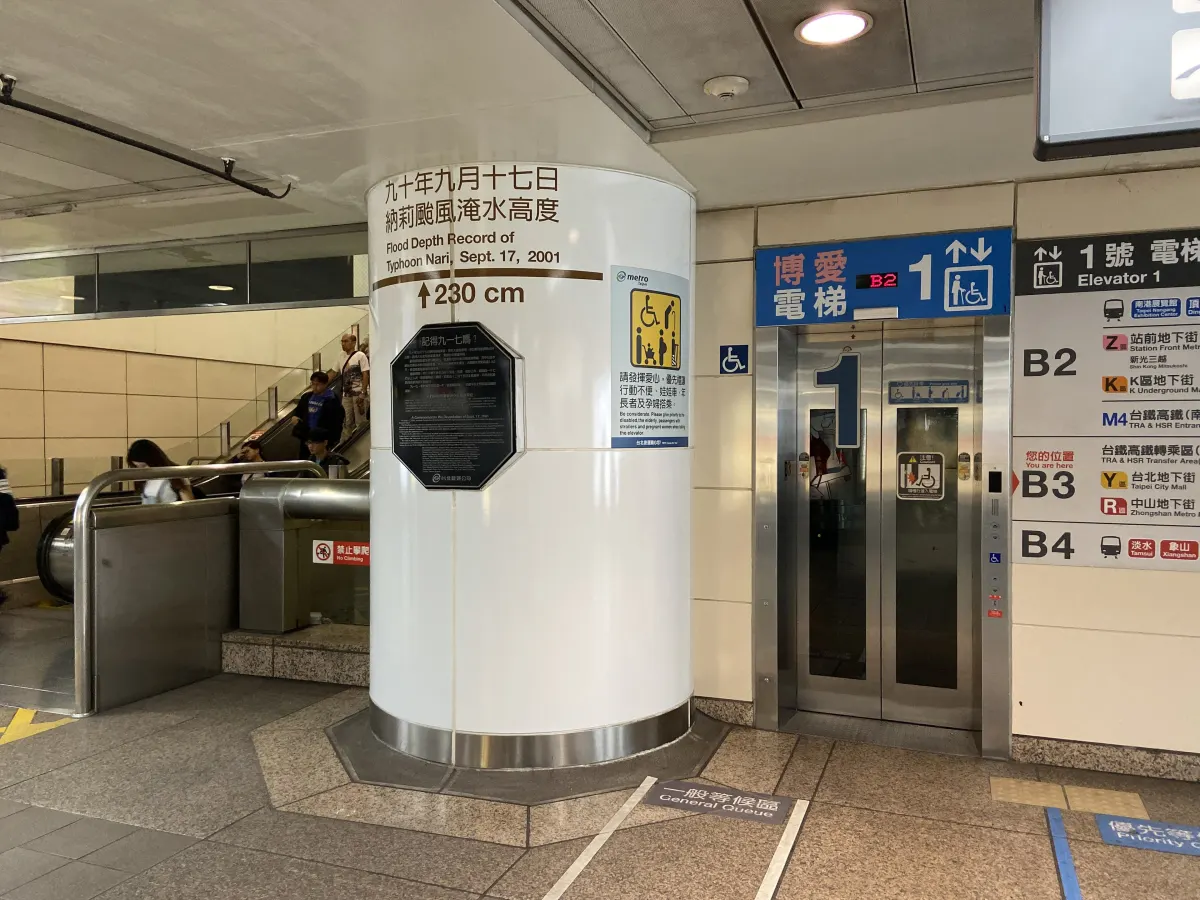
If a typhoon is coming
- Keep your plans flexible in the typhoon season, and have travel insurance that covers cancellations.
- Stay indoors when the typhoon passes. Stock up on water and snacks: convenience stores often stay open, but restaurants close.
- Stay away from the coast, rivers and the mountains, before and after the storm: landslides and floods continue after the wind dies down.
- Check that your trains, flights and ferries are running, and re-book early if they're not: everyone else will be trying too.
- Typhoons can also bring cooler, clearer days afterwards, and most visitors only ever see one as a day of heavy rain indoors.
Heavy rain and the plum rains
Heavy rain causes landslides and floods outside the typhoon season too, especially in the plum rain season of May and June. See Weather and when to go.
See also: Safety.




Comments
No comments yet.