
Visiting temples in Taiwan: etiquette, gods, fortune telling and festivals
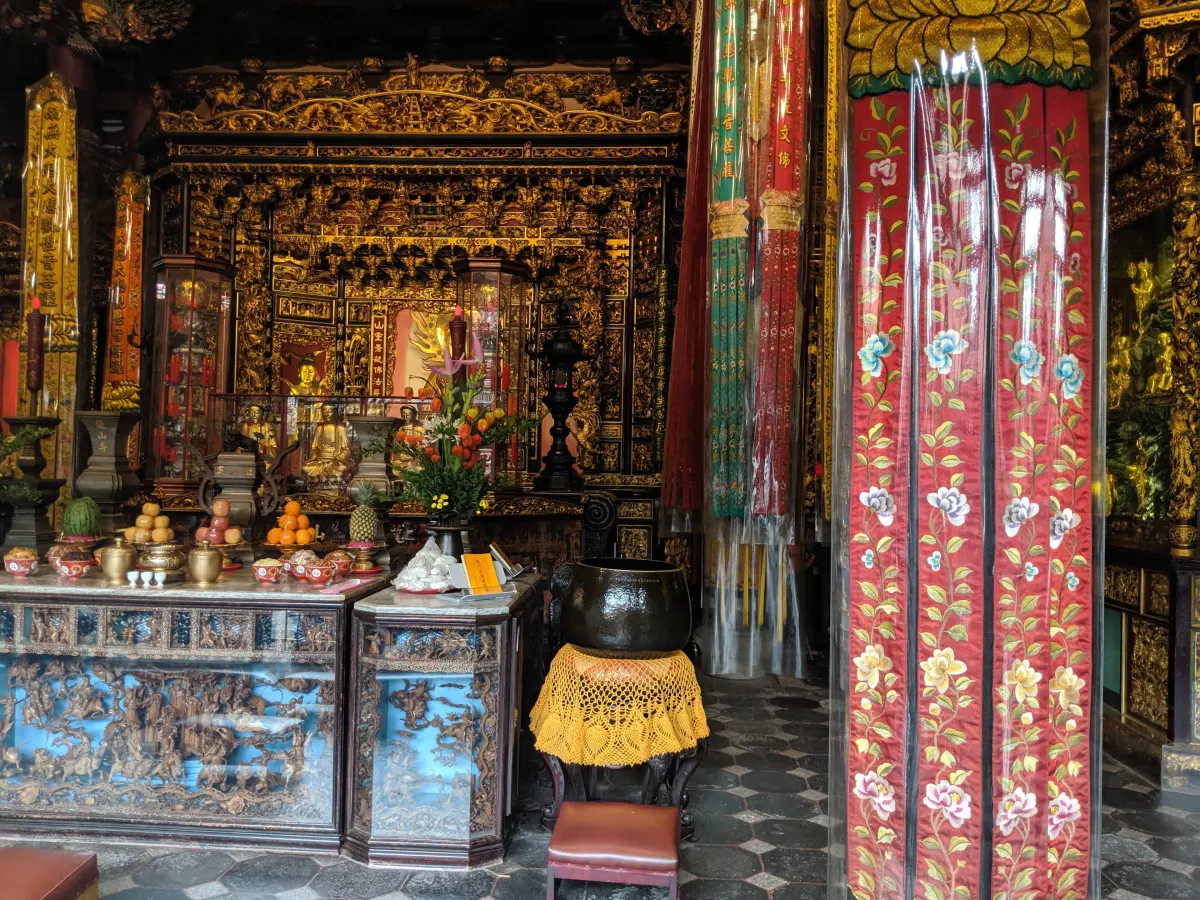
Taiwan has more than 12,000 registered temples, from tiny roadside shrines to vast, glittering complexes, and they're very much alive: locals drop in to pray, ask the gods for advice and burn incense at all hours. Visitors are welcome almost everywhere.
Temple etiquette
- You don't need to cover up as strictly as in some countries, but dress respectfully: avoid very short shorts and skimpy tops.
- Traditionally, you go in through the right-hand door (the dragon door, on your right as you face the temple) and leave through the left (the tiger door). The middle door is for the gods.
- Don't step on the raised threshold of a door: step over it.
- Be quiet and don't walk in front of people praying. Don't point at the statues of the gods, or touch them, and don't sit with your feet pointing towards them.
- Photos are usually fine in the courtyards and halls, but not of people praying close up, and look out for signs: some inner halls forbid them. Don't use a flash.
- Temples are free. Donation boxes are welcome, and you can buy incense, paper money and offerings at a counter.
Incense and offerings
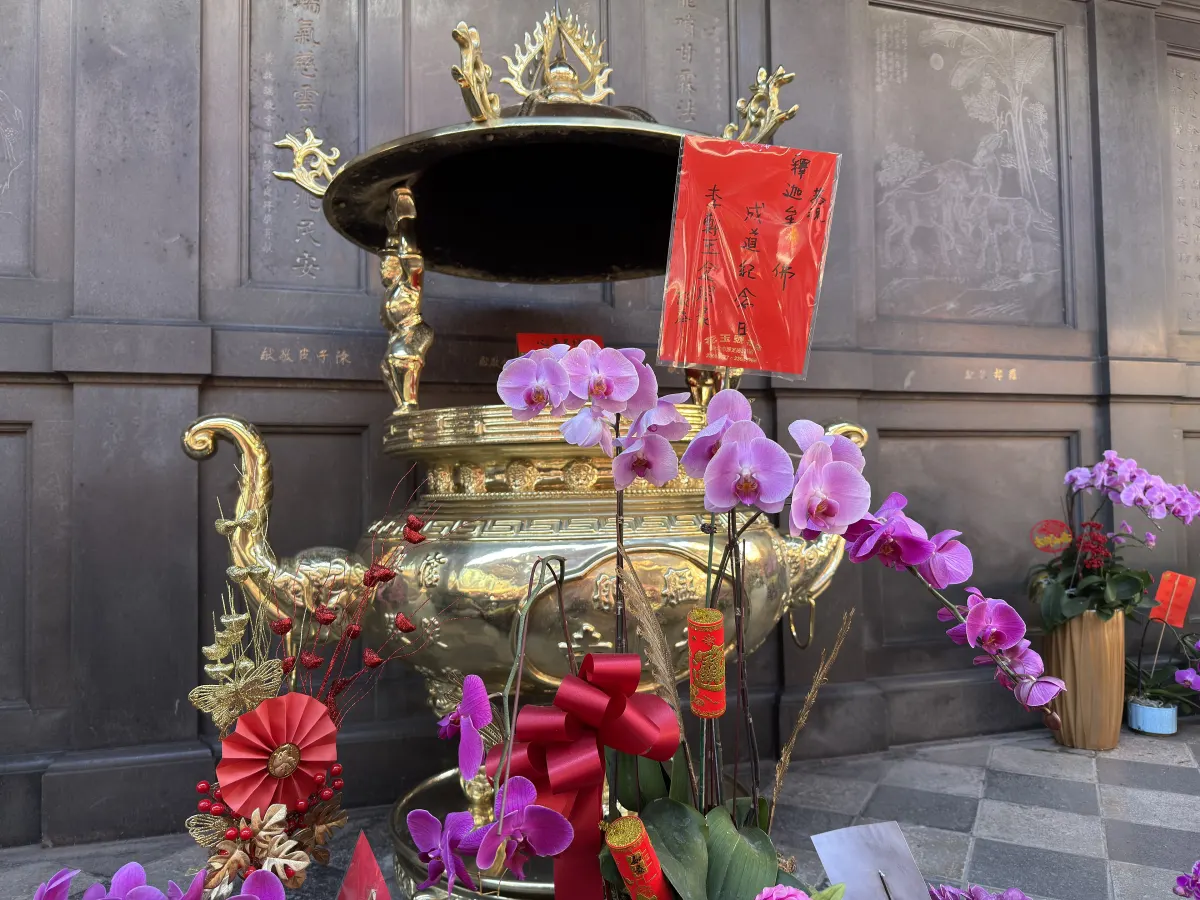
Worshippers light incense and bow to the gods in turn, following a set order round the temple, and place the sticks in the burners. Many temples have cut down on incense to reduce air pollution, so you may find fewer burners or be asked to use only one stick. Offerings of fruit, flowers and food are left on the tables, and paper "ghost money" is burnt in the furnaces.
The gods
- Mazu, the sea goddess and protector of fishermen and sailors, is the most popular god in Taiwan.
- Guanyin, the Buddhist goddess of mercy, and Guan Gong, the red-faced god of war, loyalty and business, are also everywhere.
- Many temples mix Buddhist, Taoist and folk gods. Confucian temples, such as the Confucius Temple in Tainan, are quieter, and students visit them to pray before exams.
- The god of matchmaking, the Old Man under the Moon, draws young people looking for love, especially at Longshan Temple in Taipei and in Tainan.
Asking the gods
- Moon blocks (bwah bwei): two red crescent-shaped blocks, flat on one side and round on the other. Ask a yes-or-no question, and drop them: one flat and one round side up means yes.
- Fortune sticks: shake a pot of numbered sticks until one falls out, then check with the moon blocks that it's the right one, and collect the poem with that number from the drawers. Some temples have English versions, and volunteers who'll help explain.
Temples to visit
- In Taipei: Longshan Temple and Dalongdong Baoan Temple.
- In Tainan, the old capital, which has more temples than anywhere else: the Confucius Temple and dozens of others in the old town.
- Lukang, with its own Longshan Temple and Mazu temple, the Lotus Pond in Kaohsiung, and the huge Buddhist complex at Fo Guang Shan.
Festivals
- The Lantern Festival, on the 15th day of the Lunar New Year, with lantern displays all over Taiwan and sky lanterns released at Pingxi.
- The Mazu pilgrimages in spring, around Mazu's birthday: the Dajia Mazu procession walks for nine days through central Taiwan, with huge crowds, firecrackers and processions of gods.
- Ghost Month, the seventh month of the lunar calendar (usually in August), when the gates of the underworld are said to open. There are offerings everywhere and ceremonies at temples, and some locals avoid swimming, travelling or moving house.
- Gods' birthdays are celebrated all year with parades, puppet shows, opera and firecrackers. If you see one, stop and watch, but keep your distance from the firecrackers.
See also: Culture and etiquette.

Comments
No comments yet.