Walks and treks
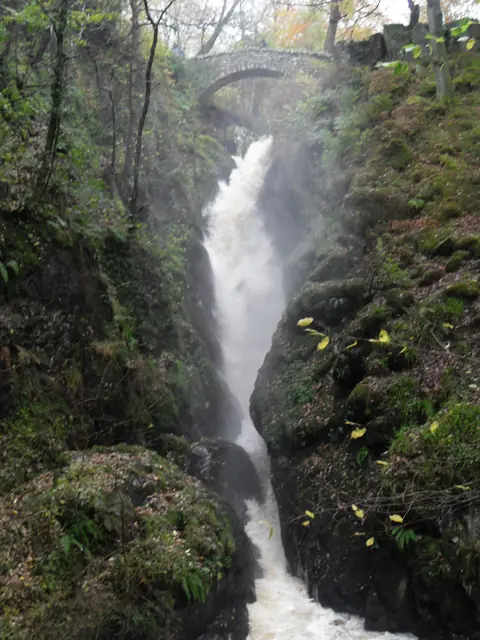
Aira Force and Ullswater
Keswick, Cumbria
A 65-foot waterfall crashing through a wooded ravine above Ullswater, often called the most beautiful lake in England.
About England · All tips in United Kingdom
A 65-foot waterfall crashing through a wooded ravine above Ullswater, often called the most beautiful lake in England.
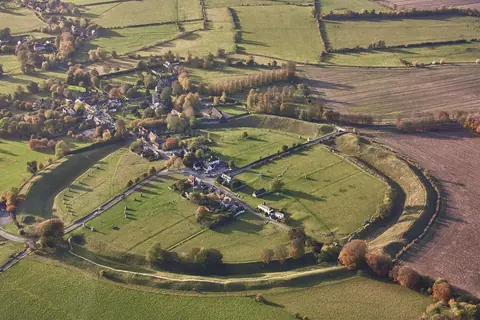
The largest stone circle in Britain, so big that part of the village of Avebury sits inside it.
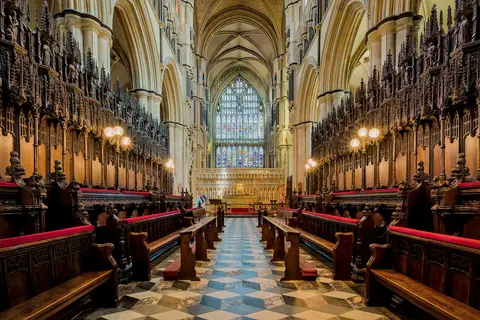
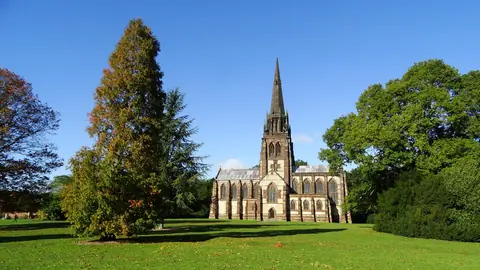
One of the finest Gothic churches in Europe, and often called the most beautiful church in England that isn't a cathedral.
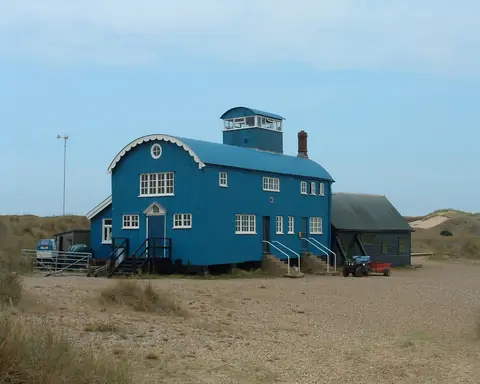
A long shingle spit on the north Norfolk coast, home to England's largest colony of grey seals; around 4,000 pups are born here each winter.
A storybook castle with round towers and battlements, rising straight out of a wide moat.
The heart of the University of Oxford: the Bodleian, one of the oldest libraries in Europe, and the domed Radcliffe Camera beside it, Oxford's most f…
The family home of Sir Winston Churchill from 1924 until the end of his life, kept much as it was in the 1930s, with his books, pictures and uniforms.
The grandest of Oxford's colleges, founded by Cardinal Wolsey and Henry VIII in 1546.
The dramatic ruin of a royal castle on a steep hill in a gap in the Purbeck Hills, above a village of grey stone cottages.
The Victorian home of the inventor and industrialist Lord Armstrong, and the first house in the world lit by hydroelectricity.
A limestone valley in the Peak District, with steep wooded sides and strange rock formations such as Lion's Head Rock and Ilam Rock along the River D…
A group of rocky islands off the Northumberland coast, home to around 200,000 seabirds in summer, including tens of thousands of puffins, and a large…
The largest monastic ruin in England, a Cistercian abbey founded in 1132 and closed by Henry VIII, set in a wooded valley beside the River Skell.
The wall built across northern England by the Emperor Hadrian from 122 AD to guard the Roman Empire's north-west frontier.
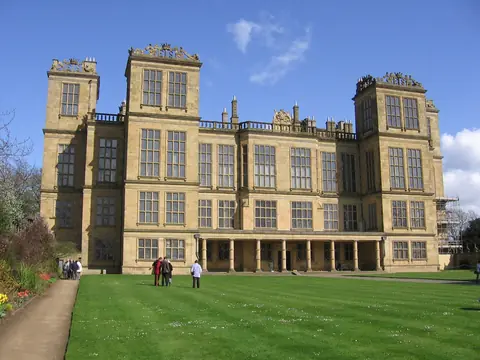
"Hardwick Hall, more glass than wall": an Elizabethan prodigy house built in the 1590s for Bess of Hardwick, one of the richest women in England, who…
One of England's most influential gardens, created in the early 1900s by the American horticulturist Lawrence Johnston.
The small 17th-century farmhouse Beatrix Potter bought in 1905 with the money from her first books, and where she wrote many of her tales.
England's only natural World Heritage Site, a 150 km stretch of coast in Dorset and Devon whose cliffs show 185 million years of geological history, …
The Royal Botanic Gardens at Kew, in south-west London, a UNESCO World Heritage Site, hold one of the largest collections of living plants in the wor…
A masterpiece of late Gothic architecture, built between 1446 and 1515, with the largest fan-vaulted ceiling in the world and magnificent stained gla…
One of the most beautiful coves in Cornwall, with white sand, turquoise water and islands of dark red and green serpentine rock.
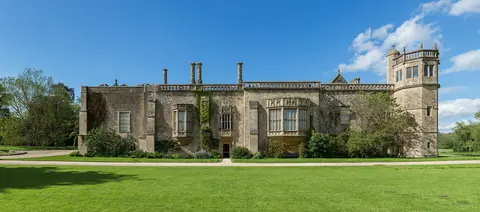
A medieval nunnery turned into a country house, where William Henry Fox Talbot made the earliest surviving photographic negative in 1835, of an oriel…
England's largest national park, a UNESCO World Heritage Site of lakes, fells and stone villages that inspired Wordsworth and Beatrix Potter.
A Tudor fort on a rocky outcrop on Holy Island, turned into a holiday home by Edwin Lutyens for Edward Hudson, founder of Country Life magazine.
A Victorian cliff railway, opened in 1890, linking the twin villages of Lynmouth, at sea level, and Lynton, 150 m above on the cliff top.
A cathedral-like Victorian museum in South Kensington, with a blue whale skeleton hanging in the great Hintze Hall, dinosaurs including a moving T.
Porthcurno is a stunning beach of fine white shell sand and clear blue-green water in a steep cove near Land's End.
A remarkably well-preserved Roman bathing complex built around natural hot springs, with the steaming green Great Bath at its centre, surrounded by G…
A wide crescent of white sand and turquoise water at the far western tip of Cornwall, sheltered by Pedn-men-du headland.
The half-timbered house on Henley Street where William Shakespeare was born in 1564 and grew up.
One of the most famous gardens in England, created in the 1930s by the writer Vita Sackville-West and her husband Harold Nicolson around the ruins of…
A tidal island off the coast of Cornwall crowned by a medieval castle and church, the home of the same family since the 17th century.
The world's most famous prehistoric monument, a ring of huge standing stones on Salisbury Plain, built in stages from about 3000 BC; some of the ston…
One of the world's most famous landscape gardens, laid out in the 18th century around a lake by the banker Henry Hoare.
A vast 18th-century landscape garden full of temples, monuments and bridges, made by the Temple family with help from Capability Brown, who was head …
The Anglo-Saxon royal burial ground where, in 1939, a great ship burial was found under a mound, full of treasures, among them a magnificent iron hel…
One of the world's great museums, founded in 1753, with eight million objects covering two million years of human history.
A castle on the Thames founded by William the Conqueror in the 1070s, which has served as a royal palace, a prison and a place of execution.
A French Renaissance-style château built in the 1870s and 1880s for Baron Ferdinand de Rothschild to display his collection of art and to entertain.
A lovely walk from Lynmouth up the wooded gorge of the East Lyn River to Watersmeet, where the East Lyn and Hoar Oak Water meet in a series of waterf…
Westminster Abbey has been the coronation church of English monarchs since 1066, and holds the tombs of kings and queens, and of Newton, Darwin and m…
The famous chalk cliffs above the English Channel, a symbol of Britain for travellers arriving by sea.
The oldest and largest occupied castle in the world and an official residence of the King.
York Minster is one of the largest Gothic cathedrals in northern Europe, with the Great East Window, the largest expanse of medieval stained glass in…
A Jacobean house on the site of an Augustinian priory, filled with the art collection of Lord Fairhaven, who also laid out the large gardens with ave…
A Regency house in a wooded valley on the edge of Exmoor, filled with the collections of Rosalie Chichester, who lived here until 1949: model ships, …
Over 5,000 acres of woods, commons and chalk downland on the Chiltern Hills, with walks for every length.
A grand Georgian mansion built in 1785 for the 1st Lord Berwick, with a picture gallery by John Nash and a collection of Regency silver and Italian f…
A medieval moated manor house in the Forest of Arden that hid Catholic priests in the 1590s; three priest holes can still be seen.
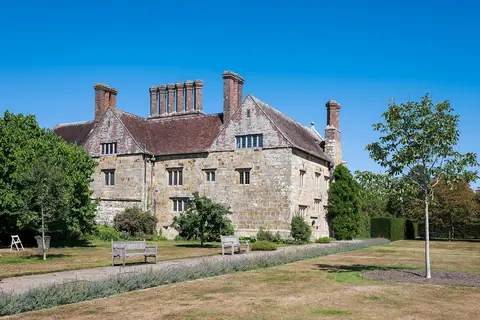
The 17th-century sandstone house in the Sussex countryside where Rudyard Kipling, author of The Jungle Book, lived from 1902 until his death.
The homes where John Lennon and Paul McCartney grew up: Mendips, the 1930s semi where John lived with his Aunt Mimi, and 20 Forthlin Road, the counci…
A perfect example of a Restoration country house, built in the 1680s for the Brownlow family, with rooms of fine plasterwork, carvings and silver.
Fifteen acres of gardens in leafy Edgbaston, laid out in 1832, with four glasshouses, from tropical rainforest and subtropical to Mediterranean and a…
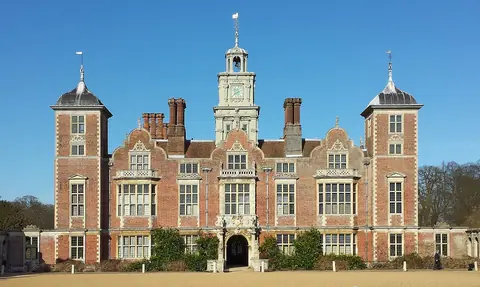
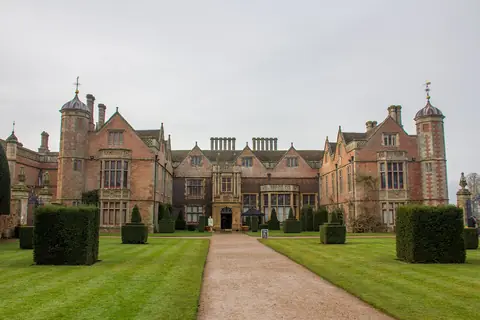
A Jacobean house of red brick framed by yew hedges, said to stand on the site of the home of Anne Boleyn's family, and to be visited by her ghost eve…
Seven miles of golden sand, with clean water and Blue Flag beaches, running from Sandbanks to Hengistbury Head.
A chalk hill on the North Downs with one of the best-known views in south-east England, from the Salomons Memorial across the Weald.
Strange balancing rock formations of millstone grit on a moor in Nidderdale, carved by ice, wind and rain into shapes with names like the Dancing Bea…
A wooded island in Poole Harbour, and one of the few places in southern England where red squirrels still live.
A 13th-century Cistercian abbey turned into a house, later bought by Sir Francis Drake after his voyage around the world.
A chocolate-themed attraction at Cadbury's factory in Bournville, the model village built by the Cadbury family for its workers in south Birmingham.
The "un-stately home": a Baroque mansion where the reclusive Harpur Crewe family hoarded everything and changed little for over a century.
The mother church of the Anglican Communion and one of England's oldest Christian sites, founded in 597.
The last castle built in England, designed by Edwin Lutyens for the grocery millionaire Julius Drewe and finished in 1930.
A Tudor house of red brick beside the River Avon, home to the Lucy family for over 900 years.
A grand Italianate mansion on cliffs above the Thames, once the home of the Astor family and the setting of the Profumo affair.
Over 3,800 acres of parkland, woods and heath in Sherwood Forest, once the estate of the Dukes of Newcastle.
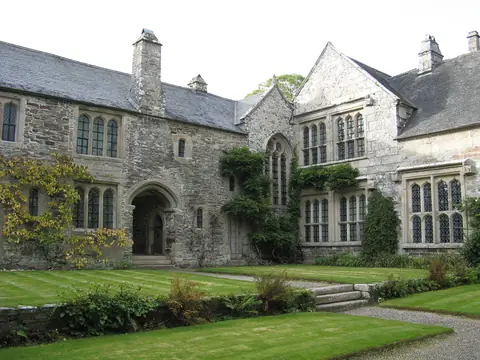
A Tudor house of granite and slate above the River Tamar, kept almost unchanged for centuries, with tapestries, armour and old furniture in dim, atmo…
Capability Brown's first complete landscape, made from marshland for the 6th Earl of Coventry in the 1750s, around a Palladian house, the first he de…
A Georgian house and deer park on the edge of Manchester, home of the Earls of Stamford, with a house that was a military hospital in the First World…
A castle on a wooded hill above the medieval village of Dunster, home to the Luttrell family for 600 years and remodelled as a Victorian country house.
A Baroque house built in the late 1600s for William Blathwayt, a civil servant to William III, set at the foot of a deer park in a fold of the Cotswo…
Huge geodesic domes, built in a former clay pit in Cornwall, contain two of the world's largest greenhouses.
A stretch of wild sandy beach and dunes north of Liverpool, backed by pinewoods where red squirrels still live.
A Georgian landscape garden in the Derwent Valley, created by the coal baron George Bowes, with a Palladian chapel, a column to Liberty taller than N…
A subtropical garden in a valley running down to the Helford River, planted by the Fox family in the 1820s.
The highest cliff on the south coast of England, named for the band of golden sandstone at its top, part of the Jurassic Coast World Heritage Site.
A 17th-century house on the Thames, home of the Duchess of Lauderdale and kept with much of its original furniture and decoration.
A rare surviving medieval royal hunting forest, much as it was in Norman times, with ancient pollarded oaks and hornbeams, grassy rides and a lake.
A wild headland at the eastern end of Bournemouth's beaches, with heathland, woods and a sandy spit, and views over Christchurch Harbour, the Isle of…
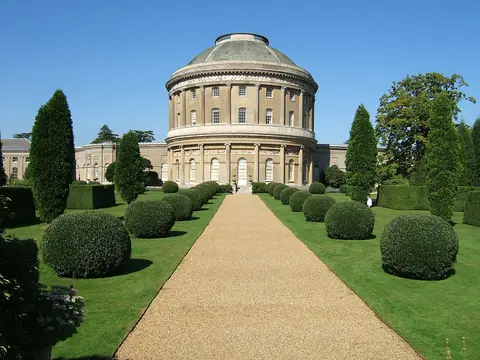
An eccentric Italianate house with a huge central rotunda, built by the 4th Earl of Bristol, also the Bishop of Derry, to hold the art he collected o…
A medieval manor house surrounded by a moat, hidden in a wooded valley.
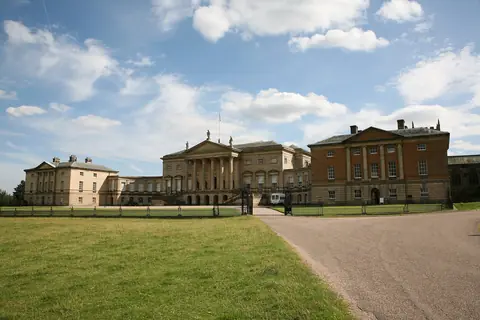
A Palladian mansion with some of the finest interiors by Robert Adam, built in the 1760s for the Curzon family.
A grand country house in the style of an Italian palazzo, built for the Bankes family after they lost Corfe Castle in the Civil War.
One of the largest houses in England, more like a small town, built for an Archbishop of Canterbury and taken by Henry VIII.
A small, rugged cove of granite boulders at the end of a wooded valley near Mousehole, which drew a colony of artists in the early 20th century.
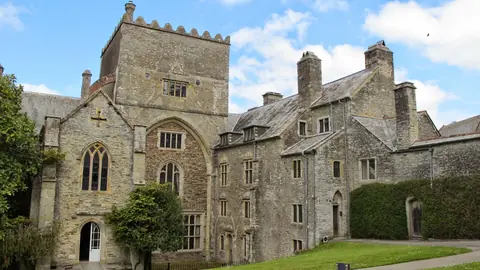
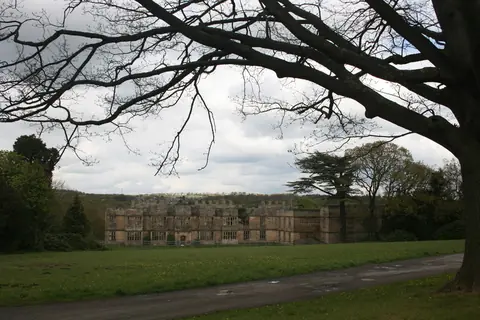
A grand late Victorian country house rebuilt after a fire in 1881, with a gatehouse and gallery from the 17th century.
A tin and copper mine on the cliffs of the Atlantic coast, where tunnels reached far out under the sea.
A wonderfully crooked Tudor manor house of black and white timber framing, surrounded by a moat.
The most southerly point of mainland Britain, with rugged cliffs, a lifeboat station and the white Lizard Lighthouse.
A 135 m observation wheel on the South Bank of the Thames, opposite the Houses of Parliament.
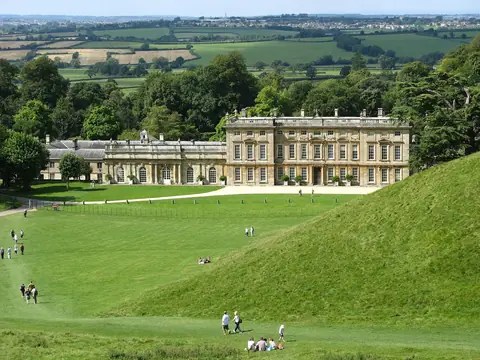
A grand house with an Italianate front set in a huge deer park on the edge of the Peak District.
The highest lake in England, surrounded by limestone pavement and moorland in the Yorkshire Dales.
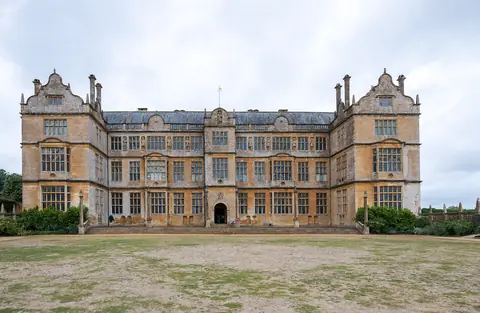
A glittering Elizabethan mansion of golden Ham Hill stone, built in the 1590s with great walls of glass.
A medieval priory turned into a house beside the River Test, best known for its walled garden of old-fashioned roses, one of the finest collections i…
A garden made by the Messel family, plant collectors who brought rare trees and shrubs from around the world.
The largest vegetated shingle spit in Europe, cut off from the mainland by the River Alde, where secret military research took place for most of the …
A Tudor mansion transformed by Robert Adam in the 18th century for the Child family of bankers, with some of his finest interiors, from the Etruscan …
A moated manor house built in 1482 by the Bedingfeld family, who still live here.
A historic indoor market in the centre of Oxford, open since 1774, with about 50 independent traders: butchers, bakers, cheesemongers, cafés, florist…
Britain's first national park, between Manchester and Sheffield, with gritstone edges, moorland and limestone dales.
One of the best-preserved medieval manor houses in England, home of the Sidney family since 1552.
A grand 17th-century mansion holding one of the finest art collections in the care of the National Trust, including paintings by Turner, who painted …
The Edwardian country house of the society hostess Margaret Greville, where kings, maharajas and politicians came to stay.
An 18th-century landscape garden on a hillside above Bath, with one of only four Palladian bridges of its kind in the world.
One of the best preserved textile mills of the Industrial Revolution, founded in 1784 by Samuel Greg.
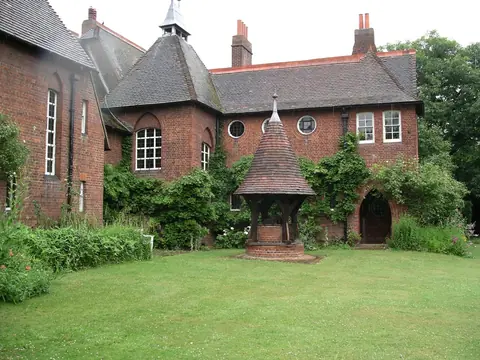
The only house commissioned by William Morris, designer and leader of the Arts and Crafts movement, built in 1859 by his friend Philip Webb.
A distinctive hill with a half-cone summit on the edge of the North York Moors, shaped by a geological fault and mining that collapsed its side.
The water meadow beside the Thames where King John agreed to Magna Carta in 1215, the charter that became a foundation of law and liberty.
The romantic ruin of a 14th-century moated castle, set as the centrepiece of a picturesque garden by the Hussey family when they built a new house on…
A Baroque masterpiece designed by Sir John Vanbrugh, architect of Blenheim, for the Delaval family, known for their wild parties and practical jokes.
A series of white chalk cliffs rising and falling along the Sussex coast in the South Downs National Park.
A landscape garden with four lakes, laid out in the 18th century and planted with trees from around the world.
A landscape park designed by Humphry Repton, who called it his favourite work, with a huge collection of rhododendrons and azaleas that flower in May…
A medieval house built around a 14th-century tower, home to the Strickland family for over 700 years.
A Cotswold manor filled with the extraordinary collection of the architect and craftsman Charles Wade, who gathered over 20,000 objects: Japanese sam…
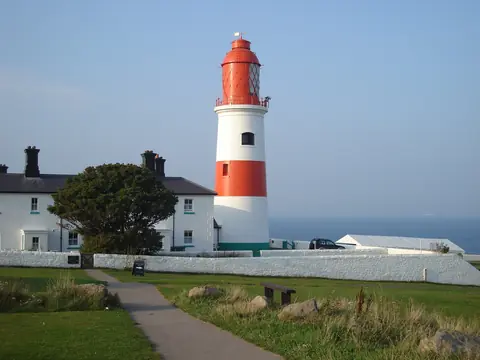
A red and white striped lighthouse opened in 1871, the first designed to use alternating electric current.
A rare Tudor black and white timber-framed manor house on the banks of the Mersey, built around a courtyard with two ancient yew trees.
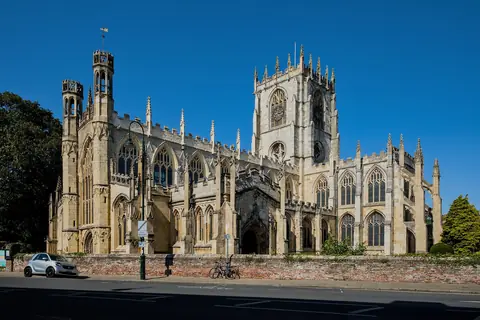
A beautiful medieval parish church at the other end of Beverley's centre from the Minster, with a painted chancel ceiling showing all the kings of En…
A pretty lake surrounded by woods and fells, with views to the Langdale Pikes and Helvellyn.
A towering red-brick castle built in the 1430s for Ralph Cromwell, Lord Treasurer of England, rising high above the flat Lincolnshire fens.
Liverpool city centre's oldest building, a Queen Anne-style former charity school built in 1717, and now the UK's oldest arts centre.
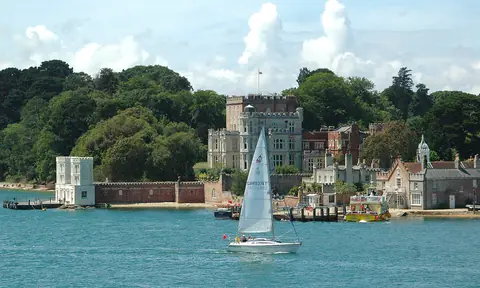
A Victorian fort perched on the cliffs at the western tip of the Isle of Wight, with views straight down to the Needles, three chalk stacks rising fr…
An elegant Georgian colonnade in the old spa town of Royal Tunbridge Wells, built around the Chalybeate Spring, whose iron-rich water was discovered …
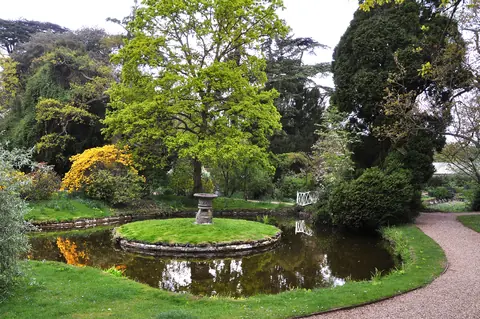
A romantic Regency garden created in the 1820s by Lord Ongley, with a thatched Swiss cottage, ponds, bridges, a fernery and grotto, and winding paths…
A spectacular Victorian Gothic Revival house, with towers, turrets and a private chapel, built for the Gibbs family, who made a fortune from guano.
A graceful prehistoric figure of a horse cut into the chalk of a hillside about 3,000 years ago, the oldest hill figure in Britain.
A dry valley running parallel to the sea just west of Lynton, lined with dramatic rocky tors and crags, and home to a herd of wild feral goats that c…
One of Europe's most important wetlands and the National Trust's oldest nature reserve, bought in 1899.
A Victorian house built in the 1880s for a paint manufacturer, filled with one of the best collections of Arts and Crafts design and Pre-Raphaelite a…
The largest country house in Cambridgeshire, with a library and chapel decorated by some of the best architects of the 18th century.
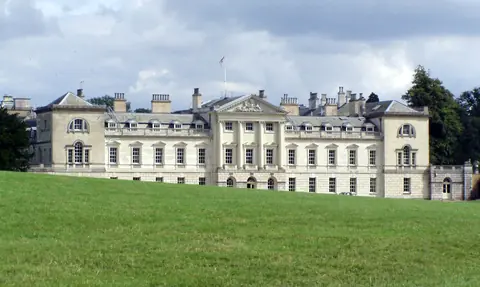
Woburn Abbey has been the home of the Dukes of Bedford for nearly 400 years.
The farmhouse where Isaac Newton was born in 1642 and where he did much of his most important work while Cambridge was closed by the plague in 1665 a…
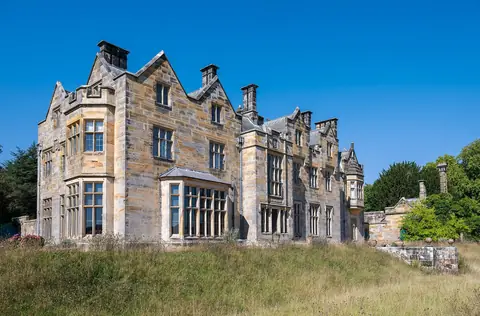
A Victorian Gothic country-house hotel built in 1881, set in parkland on the edge of the North York Moors National Park at Scalby, just outside Scarb…
A youth hostel in a large Victorian house, five minutes' walk from the River Thames at Streatley, where the Thames Path crosses the ancient Ridgeway …
A Victorian riverside promenade along the River Great Ouse in Bedford, with gardens, tree-lined walks and the white Suspension Bridge.
A Grade II* listed timber-framed house built in 1577, now a pub and restaurant.
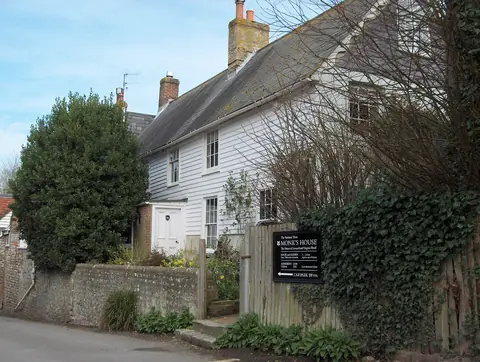
The weatherboarded cottage in the village of Rodmell that was the country home of the writer Virginia Woolf and her husband Leonard.
The north-east corner of Hyde Park, near Marble Arch, has been London's home of free speech since 1872.
A mock-Gothic castle with turrets and battlements on the western shore of Windermere, built in the 1840s for a retired surgeon.