
Natural features

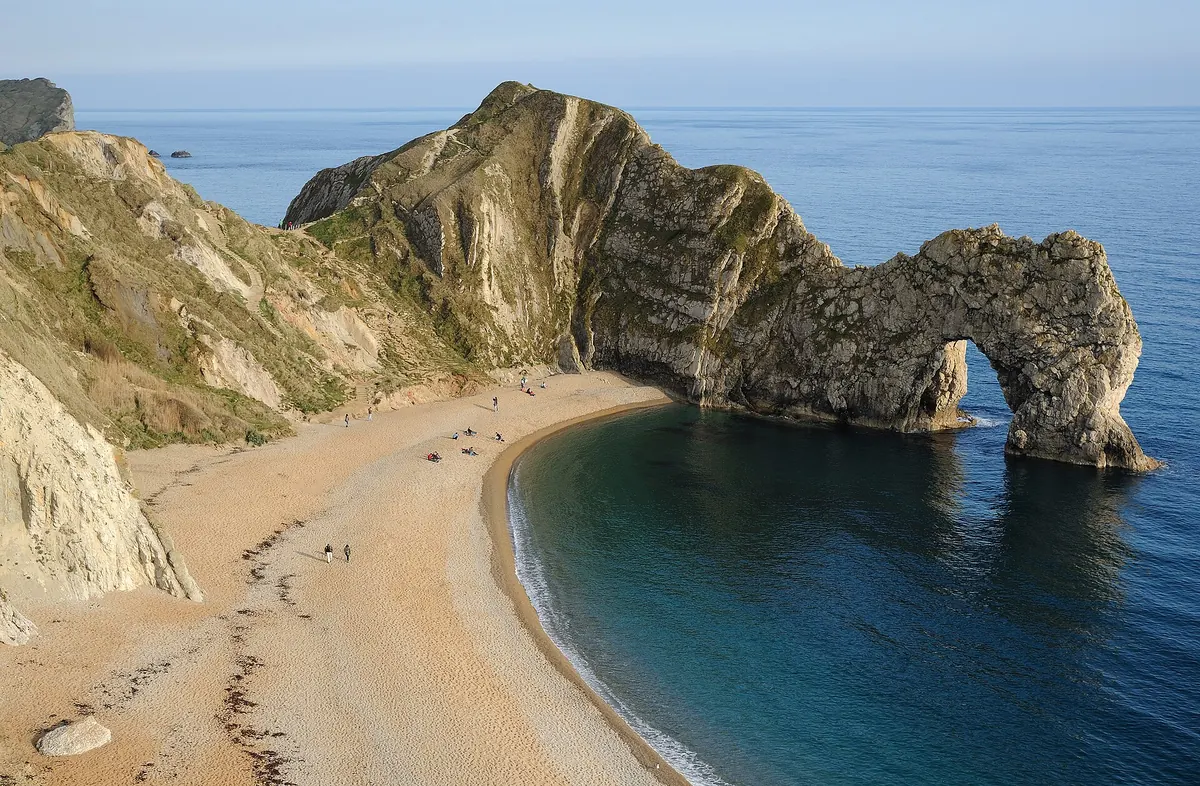
Jurassic Coast and Durdle Door
United Kingdom Dorset Wool

Jurassic Coast and Durdle Door
Photo: Saffron Blaze, CC BY-SA 3.0, via Wikimedia Commons

England's only natural World Heritage Site, a 150 km stretch of coast in Dorset and Devon whose cliffs show 185 million years of geological history, and where fossils are often found. Its most famous sight is Durdle Door, a natural limestone arch, with nearby Lulworth Cove, an almost circular bay.


Walk the cliff path between Lulworth and Durdle Door (about 1 km, steep) or further along the South West Coast Path. Hunt for fossils on the beaches at Charmouth and Lyme Regis, ideally on a falling tide after storms.

Comments

No comments yet.

Historic sites

Corfe Castle

Corfe Castle, Dorset

The dramatic ruin of a royal castle on a steep hill in a gap in the Purbeck Hills, above a village of grey stone cottages.

Natural features

Brownsea Island

Corfe Castle, Dorset

A wooded island in Poole Harbour, and one of the few places in southern England where red squirrels still live.

Historic sites

Kingston Lacy

Sturminster Marshall, Dorset

A grand country house in the style of an Italian palazzo, built for the Bankes family after they lost Corfe Castle in the Civil War.

Natural features

Bournemouth Beach and Pier

Bournemouth, Bournemouth, Christchurch and Poole

Seven miles of golden sand, with clean water and Blue Flag beaches, running from Sandbanks to Hengistbury Head.

Natural features

Hengistbury Head, Bournemouth

Christchurch, Bournemouth, Christchurch and Poole

A wild headland at the eastern end of Bournemouth's beaches, with heathland, woods and a sandy spit, and views over Christchurch Harbour, the Isle of…

Walks and treks

Golden Cap

Charmouth, Dorset

The highest cliff on the south coast of England, named for the band of golden sandstone at its top, part of the Jurassic Coast World Heritage Site.