Buildings
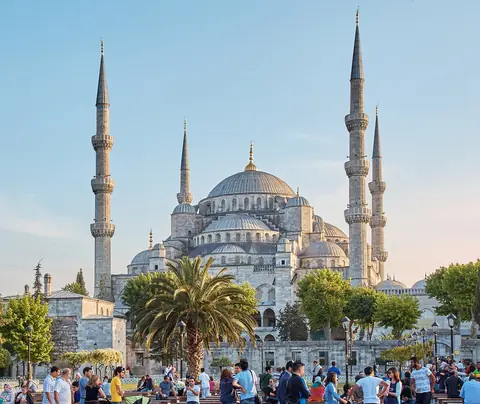
Blue Mosque (Sultan Ahmed Mosque), Istanbul
Fatih, İstanbul
Built between 1609 and 1616, the Sultan Ahmed Mosque is famous for its six minarets, its cascading domes and the more than 20,000 blue İznik tiles th…
Built between 1609 and 1616, the Sultan Ahmed Mosque is famous for its six minarets, its cascading domes and the more than 20,000 blue İznik tiles th…
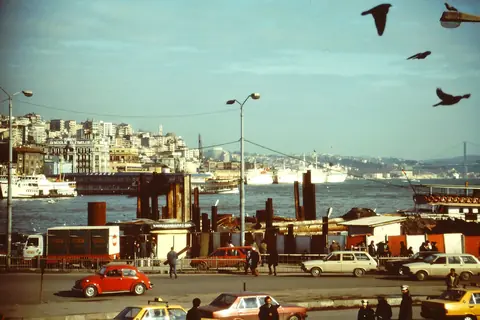
The strait dividing Europe from Asia, lined with palaces, Ottoman wooden mansions (yalı) and fortresses.
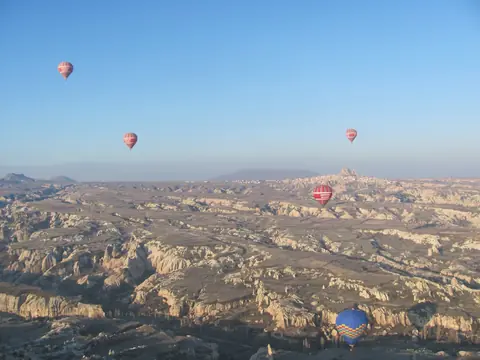
A landscape of rock pinnacles ('fairy chimneys'), valleys and cave dwellings in central Turkey, a UNESCO World Heritage Site.
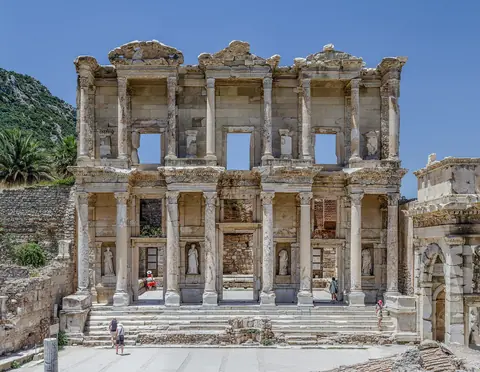
One of the best-preserved ancient cities in the Mediterranean, once the capital of Roman Asia Minor with up to 250,000 people.
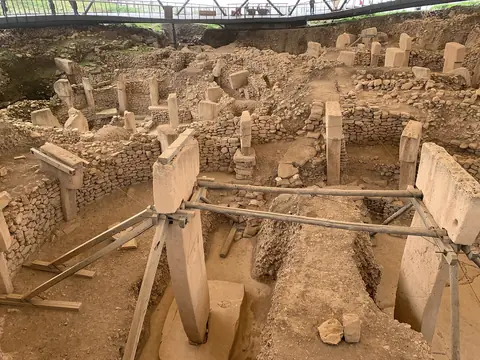
The world's oldest known monumental temple, built around 9600 BC by hunter-gatherers, thousands of years before Stonehenge, with huge T-shaped stone …
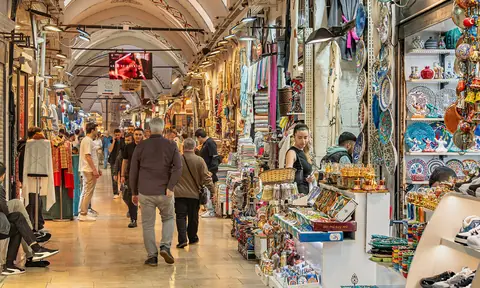
One of the oldest and largest covered markets in the world, begun in 1461.
Built as a cathedral by the Byzantine emperor Justinian in 537, later a mosque, then a museum, and again a mosque since 2020, with a vast dome that s…
A mountain top at 2,134 m where King Antiochus of Commagene built a tomb mound in the 1st century BC, with huge stone heads of gods and kings now sca…
Ölüdeniz is one of Turkey's most famous beaches: a long curve of shingle beach and a sheltered lagoon of turquoise water, backed by pine-covered moun…
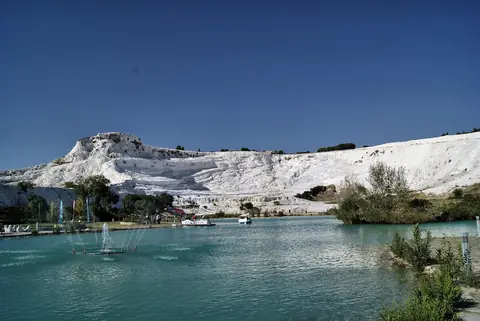
Pamukkale ('cotton castle') is a hillside covered in dazzling white terraces of travertine, formed by calcium-rich hot springs flowing down the slope…
The palace of the Ottoman sultans for nearly 400 years, on a point above the Bosphorus and the Golden Horn, with courtyards, pavilions tiled in Iznik…
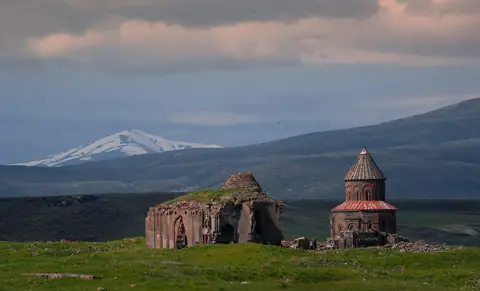
The ruined medieval Armenian capital on the closed border with Armenia, once a city of 100,000 people, with the remains of churches, a cathedral and …
The walled old town of Antalya, with Ottoman houses, Hadrian's Gate, a Roman harbour and the Yivli Minaret, above the turquoise Mediterranean.
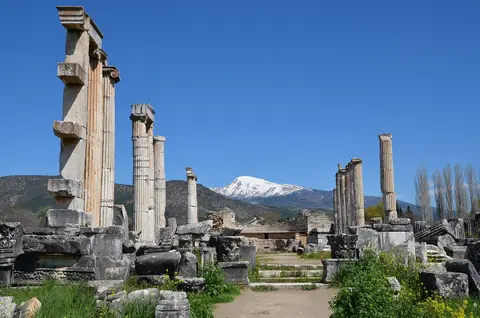
A Roman city famous for its school of marble sculpture, with a superbly preserved stadium for 30,000 spectators, a monumental gateway (the Tetrapylon…
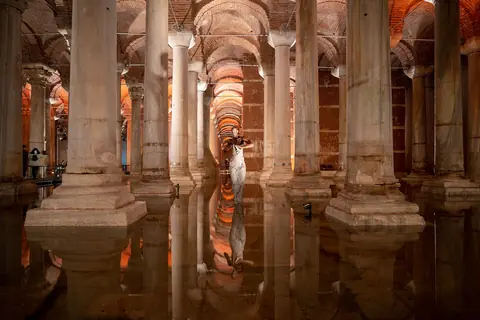
A vast underground Byzantine water reservoir built in the 6th century, with 336 marble columns rising from the water, dimly lit, and two Medusa heads…
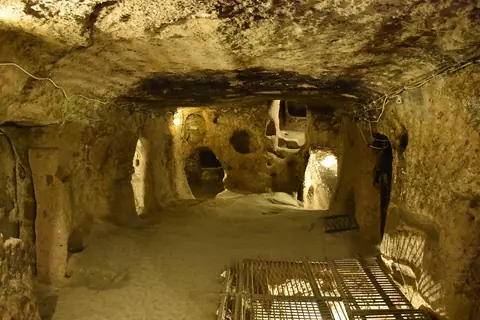
An underground city carved into the soft rock up to 85 m deep, with stables, wineries, chapels and ventilation shafts, which could shelter thousands …
The battlefields of the 1915 Gallipoli campaign, where Allied forces, including Australians and New Zealanders, fought the Ottomans.
The restaurant where İskender kebab was invented, run by the same family since 1867.
A long-distance trail of about 540 km along the Mediterranean coast from Fethiye to Antalya, past Lycian tombs, ruins and beaches.
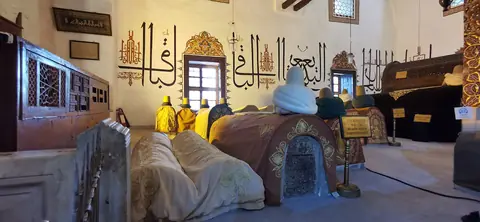
The tomb of the Sufi poet Rumi (Mevlana), under a green-tiled dome, now a museum and a pilgrimage site.
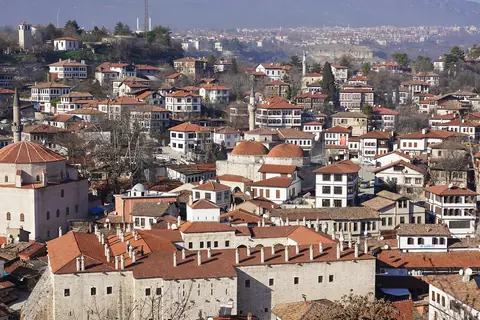
A town of well-preserved Ottoman timber-framed houses, a UNESCO World Heritage Site, once a stop on the caravan route.
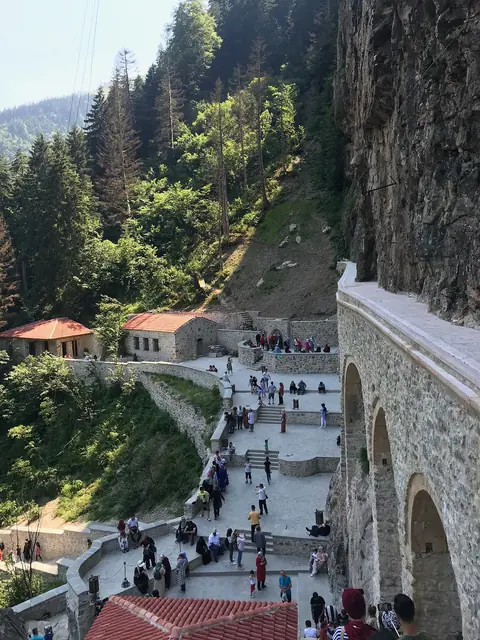
A Greek Orthodox monastery clinging to a cliff face 1,200 m up in a forested valley near Trabzon, founded in the 4th century, with frescoes in the ro…
A family-run hotel in Pamukkale village with a garden courtyard and pool, a short walk from the travertine terraces.
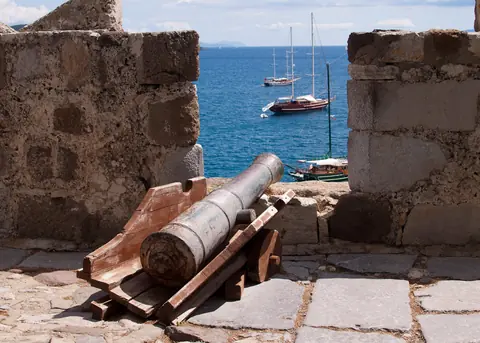
A castle built by the Knights of St John in the 15th century, partly from stones of the Mausoleum of Halicarnassus, one of the Seven Wonders.
A family-run hotel in Pamukkale village, about six minutes' walk from the entrance to the white travertine terraces and the ruins of Hierapolis.
The ruins of the legendary city of the Trojan War, with nine layers of settlement over 4,000 years, a UNESCO World Heritage Site.