Historic sites
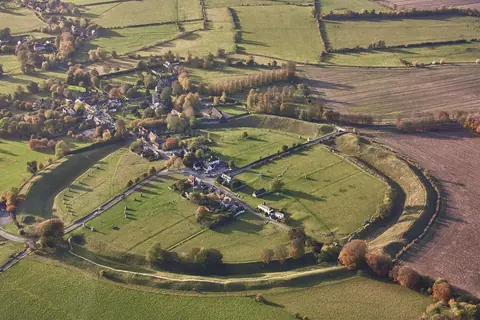
Avebury Stone Circle
Marlborough, Wiltshire
The largest stone circle in Britain, so big that part of the village of Avebury sits inside it.
The largest stone circle in Britain, so big that part of the village of Avebury sits inside it.
A storybook castle with round towers and battlements, rising straight out of a wide moat.
The family home of Sir Winston Churchill from 1924 until the end of his life, kept much as it was in the 1930s, with his books, pictures and uniforms.
The grandest of Oxford's colleges, founded by Cardinal Wolsey and Henry VIII in 1546.
The dramatic ruin of a royal castle on a steep hill in a gap in the Purbeck Hills, above a village of grey stone cottages.
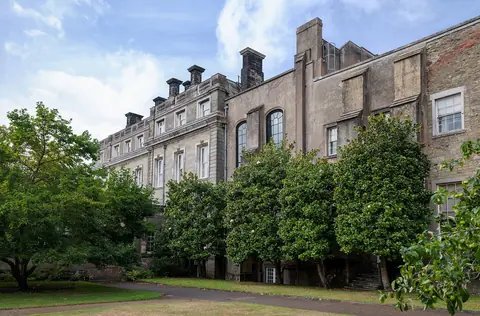
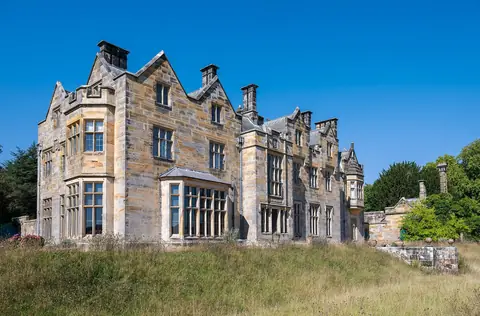
The Victorian home of the inventor and industrialist Lord Armstrong, and the first house in the world lit by hydroelectricity.
A fortress on an extinct volcano above Scotland's capital, the home of the Scottish crown jewels (the Honours of Scotland) and the Stone of Destiny.
The largest monastic ruin in England, a Cistercian abbey founded in 1132 and closed by Henry VIII, set in a wooded valley beside the River Skell.
The wall built across northern England by the Emperor Hadrian from 122 AD to guard the Roman Empire's north-west frontier.
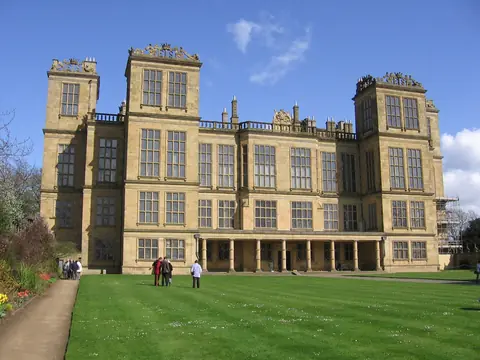
"Hardwick Hall, more glass than wall": an Elizabethan prodigy house built in the 1590s for Bess of Hardwick, one of the richest women in England, who…
The small 17th-century farmhouse Beatrix Potter bought in 1905 with the money from her first books, and where she wrote many of her tales.
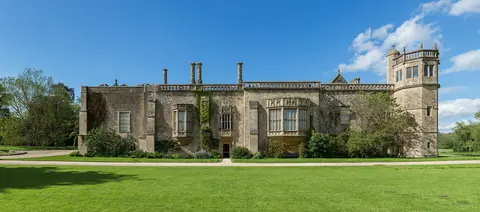
A medieval nunnery turned into a country house, where William Henry Fox Talbot made the earliest surviving photographic negative in 1835, of an oriel…
A Tudor fort on a rocky outcrop on Holy Island, turned into a holiday home by Edwin Lutyens for Edward Hudson, founder of Country Life magazine.
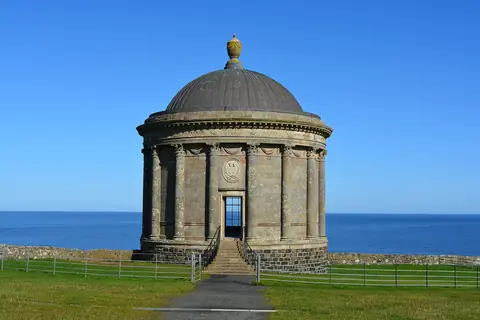
A small round temple, modelled on the temples of Vesta in Italy, perched on the very edge of a cliff above Downhill Strand, built in 1785 as a librar…
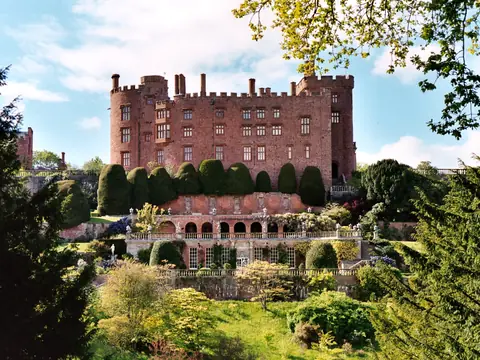
A medieval castle of red stone built by Welsh princes, perched on a ridge above famous Italianate terraced gardens, laid out over 300 years ago and p…
A remarkably well-preserved Roman bathing complex built around natural hot springs, with the steaming green Great Bath at its centre, surrounded by G…
The half-timbered house on Henley Street where William Shakespeare was born in 1564 and grew up.
A tidal island off the coast of Cornwall crowned by a medieval castle and church, the home of the same family since the 17th century.
The world's most famous prehistoric monument, a ring of huge standing stones on Salisbury Plain, built in stages from about 3000 BC; some of the ston…
The Anglo-Saxon royal burial ground where, in 1939, a great ship burial was found under a mound, full of treasures, among them a magnificent iron hel…
A castle on the Thames founded by William the Conqueror in the 1070s, which has served as a royal palace, a prison and a place of execution.
A French Renaissance-style château built in the 1870s and 1880s for Baron Ferdinand de Rothschild to display his collection of art and to entertain.
A Regency house in a wooded valley on the edge of Exmoor, filled with the collections of Rosalie Chichester, who lived here until 1949: model ships, …
A grand Georgian mansion built in 1785 for the 1st Lord Berwick, with a picture gallery by John Nash and a collection of Regency silver and Italian f…
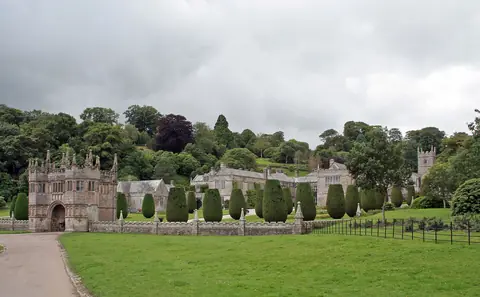
A medieval moated manor house in the Forest of Arden that hid Catholic priests in the 1590s; three priest holes can still be seen.
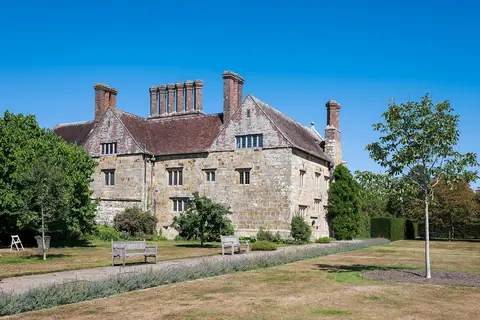
The 17th-century sandstone house in the Sussex countryside where Rudyard Kipling, author of The Jungle Book, lived from 1902 until his death.
The homes where John Lennon and Paul McCartney grew up: Mendips, the 1930s semi where John lived with his Aunt Mimi, and 20 Forthlin Road, the counci…
A perfect example of a Restoration country house, built in the 1680s for the Brownlow family, with rooms of fine plasterwork, carvings and silver.
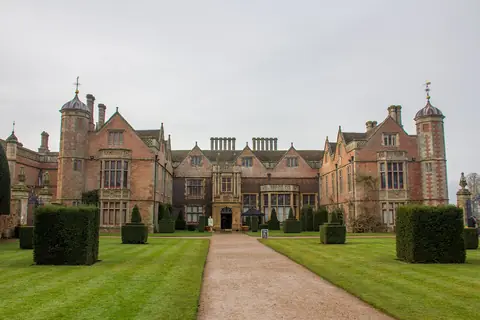
A Jacobean house of red brick framed by yew hedges, said to stand on the site of the home of Anne Boleyn's family, and to be visited by her ghost eve…
A 13th-century Cistercian abbey turned into a house, later bought by Sir Francis Drake after his voyage around the world.
The "un-stately home": a Baroque mansion where the reclusive Harpur Crewe family hoarded everything and changed little for over a century.
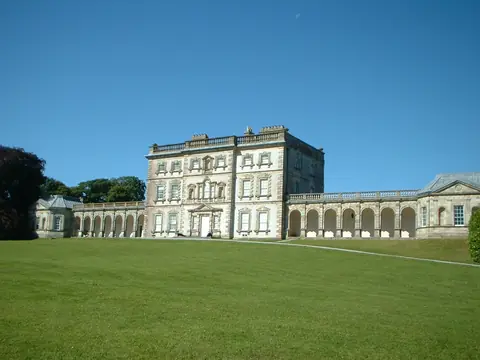
One of the finest neoclassical houses in Ireland, designed by James Wyatt for the Earl of Belmore in the 1790s, with Portland stone brought from Engl…
The last castle built in England, designed by Edwin Lutyens for the grocery millionaire Julius Drewe and finished in 1930.
An 18th-century house with two different fronts, one Classical and one Gothic, because Lord and Lady Bangor couldn't agree on a style.
A Tudor house of red brick beside the River Avon, home to the Lucy family for over 900 years.
A massive castle built in 1295 by Edward I to control the Welsh border, the last of his castles still lived in until 2004.
A grand Italianate mansion on cliffs above the Thames, once the home of the Astor family and the setting of the Profumo affair.
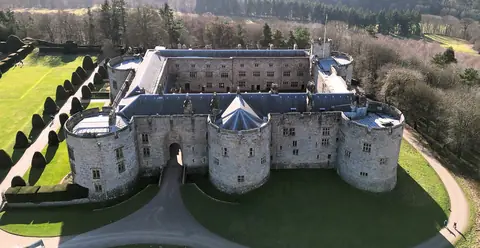
One of the great medieval castles built by Edward I to conquer Wales, completed in 1287, with eight huge towers and almost complete town walls that y…
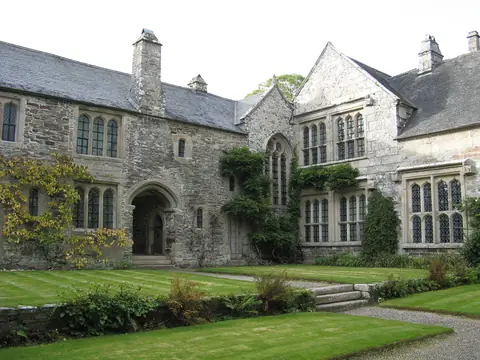
A Tudor house of granite and slate above the River Tamar, kept almost unchanged for centuries, with tapestries, armour and old furniture in dim, atmo…
Capability Brown's first complete landscape, made from marshland for the 6th Earl of Coventry in the 1750s, around a Palladian house, the first he de…
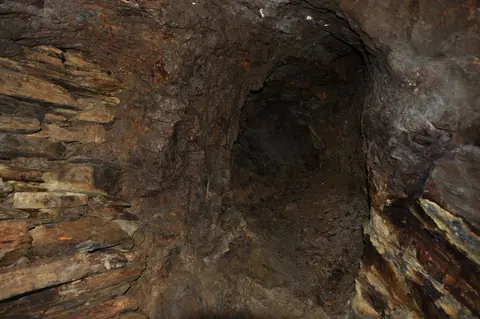
The only known Roman gold mine in Britain, worked again in Victorian times and the 1930s.
A Georgian house and deer park on the edge of Manchester, home of the Earls of Stamford, with a house that was a military hospital in the First World…
A castle on a wooded hill above the medieval village of Dunster, home to the Luttrell family for 600 years and remodelled as a Victorian country house.
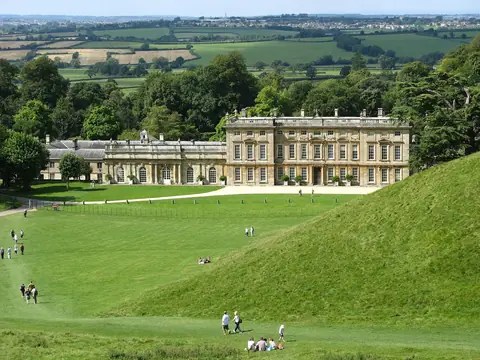
A Baroque house built in the late 1600s for William Blathwayt, a civil servant to William III, set at the foot of a deer park in a fold of the Cotswo…
A country house that tells the story of the people who worked as well as lived in it: the Yorke family painted and wrote poems about their servants, …
A Georgian house with rococo plasterwork set against the Cuilcagh Mountains, home of the Earls of Enniskillen.
A 17th-century house on the Thames, home of the Duchess of Lauderdale and kept with much of its original furniture and decoration.
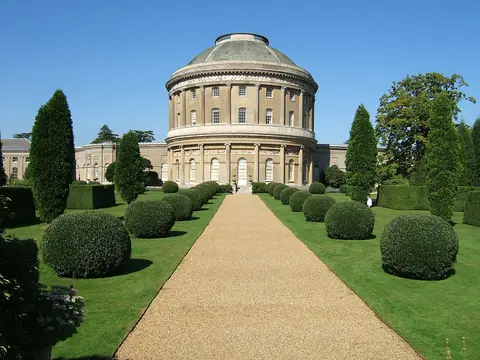
An eccentric Italianate house with a huge central rotunda, built by the 4th Earl of Bristol, also the Bishop of Derry, to hold the art he collected o…
A medieval manor house surrounded by a moat, hidden in a wooded valley.
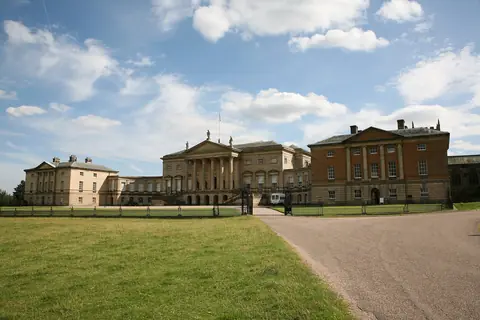
A Palladian mansion with some of the finest interiors by Robert Adam, built in the 1760s for the Curzon family.
A grand country house in the style of an Italian palazzo, built for the Bankes family after they lost Corfe Castle in the Civil War.
One of the largest houses in England, more like a small town, built for an Archbishop of Canterbury and taken by Henry VIII.
A grand late Victorian country house rebuilt after a fire in 1881, with a gatehouse and gallery from the 17th century.
A tin and copper mine on the cliffs of the Atlantic coast, where tunnels reached far out under the sea.
A wonderfully crooked Tudor manor house of black and white timber framing, surrounded by a moat.
A grand house with an Italianate front set in a huge deer park on the edge of the Peak District.
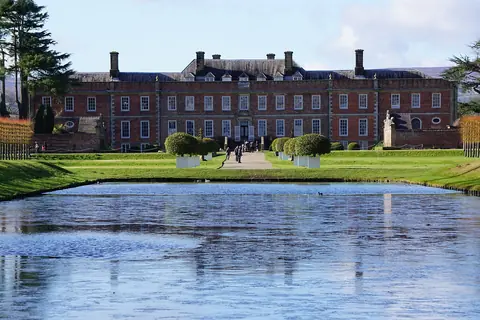
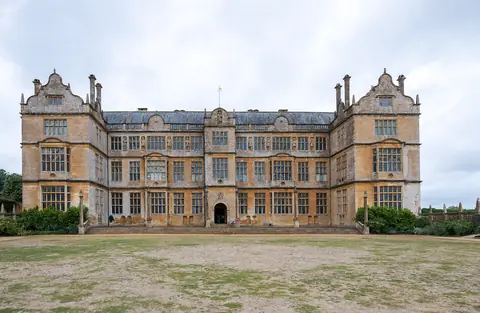
A glittering Elizabethan mansion of golden Ham Hill stone, built in the 1590s with great walls of glass.
A Tudor mansion transformed by Robert Adam in the 18th century for the Child family of bankers, with some of his finest interiors, from the Etruscan …
A moated manor house built in 1482 by the Bedingfeld family, who still live here.
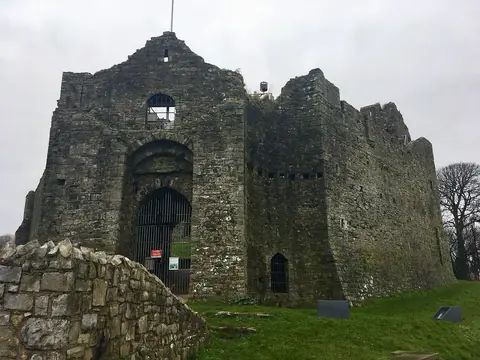
The ruins of a Norman castle on a hill above Mumbles, built by the de Breos family in the 12th century, with views over Swansea Bay.
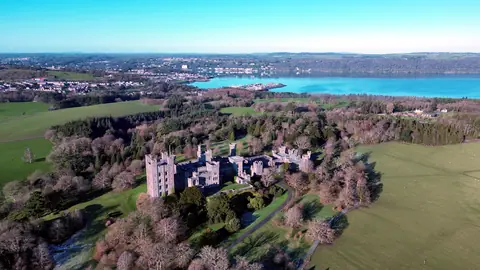
A vast neo-Norman castle built in the early 1800s for the Pennant family, whose wealth came from Jamaican sugar plantations and Welsh slate quarries.
One of the best-preserved medieval manor houses in England, home of the Sidney family since 1552.
A grand 17th-century mansion holding one of the finest art collections in the care of the National Trust, including paintings by Turner, who painted …
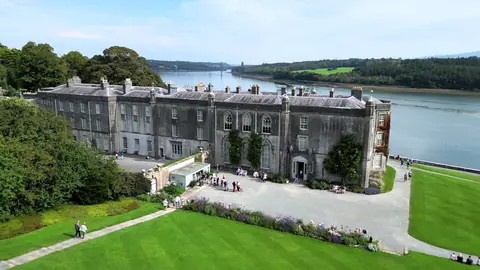
The home of the Marquesses of Anglesey, on the shore of the Menai Strait with views to the mountains of Snowdonia (Eryri).
The Edwardian country house of the society hostess Margaret Greville, where kings, maharajas and politicians came to stay.
One of the best preserved textile mills of the Industrial Revolution, founded in 1784 by Samuel Greg.
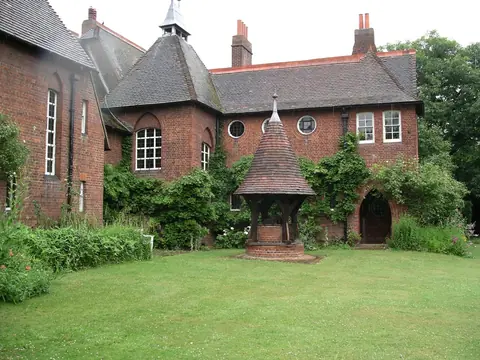
The only house commissioned by William Morris, designer and leader of the Arts and Crafts movement, built in 1859 by his friend Philip Webb.
The water meadow beside the Thames where King John agreed to Magna Carta in 1215, the charter that became a foundation of law and liberty.
The romantic ruin of a 14th-century moated castle, set as the centrepiece of a picturesque garden by the Hussey family when they built a new house on…
A Baroque masterpiece designed by Sir John Vanbrugh, architect of Blenheim, for the Delaval family, known for their wild parties and practical jokes.
A medieval house built around a 14th-century tower, home to the Strickland family for over 700 years.
A Cotswold manor filled with the extraordinary collection of the architect and craftsman Charles Wade, who gathered over 20,000 objects: Japanese sam…
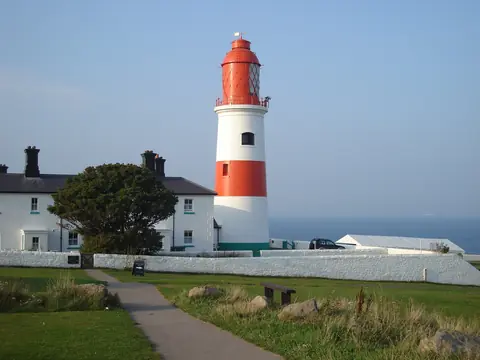
A red and white striped lighthouse opened in 1871, the first designed to use alternating electric current.
A rare Tudor black and white timber-framed manor house on the banks of the Mersey, built around a courtyard with two ancient yew trees.
A towering red-brick castle built in the 1430s for Ralph Cromwell, Lord Treasurer of England, rising high above the flat Lincolnshire fens.
A Victorian fort perched on the cliffs at the western tip of the Isle of Wight, with views straight down to the Needles, three chalk stacks rising fr…
An elegant Georgian colonnade in the old spa town of Royal Tunbridge Wells, built around the Chalybeate Spring, whose iron-rich water was discovered …
A spectacular Victorian Gothic Revival house, with towers, turrets and a private chapel, built for the Gibbs family, who made a fortune from guano.
A graceful prehistoric figure of a horse cut into the chalk of a hillside about 3,000 years ago, the oldest hill figure in Britain.
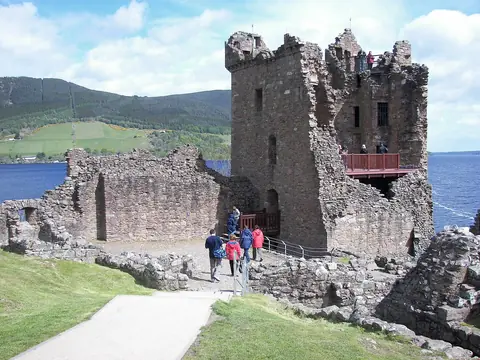
The ruins of a medieval castle on a headland jutting into Loch Ness, the long, deep lake famous for its legendary monster, 'Nessie'.
A Victorian house built in the 1880s for a paint manufacturer, filled with one of the best collections of Arts and Crafts design and Pre-Raphaelite a…
The largest country house in Cambridgeshire, with a library and chapel decorated by some of the best architects of the 18th century.
The farmhouse where Isaac Newton was born in 1642 and where he did much of his most important work while Cambridge was closed by the plague in 1665 a…
One of the first road suspension bridges in the world, built by Thomas Telford in 1826 with turrets to match Conwy Castle beside it.
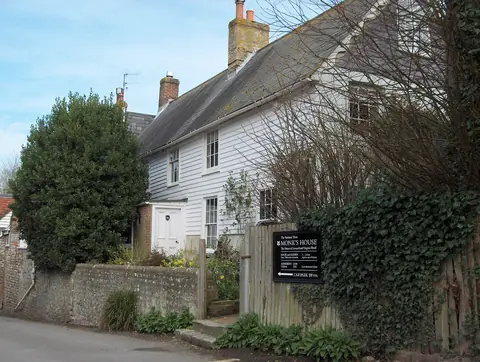
The weatherboarded cottage in the village of Rodmell that was the country home of the writer Virginia Woolf and her husband Leonard.
The north-east corner of Hyde Park, near Marble Arch, has been London's home of free speech since 1872.
A mock-Gothic castle with turrets and battlements on the western shore of Windermere, built in the 1840s for a retired surgeon.