
Christmas Island National Park
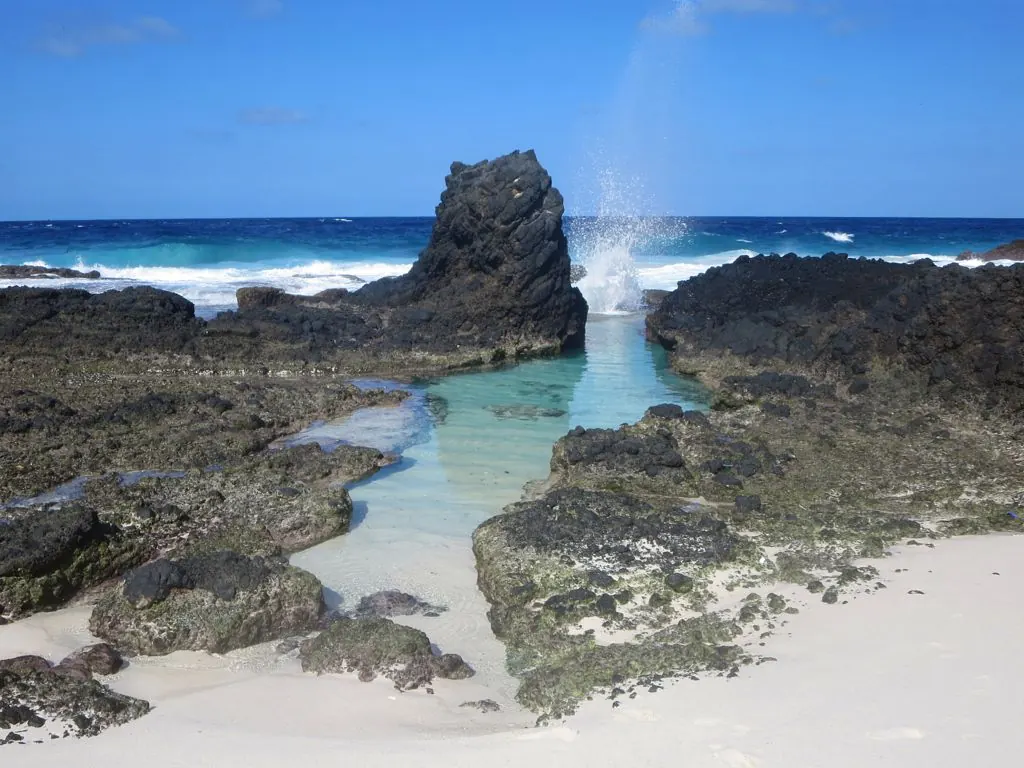
A national park covering about two-thirds of Christmas Island, a remote Australian territory in the Indian Ocean, south of Java. Most of the island is a raised limestone plateau covered in tall rainforest, ringed by cliffs and terraces that drop to coral reefs. The park protects that forest, the island's freshwater wetlands and a coast with beaches, caves and blowholes, and it's home to birds and land crabs found almost nowhere else. Give it a week.
What to see
- The rainforest, on the plateau and the terraces, with tall trees, buttress roots and strangler figs. Walking tracks lead through it from the roads.
- The Dales, a group of valleys on the west coast, a wetland of international importance, with a boardwalk to Hugh's Dale waterfall.
- The coast: Dolly Beach, reached by a boardwalk through the forest, where turtles nest; Lily and Ethel beaches on the east side; and the blowholes on the south coast.
- Lookouts over the cliffs and the sea, good for watching seabirds and, in season, whale sharks and dolphins offshore.
Wildlife
- Seabirds, among them the Abbott's booby and the Christmas Island frigatebird, which nest only here, and the golden bosun, a golden form of the white-tailed tropicbird.
- Robber crabs, the largest land crabs in the world, common along the roads and tracks.
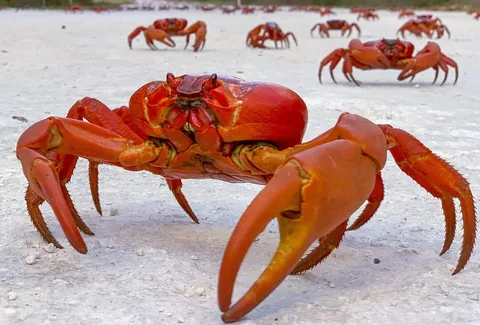
- Red crabs, tens of millions of them, which leave the forest for the sea at the start of the wet season. See the Christmas Island red crab migration.
When to go
The dry season, about May to October, is best for walking, snorkelling and diving. The wet season brings the red crab migration, usually in November or December, when some roads and tracks close.
Getting there
Flights run from Perth. They are few and fill up, so book early, as with the island's small choice of accommodation. Hire a car on the island: the park's roads and tracks are spread out. The Parks Australia visitor centre near Flying Fish Cove has maps and track conditions.
What to know before you go
- It's part of Australia: non-Australians need an Australian visa.
- Stay on the tracks, take water, and check which tracks are open: some close after heavy rain.
- The sea can be rough and the reef edges drop steeply. Snorkel only in calm water.
- Drive slowly and never drive over crabs; roads close during the migration.
Comments