
Food and drink

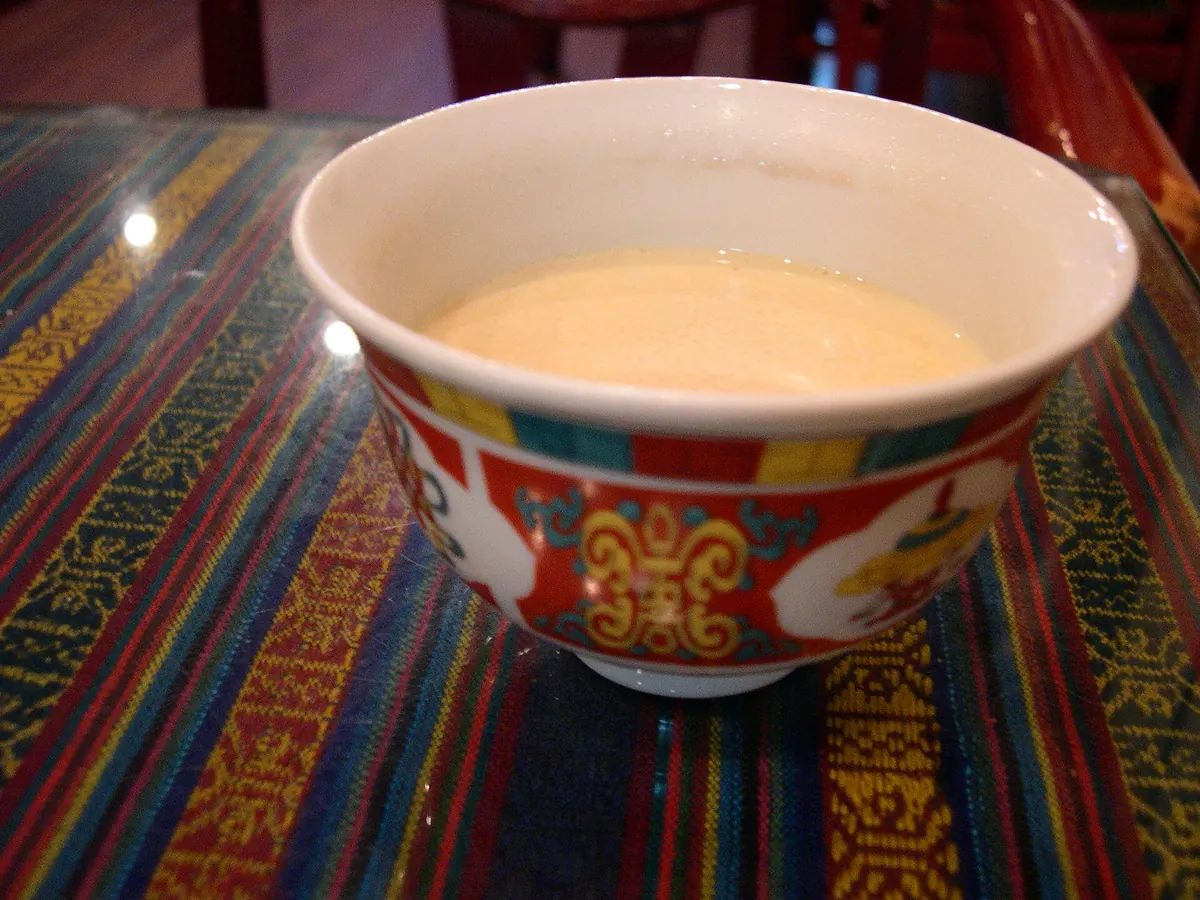
Butter tea and tsampa
China Tibet Lhasa

Butter tea and tsampa
Photo: Yosomono, CC BY 2.0, via Wikimedia Commons

Tibetans drink butter tea (po cha) all day: strong tea churned with yak butter and salt into a rich, savoury drink, a little like soup. It is good for the cold and the altitude. Your cup will be topped up whenever you take a sip; leave it full when you've had enough.


Tsampa, roasted barley flour, is the staple food, mixed with butter tea and kneaded by hand into a dough. Also try momos (dumplings) filled with yak meat, thukpa noodle soup and yak yoghurt.


Lhasa's tea houses, especially in the lanes around the Barkhor and Jokhang Temple, are lively places where locals sit for hours over thermos flasks of sweet milk tea, a cheap and friendly place to rest. Remember that foreign visitors need a permit and an organised tour to visit Tibet.

Comments

No comments yet.

More tips nearby

All tips for China
Historic sites

Potala Palace, Lhasa

Lhasa, Tibet

The former winter palace of the Dalai Lamas, a huge red and white building rising up the Red Hill above Lhasa, at 3,700 m, a UNESCO World Heritage Si…

Walks and treks

Ganden to Samye trek, Tibet

Dagzê, Tibet

A classic trek of about 80 km over 4 to 5 days, linking two of Tibet's most important monasteries.

Walks and treks

Tiger Leaping Gorge

Yunnan

A deep gorge where the Jinsha River (upper Yangtze) races between the Jade Dragon and Haba snow mountains, up to 3,900 m deep.

Historic sites

Old Town of Lijiang

Gucheng, Yunnan

An old town of the Naxi people, with cobbled lanes, wooden houses and canals, at the foot of the Jade Dragon Snow Mountain, a UNESCO World Heritage S…

Historic sites

Mogao Caves, Dunhuang

Dunhuang, Gansu

Nearly 500 Buddhist cave temples carved into a cliff in the desert near Dunhuang, an oasis on the Silk Road, with murals and statues painted over a t…

Historic sites

Leshan Giant Buddha

Wutongqiao, Sichuan

The world's largest stone Buddha, 71 m tall, carved into a red sandstone cliff where three rivers meet, in the 8th century.