Historic sites

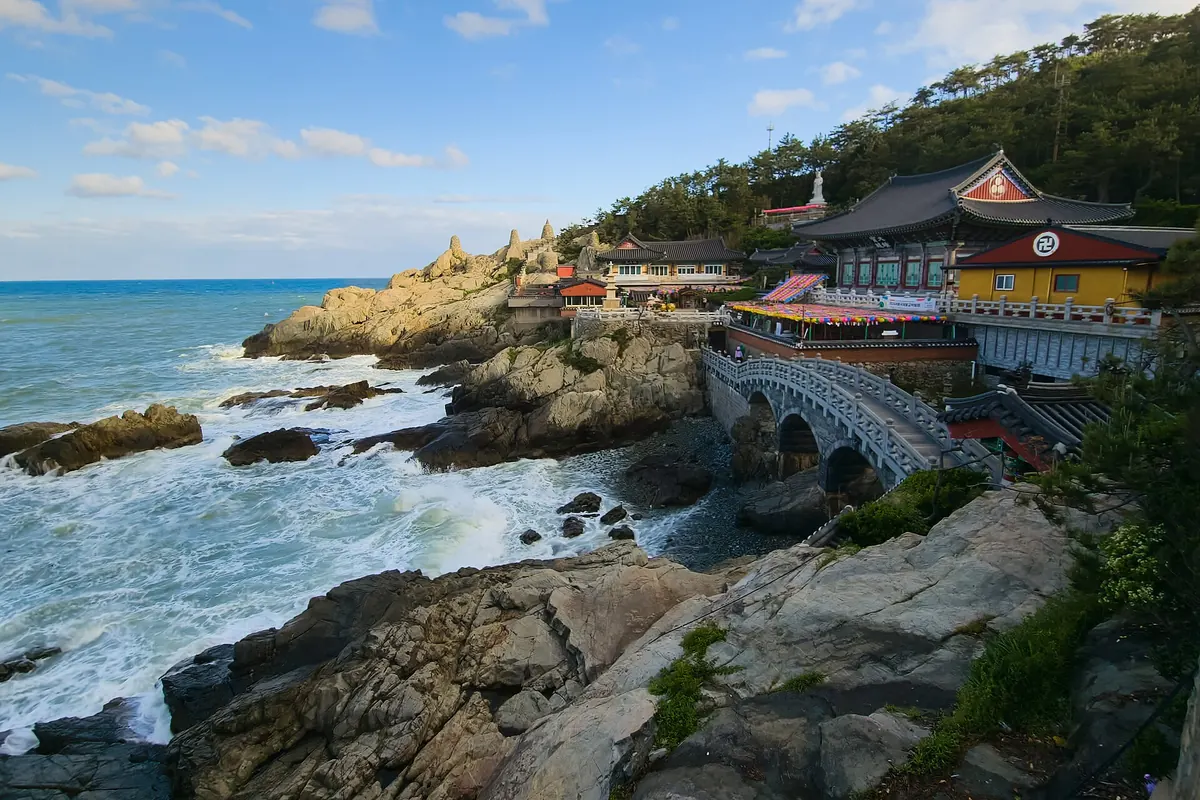
Haedong Yonggungsa Temple, Busan
South Korea Busan Gijang-gun

Haedong Yonggungsa Temple, Busan
Photo: lumoplank, CC0, via Wikimedia Commons

A Buddhist temple built on rocks right beside the sea on Busan's east coast, first founded in 1376. Its colourful halls, stone lanterns and statues cling to the shoreline, with waves breaking on the rocks below, unlike Korea's usual mountain temples.


Visitors walk down a long stairway past statues of the twelve zodiac animals to the temple, crossing a small bridge over the rocks. It is a popular place to watch the sunrise, especially on New Year's Day. It gets busy at weekends.


Buses run from Haeundae, about 30 minutes away; the nearest station is OSIRIA on the Donghae line. Be respectful, as it is a working temple.
Comments

No comments yet.

Natural features

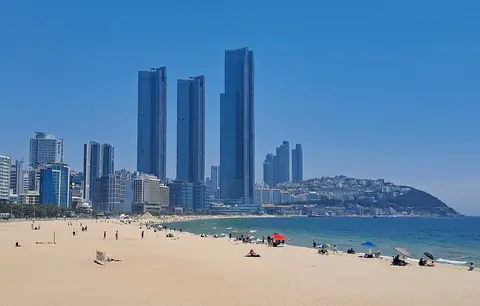
Haeundae Beach, Busan

Haeundae-gu, Busan

Korea's best-known beach, a long curve of sand backed by tall towers in Busan, the country's second city.

Historic sites

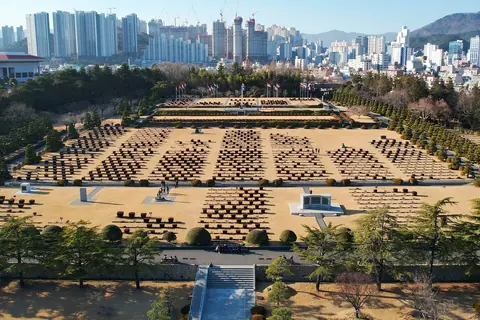
United Nations Memorial Cemetery, Busan

Nam-gu, Busan

The only United Nations cemetery in the world, where about 2,300 soldiers who died in the Korean War rest, from countries including the United Kingdo…

Historic sites

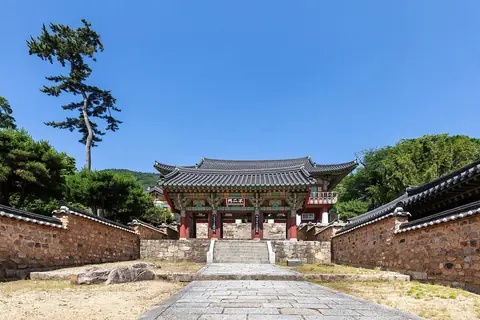
Beomeosa Temple, Busan

Geumjeong-gu, Busan

One of Korea's great Buddhist temples, founded in 678 on the slopes of Geumjeongsan, a mountain on the northern edge of Busan.

Food and drink

Dwaeji gukbap (Busan pork soup)

Busan

Busan's comfort food: a milky pork bone broth with slices of boiled pork, served with rice to add to the soup.

Natural features

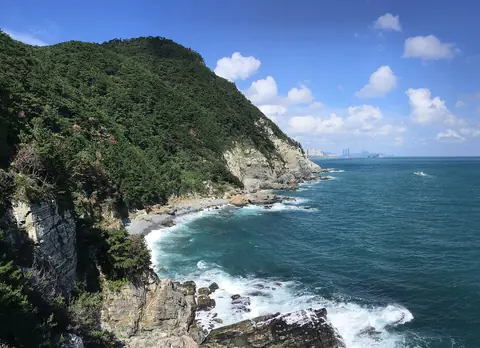
Taejongdae cliffs, Busan

Yeongdo-gu, Busan

Dramatic cliffs and rocky shores at the southern tip of Yeongdo island in Busan, covered in pine and camellia forest.