
Midnight sun and Northern Lights in Sweden: when and where to see them, Abisko, and how to photograph them
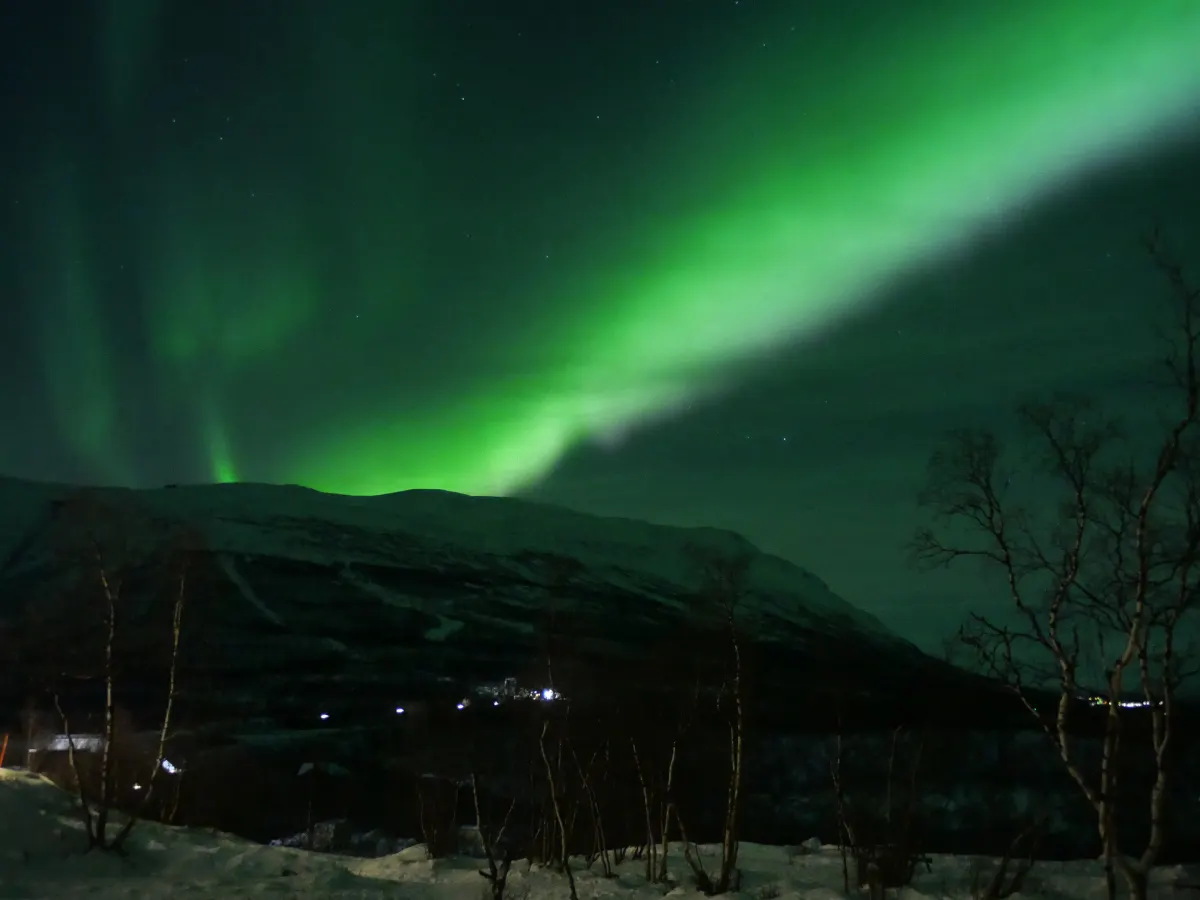
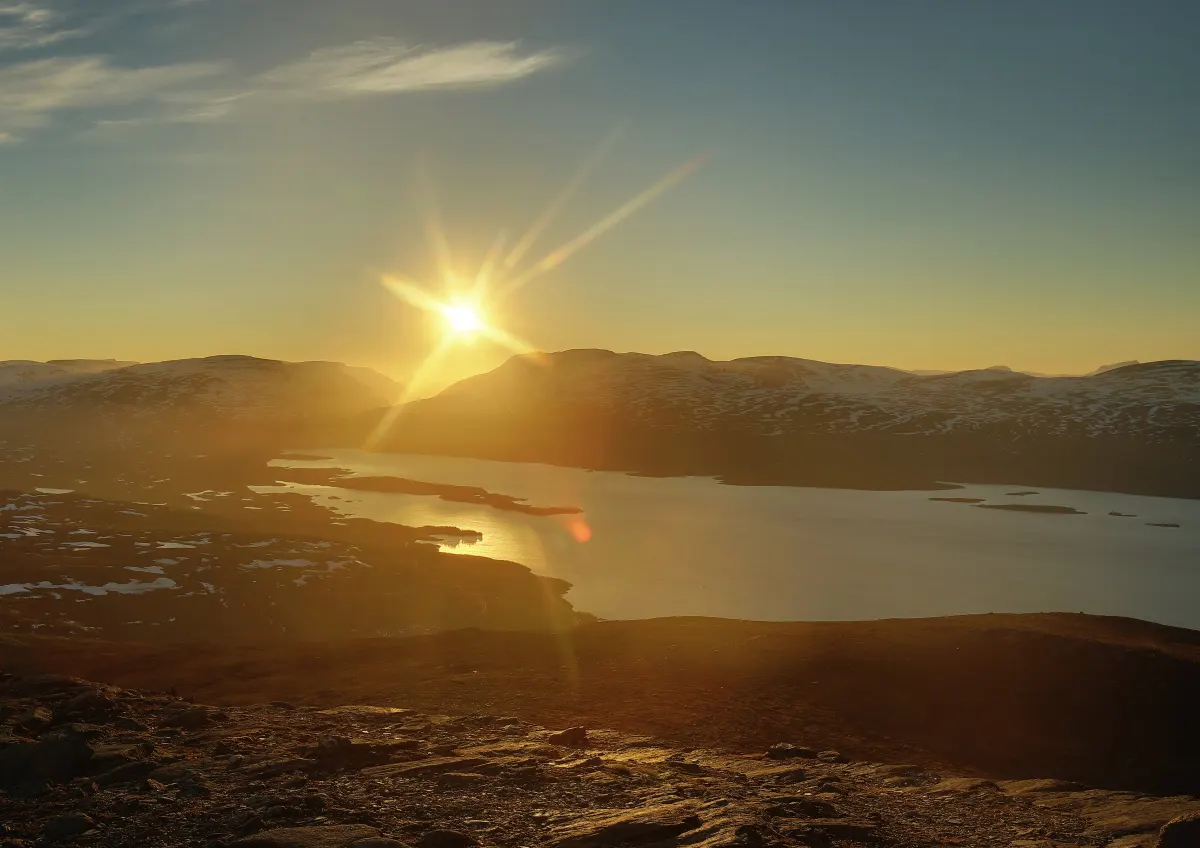
North of the Arctic Circle, the sun stays up all night in June and doesn't appear at all in December. In between come the Northern Lights. You can't have the midnight sun and the lights on the same trip.
Midnight sun
- In Kiruna, from about 27 May to 15 July. In Abisko, a couple of days longer, from about 25 May, but the mountains can hide it.
- On the Arctic Circle itself, near Jokkmokk, about 10 days to a fortnight round Midsummer.
- Further south the sky just doesn't go dark: in Stockholm it's light enough to read outside at 11 pm in June.
- Where: the top of Nuolja above Abisko, by chairlift or on foot, Dundret at Gällivare, or any lake with a view to the north.
- Walk at night. It's quiet, and the light is golden for hours.
Polar night
- In Kiruna the sun stays down from about 10 December to the first days of January. It isn't black: there are some hours of blue and pink at midday.
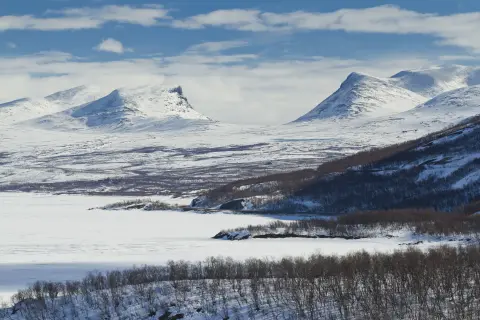
- In Abisko, behind mountains, the sun is missing for longer.
Northern Lights: when
- From the end of August to early April, in the dark, with a clear sky. 8 pm to 1 am is the likeliest.
- September and October are mild, with lights reflected in lakes. February and March have snow, clearer skies and bearable cold. December and January have the most darkness, and more cloud.
- A full moon doesn't matter much, and lights the snow for photos.
- Give it three or four nights. One may be enough, or not.
Where
- Abisko has the best odds in Sweden. The mountains make a dry, clear patch over lake Torneträsk, the blue hole, when everything round it is in cloud.
- Kiruna and Jukkasjärvi, by the Icehotel: walk to the river, away from the lamps.
- Luleå, Jokkmokk, Gällivare, Porjus and the Torne valley are quieter and cheaper.
- In strong storms they've been seen in Stockholm and even Skåne. Look north, from somewhere dark.
Aurora Sky Station
- A chairlift takes you up Nuolja to a viewpoint and café at 900 m. In the winter of 2026–27 the evening visit runs from 19 October to 27 March, from 8.30 pm to 1 am, with a guide, overalls and boots, from 1,295 kronor. The minimum age is 12.
- There are only 40 places. Book ahead, and note that in a storm it moves to a tent at the bottom.
- You can see the lights just as well for nothing from the lake shore. What you pay for is height and a guide.
Forecasts
- Two things matter: the cloud (SMHI, or Norway's yr.no) and the activity (the Kp number; 2 or 3 is plenty in Abisko). Cloud matters more.
- Ask the hotel to wake you.
Photos
- A tripod or a wall, focus at infinity by hand, the widest aperture, ISO 800 to 3200, and 3 to 15 seconds. Newer phones do well in night mode, held still.
- Keep spare batteries inside your jacket. Don't use a flash, or a headlamp with other people about: a red light is kind.
- Look up as well. Your eyes see the movement, and the camera the colour.
See also A week in Lapland by night train.

Natural features
Abisko National Park
Norrbotten
A national park in Swedish Lapland, 200 km north of the Arctic Circle, famous as one of the best places in the world to see the northern lights, than…

Places to stay
Icehotel, Jukkasjärvi
Kiruna, Norrbotten
The world's first ice hotel, rebuilt every winter since 1989 from blocks of ice from the Torne River, with art suites carved by artists from around t…
Comments