
Getting around Macau: buses, the LRT, taxis, walking and the free hotel shuttles
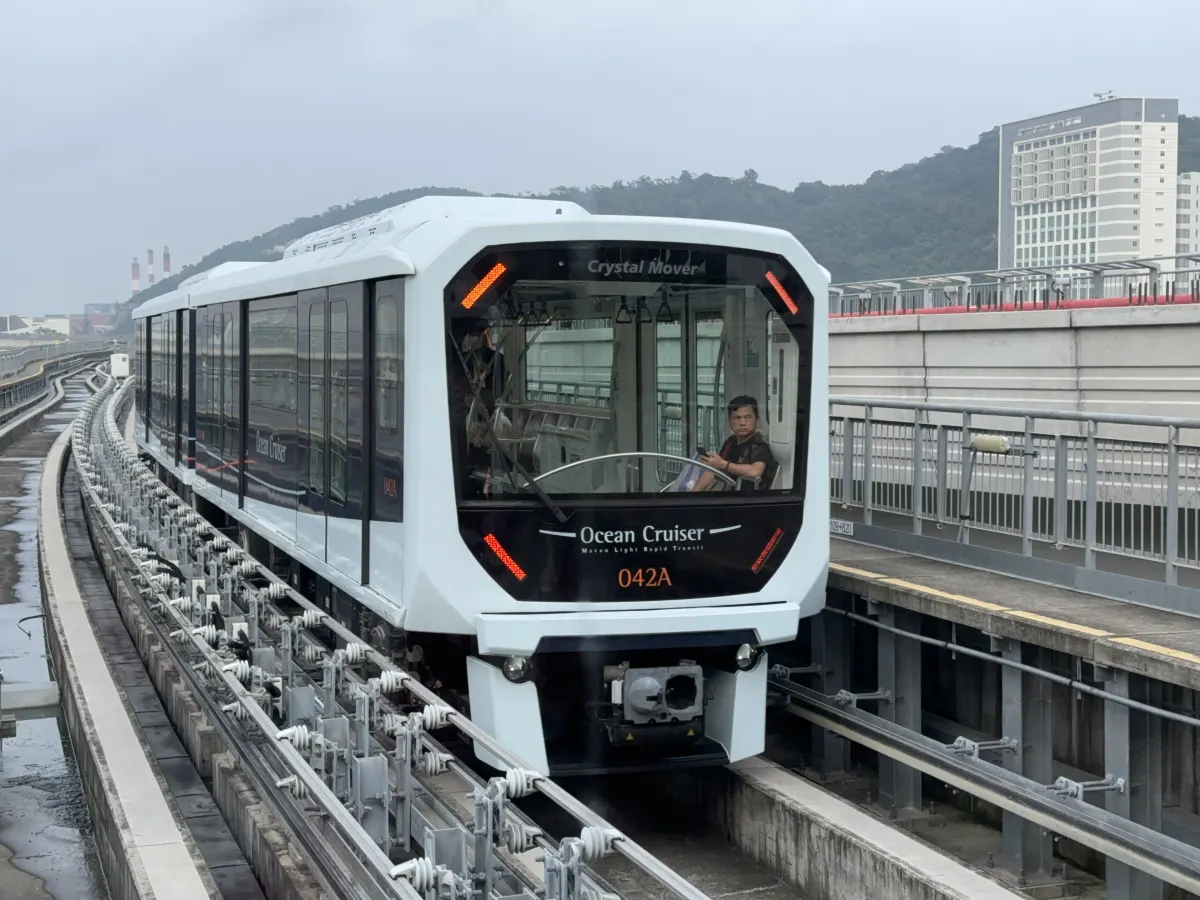
Macau is tiny, about 33 square kilometres, so nothing is far. The old town on the Macau Peninsula is best on foot. For everything else there are buses, a light railway, taxis and the free shuttle buses of the big resorts.
Walking
- The peninsula's historic centre is compact: Senado Square to the Ruins of St Paul's is ten minutes. Streets are steep in places, with steps and cobbles: wear good shoes.
- Signs are in Chinese and Portuguese, often with some English.
- Traffic drives on the left. Crossings are marked, but drivers don't always slow down.
- In Cotai everything is indoors and enormous. Walking between the resorts through air-conditioned malls is pleasant, and longer than it looks on a map.
Buses
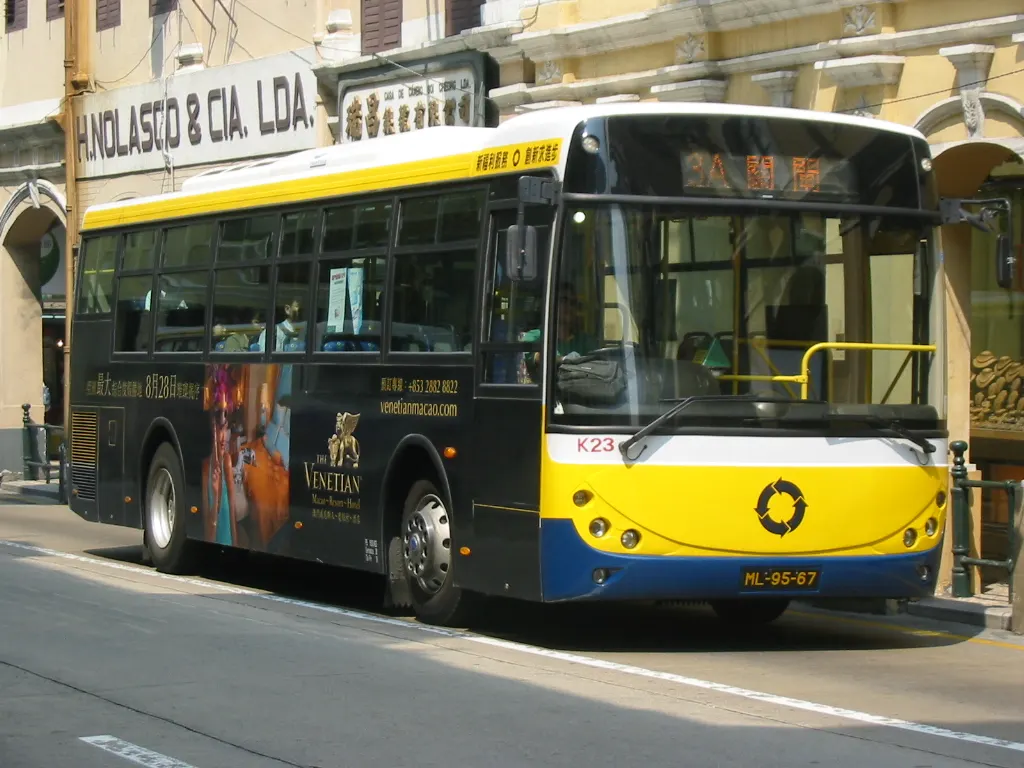
- Buses run all over the peninsula, Taipa, Cotai and Coloane, frequently and air-conditioned. Two companies, Transmac and TCM, run them.
- The fare is MOP 6, whatever the distance. Pay exact coins in the box: drivers give no change.
- With a Macau Pass card you pay less (about MOP 3 for ordinary routes, MOP 4 for express routes with an X), and transfers are cheaper. Buy and top it up at convenience stores and service counters. It works on the LRT too, and in some shops.
- Don't count on tapping a foreign bank card on the bus. Some QR codes are accepted (mainland China and Hong Kong wallets) but foreign wallets aren't.
- The Transport Bureau (DSAT) app and website show routes and the next bus: dsat.gov.mo. Google Maps is less reliable here than in Hong Kong.
- Useful routes: bus 3 links the Outer Harbour Ferry Terminal and Border Gate with the old town; buses to Coloane go through Taipa. Check the stop displays, as routes change.
The LRT (light rail)
- The Taipa Line runs from Barra, on the peninsula near A-Ma Temple, across the Sai Van Bridge to Taipa, the Cotai resorts, the airport and the Taipa Ferry Terminal. The Seac Pai Van and Hengqin lines branch off it.
- The East Line, to the Border Gate, is still being built.
- A single ticket costs MOP 6 to 12 by distance. With a Macau Pass it costs MOP 3 to 6. Machines take Macau coins and notes (except MOP 1,000).
- Trains don't reach the old town beyond Barra. From there, walk or take a bus.
Taxis
- Black taxis with cream roofs. The flagfall is MOP 21 for the first 1.6 km, then MOP 2 for every 220 m. Luggage in the boot costs MOP 3 per piece.
- Surcharges: MOP 8 from the airport, Taipa Ferry Terminal, Hengqin Port or the bridge port; MOP 5 from the peninsula to Coloane; MOP 2 from Taipa to Coloane.
- Drivers often speak little English. Have your hotel write the address in Chinese.
- Taxis are scarce at busy times, when casinos and concerts end, and on rainy evenings. You can call one (+853 2828 3283) or use the Macao Taxi app.
- Uber and other unlicensed ride services are illegal in Macau, and police act against passengers as well as drivers.
Free shuttle buses
The big casino resorts run free shuttle buses from the ferry terminals, the Border Gate, the bridge port and some hotels, and you don't have to be staying there to use them. They're handy for Cotai, but they take you to that resort, not to the old town, and the rules change: some ask for a hotel booking, show ticket or casino card, and some have dropped stops. Ask the driver or check the resort's site before you rely on one.

Cotai Strip and Macau Tower
Macau is the world's largest gambling centre, and the Cotai Strip has huge casino resorts with shows, shopping and canals.
By car
There's no need for one: parking is scarce and roads are narrow. A UK or US licence needs a 1949 International Driving Permit obtained at home, and driving is limited to 14 days before you must register.
Getting to Coloane
Coloane village, at the south end, is the quiet side of Macau, reached by bus from Taipa or Cotai. The beaches, Cheoc Van and Hac Sa, are a little further. Buses thin out in the evening, and taxis are few.



Comments
No comments yet.