Historic sites
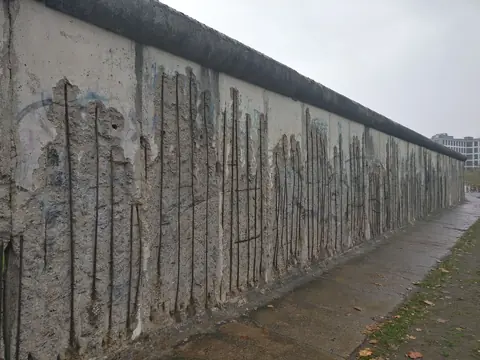
Berlin Wall Memorial and East Side Gallery
Gesundbrunnen, Berlin
Two places to understand the Berlin Wall, which divided the city from 1961 to 1989.
Two places to understand the Berlin Wall, which divided the city from 1961 to 1989.
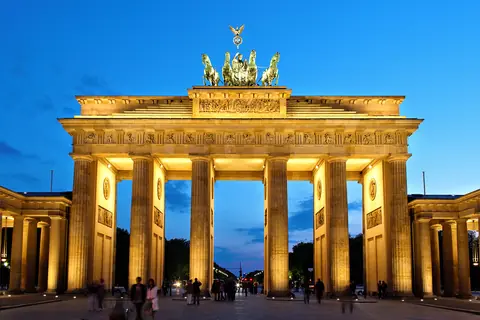
Berlin's most famous landmark: a neoclassical gate of 1791, topped by the Quadriga, a chariot drawn by four horses.
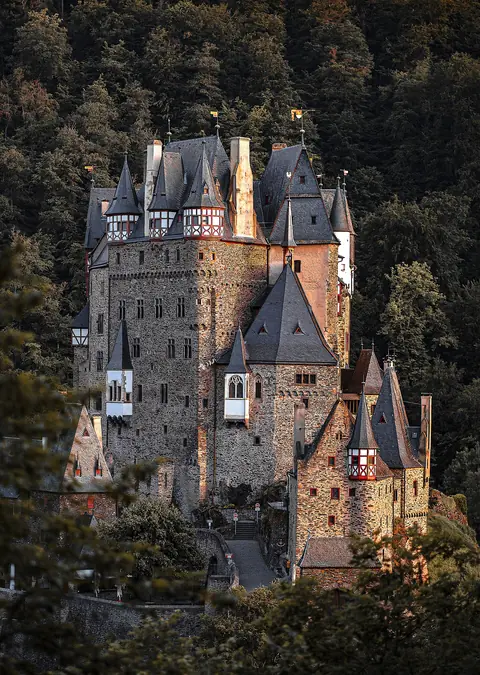
A storybook castle hidden in a wooded valley above the Moselle, owned by the same family for more than 850 years and never destroyed.
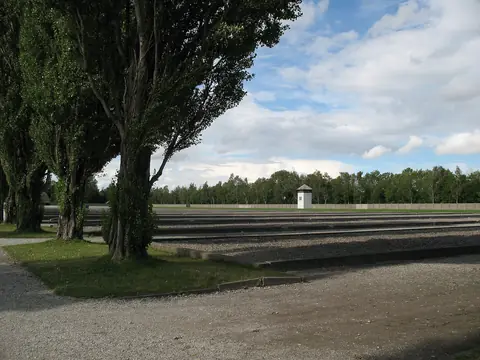
The first Nazi concentration camp, opened in 1933 and the model for those that followed.
The romantic red sandstone ruins of Heidelberg Castle rise above the old town and the River Neckar.
The heart of Munich since the 12th century, overlooked by the neo-Gothic New Town Hall, whose Glockenspiel plays at 11 am and 12 noon (also at 5 pm f…
The fairy-tale castle built from 1869 for King Ludwig II of Bavaria, perched on a crag above a gorge in the foothills of the Alps.
One of the best-preserved medieval towns in Europe, on the Romantic Road in Franconia.
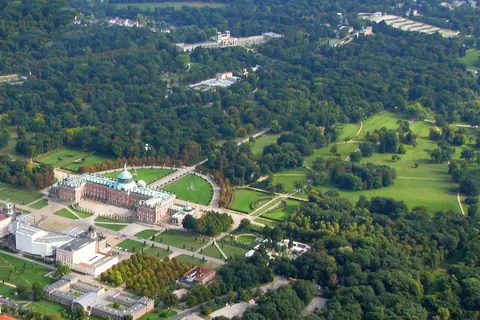
The summer palace of Frederick the Great, built in 1747 on top of terraced vineyards, in a huge park of gardens, fountains, temples and more palaces,…
Bremen's main square is surrounded by gabled merchants' houses, the Gothic cathedral and the ornate Town Hall, whose Renaissance façade and great hal…
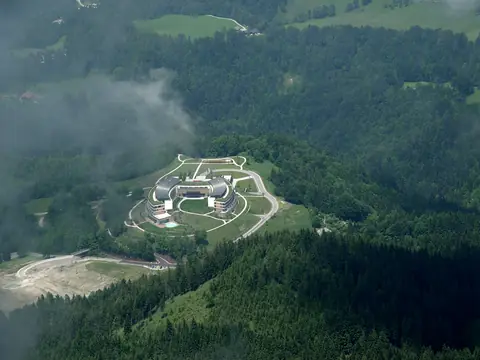
A mountain house built for Hitler's 50th birthday on a ridge at 1,834 m above Berchtesgaden, now a restaurant with spectacular views over the Alps an…
A spectacular 19th-century castle on the summit of Mount Hohenzollern, the ancestral seat of the Prussian kings and German emperors.
Lübeck was the 'Queen of the Hanseatic League', the medieval trading network of the Baltic, and its old town, on an island ringed by water, is a UNES…
The Kaiserburg, the castle of the Holy Roman Emperors, stands on a sandstone rock above Nuremberg's old town, with views over the red roofs from its …
The largest Roman city gate north of the Alps, built around 170 AD from huge sandstone blocks without mortar, and darkened over the centuries, hence …
A small town at the edge of the Harz mountains with more than 1,300 half-timbered houses spanning six centuries, one of the largest collections in Ge…
A medieval castle on a hill above Eisenach in Thuringia, founded in 1067 and a UNESCO World Heritage Site.
Once the largest coal mine in Europe, closed in 1986 and now a UNESCO World Heritage Site and a symbol of the Ruhr region's change from heavy industr…